Tian Xian Teng
Aliases: Dulin Vine (都淋藤), Three Hundred Taels of Silver (三百两银), Duling Sprouts (兜铃苗).
Taste and Nature: Bitter in taste, warm in nature.
Meridian Affinity: Liver, Spleen, Kidney meridians.
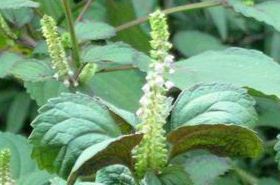
Medicinal Part: Tian Xian Teng refers to the dried aerial parts of Aristolochia debilis Sieb. et Zucc. or Aristolochia contorta Bge., both plants belonging to the Aristolochiaceae family.
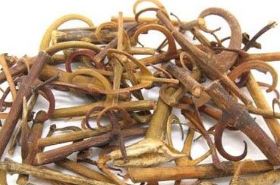
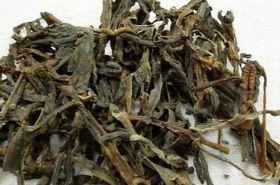
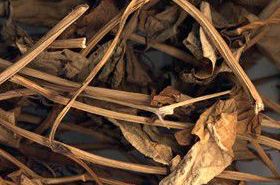
Morphological Characteristics: The stem of Tian Xian Teng is slender and cylindrical, often slightly twisted, with a diameter typically ranging from 1 to 3 mm. Its surface appears yellowish-green or pale yellowish-brown, marked with longitudinal ridges and distinct nodes, where the internode lengths can vary. The plant material is brittle and snaps easily, revealing several vascular bundles of different sizes in the cross-section. The leaves are alternate, usually crumpled and fragmented. When a complete leaf is flattened, it presents as a triangular-narrow ovate or angular-broad ovate shape with a heart-shaped base. The color is typically dark green or pale yellowish-brown, featuring prominent basal veins and a slender petiole. It possesses a light, fragrant aroma and a mild taste.
Tian Xian Teng Usage and Dosage
Dosage: Typically 3 to 6 grams.
Preparation: Remove any impurities and cut into sections.
Important Safety Alert Regarding Aristolochia Species
It is absolutely critical to understand that species of the Aristolochia genus, including Aristolochia debilis and Aristolochia contorta (Tian Xian Teng), contain aristolochic acids. These compounds are known to be nephrotoxic (damaging to the kidneys) and carcinogenic (cancer-causing). Due to these severe risks, many regulatory bodies worldwide have banned or restricted the use of herbs containing aristolochic acid. While Tian Xian Teng has historical applications in Traditional Chinese Medicine, its use today requires extreme caution and strict supervision by a qualified and licensed healthcare practitioner who is well-versed in the safety profiles of such herbs. Self-medication with Tian Xian Teng is highly discouraged and can be dangerous.
Always consult a qualified Traditional Chinese Medicine practitioner or your primary healthcare provider before considering any herbal remedy, especially those containing Aristolochia species. They can assess your individual health situation and advise on the safest course of treatment, if any. (See references for more information on toxicity: PMID: 29636287)
Tian Xian Teng Functions and Indications
Functions: Invigorates Qi and Blood circulation, unblocks meridians to alleviate pain.
Indications: Traditionally used for stabbing pain in the epigastrium and abdomen, and rheumatic pain (Bi Syndrome) caused by wind-dampness. (For a broader understanding of its pharmacological activities, refer to: PMID: 35914652)
Tian Xian Teng Formulations
Below are historical formulations involving Tian Xian Teng. Please remember these are traditional recipes and should not be attempted without professional medical guidance due to the inherent risks of Aristolochia species, as well as the historical nature of some ingredients and practices.
(Note on traditional measurements: 1 Liang (两) ≈ 30-37.5 grams; 1 Qian (钱) ≈ 3-3.75 grams)
- From "Handbook of Commonly Used Clinical Chinese Herbs": Tian Xian Teng is combined with Cyperus Rhizome (Xiang Fu) and Lindera Root (Wu Yao) to treat epigastric and abdominal pain.
- From "Sun Tianren's Collection of Effective Formulas": One liang (approx. 30-37.5g) of Tian Xian Teng and one bowl of good wine. Boil until reduced to half a bowl. This concoction was believed to be remarkably effective in treating painful hernia.
- From "Renzhai's Direct Pointers": Tian Xian Teng, Atractylodes Rhizome (Bai Zhu), Notopterygium Root (Qiang Huo), and Angelica Dahurica Root (Bai Zhi Shao), each 3 qian (approx. 9-11g); Curcuma Slice (Pian Zi Jiang Huang) 6 qian (approx. 18-22g); Processed Pinellia Tuber (Ban Xia Zhi) 5 qian (approx. 15-19g). For each dose, take 5 qian, decocted with 5 slices of ginger in water. It was also suggested to intermittently take Qianjin Wutao Pills to treat arm pain caused by phlegm accumulation. (Studies on related Aristolochia species demonstrate potential for ameliorating arthritis: PMID: 29775089)
- From "Excellent Formulas for Women": Five liang (approx. 150-187g) of Tian Xian Teng, stir-fried until charred and ground into a fine powder. For each dose, take 2 qian, mixed with stir-fried ginger juice, boy's urine, and fine wine. This blend was traditionally used to treat postpartum abdominal pain and afterpains. (Note: The inclusion of boy's urine is a historical practice that is not part of modern, ethical medical treatment and highlights the critical need for professional consultation when considering historical remedies.)
- From "Zhaixuan Fang": For all types of abdominal pain due to Qi and Blood stagnation: Use the above formula, mixed with warm wine. Additionally, mix tung oil with Coptis Rhizome (Huang Lian) powder, then apply it as a compress with Tian Xian Teng heated in oil. (Note: The use of tung oil and external applications with heated herbs also requires extreme caution and should only be performed under the guidance of a licensed practitioner.)
Quick Self-Check & Immediate Action
If... you're experiencing persistent, unexplained stabbing abdominal pain, severe rheumatic pain, or any unusual symptoms after considering a herbal remedy, even if it's based on traditional wisdom...
Then/Immediately... stop any self-treatment and consult a licensed healthcare professional, preferably one specializing in Traditional Chinese Medicine with an understanding of modern pharmacological safety. Your health is paramount, and early professional assessment can prevent serious complications.
Disclaimer
For informational purposes only. This article provides a translation and overview of historical and traditional uses of Tian Xian Teng within Traditional Chinese Medicine. It is not intended as medical advice. Given the known severe toxicity of Aristolochia species, please consult a qualified practitioner of Traditional Chinese Medicine (TCM) or your primary healthcare provider before considering any use of this herb.
References
Overview of pharmacological activities: PMID: 35914652
Relevance to rheumatic conditions (Aristolochia contorta): PMID: 29775089
Crucial information on aristolochic acid toxicity: PMID: 29636287