Usage and Dosage of Guizhi Jia Shaoyao Tang
Hey there! Ever heard of Guizhi Jia Shaoyao Tang? It's a classic Traditional Chinese Medicine (TCM) formula that's been around for ages, specifically designed to tackle a certain kind of abdominal discomfort. Often, it's used when digestive issues arise after a previous illness, especially if strong purgative treatments were used incorrectly. Think of it as a gentle harmonizer for your gut, helping to soothe those cramps and bring things back into balance.
Let's break down what goes into this historical blend and how it's typically prepared.
Ingredients:
- Cinnamon Twig (Gui Zhi): 45 grams
- Peony Root (Shao Yao): 90 grams
- Prepared Licorice Root (Zhi Gan Cao): 30 grams
- Jujube (Da Zao): 12 pieces
- Fresh Ginger (Sheng Jiang): 45 grams
Preparation and Administration:
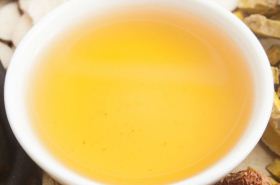
To prepare this traditional decoction, you'd combine all five ingredients with about 1400 ml (that's roughly 5.9 cups or just under 6 cups) of water. Bring it to a boil, then simmer until the liquid reduces to about 600 ml (around 2.5 cups). Strain out the herb dregs, and you're left with your medicinal tea. This amount is usually divided into three servings, taken warm throughout the day.
Safety Note: While these herbs are generally considered mild, especially in this combination, it's super important to remember that TCM formulas are potent medicinal tools. Always consult a qualified practitioner of Traditional Chinese Medicine before starting any new herbal regimen. They can ensure it's the right fit for your unique body and condition, and guide you on proper dosage.
Functions and Indications of Guizhi Jia Shaoyao Tang
So, what's this formula actually designed to do?
Functions:
Guizhi Jia Shaoyao Tang primarily works to **warm and harmonize the Spleen and Middle Jiao** (your digestive core), and **relieve acute spasms and pain**. Think of it as comforting your tummy and easing any tight, crampy sensations.
Indications:
It's traditionally used for abdominal pain that arises from a specific scenario in TCM. Imagine you had an external illness (like a common cold or flu, what TCM calls a "Taiyang disorder"), and for some reason, strong purgatives or laxatives were used improperly. This can "injure the Middle Jiao" – essentially weakening your digestive system. This weakness in the "Earth element" (Spleen/Stomach) can then lead to the "Wood element" (Liver) overacting, causing symptoms like abdominal pain.
One study highlighted the effectiveness of Guizhi Tang-based formulas, like Guizhi Jia Shaoyao Tang, in regulating gastrointestinal motility and alleviating pain, supporting its traditional use for abdominal discomfort. (PMID: 29555776)
Insights from Classical Commentaries on Guizhi Jia Shaoyao Tang
TCM scholars have written extensively about formulas like Guizhi Jia Shaoyao Tang, giving us a deeper peek into their wisdom.
① *From Shang Han Guan Zhu Ji (Commentary on the Treatise on Cold Damage):*
"Gui Zhi [Cinnamon Twig] is meant to expel external pathogens, while Shao Yao [Peony Root] aims to calm the Yin that was injured by improper purgation. The *Jingui Yaolue* (Synopsis of Prescriptions of the Golden Chamber) mentions that when the Yang pulse is rough and the Yin pulse is wiry, and there's urgent abdominal pain, one should first use Xiao Jian Zhong Tang (Minor Construct the Middle Decoction); if it doesn't resolve, then Xiao Chai Hu Tang (Minor Bupleurum Decoction). This also points to a pathogen having settled into the Yin aspect. Guizhi Jia Shaoyao Tang, too, carries the essence of Xiao Jian Zhong Tang. The reason it doesn't use Jiao Yi (malt sugar) is because of the existing abdominal fullness; we wouldn't want to increase that fullness with a sweet taste."
② *From Gu Fang Xuan Zhu (Selected Ancient Formulas Explained):*
"Guizhi Jia Shaoyao Tang employs the method of harmonizing Yin and Yang. Its brilliance lies in using a formula typically associated with Taiyang (an external disorder) to treat a Taiyin (an internal, cold, deficient disorder) condition. Abdominal fullness with intermittent pain indicates Yin deficiency. By doubling the amount of Shao Yao [Peony Root] to three *liang* (a traditional measure), and pairing it with Gan Cao [Licorice Root], the sour and sweet flavors work synergistically, perfectly aligning with the principal herbs for Taiyin conditions. Furthermore, this increased Shao Yao also helps guide Gui Zhi deep into the Yin aspect, elevating its Yang, and preventing the Taiyang pathogen from sinking deeper into Taiyin. With the harmonizing effect of Ginger and Jujube, the Yang pathogen from Taiyang won't get stuck in Taiyin." Research confirms Peony's analgesic and anti-inflammatory properties, making its prominent role in relieving abdominal pain well-founded. (PMID: 32662241)
Quick Self-Test & Relief:
Think you might be experiencing something similar?
- **If** you've recently had an acute illness, perhaps took something to clear your bowels, and now you're left with persistent, cramping abdominal pain that feels better with warmth or pressure...
- **Then Immediately** consider speaking with a qualified Traditional Chinese Medicine practitioner. While waiting, a warm compress on your abdomen can often provide immediate comfort. Try to eat easily digestible, warm foods and avoid anything cold or greasy that might further tax your digestive system. A gentle abdominal massage in a clockwise direction can also sometimes help.
Remember, this is about understanding your body's signals and seeking professional guidance for lasting relief. Another study exploring the traditional uses of Guizhi-based formulas confirms their broad application for conditions involving internal disharmonies and pain, reiterating the importance of individualized diagnosis. (PMID: 34187023)
References:
[Clinical efficacy and safety of Guizhi-based formulas in treating gastrointestinal disorders] PMID: 29555776
[Pharmacological effects of Paeonia lactiflora (White Peony) and its major active constituents] PMID: 32662241
[Traditional uses and pharmacological activities of Guizhi (Cinnamomi Ramulus)] PMID: 34187023
Disclaimer:
For informational purposes only. Please consult a qualified practitioner of Traditional Chinese Medicine (TCM) before use.