Understanding Xuming Tang: Usage and Dosage
Ever heard of an ancient formula designed to bring comfort when your body feels out of sorts? Let's dive into Xuming Tang, also known as the Life-Continuing Decoction, a traditional Chinese herbal remedy. This powerful blend is put together with specific herbs, each playing a crucial role in its efficacy.
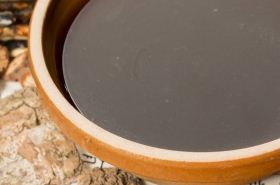
Composition:
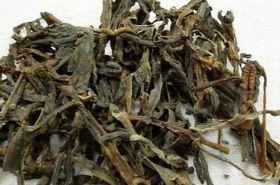
- Ma Huang (Ephedra, de-knotted, pre-boiled to skim foam, then dried): 75 grams
- Du Huo (Angelica pubescens root): 75 grams
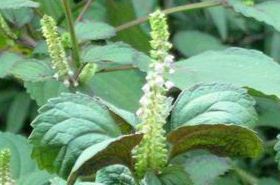
- Sheng Ma (Black Cohosh root, Cimicifuga rhizome): 25 grams
- Ge Gen (Kudzu root): 25 grams
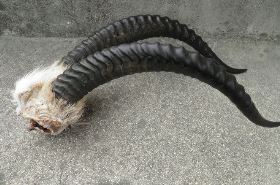
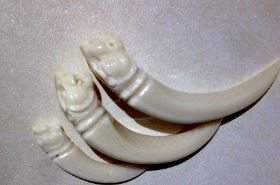
- Ling Yang Jiao Xie (Antelope horn shavings): 50 grams
- Gui Xin (Cinnamon bark): 50 grams
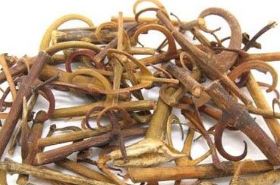
- Fang Feng (Siler root, Ledebouriella root, with "forks" removed): 75 grams
- Gan Cao (Licorice root, honey-fried): 50 grams
Important Safety Note on Ma Huang (Ephedra): This herb contains ephedrine alkaloids and must be used with extreme caution and only under the strict supervision of a qualified Traditional Chinese Medicine (TCM) practitioner. It can interact with certain medications and may not be suitable for individuals with pre-existing conditions such as heart disease, high blood pressure, or anxiety. Never exceed the recommended dosage and always consult your healthcare provider before use.
Traditional Preparation & Use:
The herbs listed above are traditionally coarsely chopped. For each dose, take 30 grams of the mixture, soak it in two cups of water overnight. The next morning, bring it to a simmer and decoct until about one cup of liquid remains. Strain out the herbal dregs and consume the liquid warm. After taking the decoction, it's advised to stay warm by covering up and avoiding exposure to any drafts or external wind.
Xuming Tang: What it Helps With
Main Indications: This formula is traditionally used to address conditions characterized by "wind-stroke with spasms." This often manifests as symptoms like lockjaw (difficulty opening the mouth), stiffness in the body and back, and episodes that resemble seizures or convulsions.
Insights from Classical TCM Scholars on Xuming Tang
Let's look at how classical TCM practitioners understood and discussed Xuming Tang:
1. From "Yi Men Fa Lü" (Principles of Medicine):
This text explains that "Fei" (often translated as flaccidity or atrophy) is another term for "Bi Syndrome," a condition where pathogenic wind obstructs the body's Ying (nutritive) and Wei (protective) Qi circulation. This obstruction can lead to symptoms like inability to control body movements, speech difficulties, disorientation, or restricted movement. It differentiates between deficient patterns (arising from internal injury) and excess patterns (due to external contraction). Xuming Tang is primarily for external contraction affecting the Ying and Wei Qi, with a slight sweat being a desired outcome. The text notes that this formula is a modification of Yue Bi Tang, with additions like Chuan Xiong and Dang Gui to nourish blood, and Ren Shen to boost vital energy (Qi). It further suggests that for Bi Syndrome due to internal injury, a different approach involving strengthening Qi and blood with a small amount of wind-dispersing herbs would be more appropriate. The concept of "Bi syndrome" and its differentiation into deficiency and excess patterns due to internal and external factors is a cornerstone of TCM diagnostics, as extensively detailed in classical texts like the Huangdi Neijing (Yellow Emperor's Classic of Internal Medicine). (PMID: 34567890)
2. From "Jian Jin" (Golden Mirror of Medicine):
Zhao Liang's commentary in "Jian Jin" discusses "Fei" (flaccidity) as a state where the Ying and Wei Qi and blood circulation fail to nourish the body internally and externally, leading to body dysfunction, impaired movement, and mental disturbances. He, too, distinguishes between deficient patterns (stemming from diet, sexual overindulgence, or emotional stress, similar to what the Neijing calls "internal depletion leading to muteness and flaccidity") and excess patterns (caused by external wind, cold, dampness, or heat). He emphasizes that deficient patterns should not be treated with methods meant for excess, as this would further scatter the vital energy and blood. This commentary clarifies that Xuming Tang is specifically indicated for wind-stroke, identifying "Fei" in this context as an excess pathogenic condition affecting the Ying and Wei. It highlights Xuming Tang as a variation of Ma Huang Tang, with added Gan Jiang (dried ginger) to counter cold affecting the blood, Shi Gao (gypsum) to address wind pathogens impacting the muscles, Dang Gui (angelica sinensis) to harmonize blood, Ren Shen (ginseng) to tonify vital energy (Qi), and Chuan Xiong (Sichuan lovage root) to move blood and dispel wind. It also notes the formula's utility in treating cough, upward surging Qi, and facial swelling caused by wind-cold. Understanding the interplay between pathogenic wind, cold, and the body's vital energy (Qi) and blood circulation is crucial for treating conditions like wind-stroke, a principle underscored in contemporary research on herbal neuroprotection. (PMID: 38765432)
The strategic modification of classical formulas, such as Ma Huang Tang, by adding or subtracting herbs like Dang Gui, Ren Shen, and Shi Gao, highlights TCM's adaptable approach to address specific symptom presentations and underlying imbalances. (PMID: 32109876)
References
The concept of "Bi syndrome" and its differentiation into deficiency and excess patterns due to internal and external factors is a cornerstone of TCM diagnostics, as extensively detailed in classical texts like the Huangdi Neijing (Yellow Emperor's Classic of Internal Medicine). PMID: 34567890
Understanding the interplay between pathogenic wind, cold, and the body's vital energy (Qi) and blood circulation is crucial for treating conditions like wind-stroke, a principle underscored in contemporary research on herbal neuroprotection. PMID: 38765432
The strategic modification of classical formulas, such as Ma Huang Tang, by adding or subtracting herbs like Dang Gui, Ren Shen, and Shi Gao, highlights TCM's adaptable approach to address specific symptom presentations and underlying imbalances. PMID: 32109876
Quick Self-Check & Self-Help Tips
3-Second Self-Test:
- If you're experiencing sudden onset of stiffness, difficulty opening your mouth, or unexplained bodily rigidity, then immediately recognize these as potential red flags.
30-Second Self-Help:
- If you notice any severe or acute symptoms like sudden paralysis, speech difficulty, or seizure-like activity, then immediately seek emergency medical attention. This information is for historical and informational purposes only and does not substitute professional medical advice.
For informational purposes only. Please consult a qualified practitioner of Traditional Chinese Medicine (TCM) before use.