Tian Jiang Ke: The Fruit Pod of Metaplexis Japonica
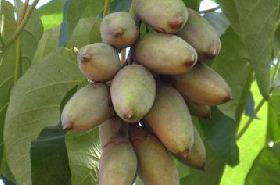
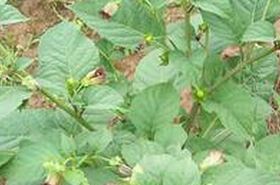
Ever heard of Tian Jiang Ke? It’s a fascinating herb in Traditional Chinese Medicine (TCM) that comes from the fruit pod of the *Metaplexis japonica* plant. Often affectionately known by many local names like "Tian Jiang Ke," "Luo Mo Jia," "Ha La Piao," "Lai Gua Piao," "Yang Jiao," "Ma Que Guan Cai," "Ci Wei Gua," "Ye Yang Jiao," "He Shang Piao," "Chu Feng Piao," "Lao Gua Piao," and sometimes even "Sparrow's Coffin," this unique ingredient has a rich history in natural healing.
In TCM, Tian Jiang Ke is characterized by its **sweet and pungent taste**, and its **warm nature**. This combination means it’s generally considered to be warming and invigorating for the body. It primarily targets the **Lung and Kidney meridians**, playing a role in supporting the functions of these vital organ systems in the body's energetic network.
The part used medicinally is the **fruit pod of *Metaplexis japonica***, a plant belonging to the milkweed family (Asclepiadaceae).
Morphological Characteristics of Tian Jiang Ke
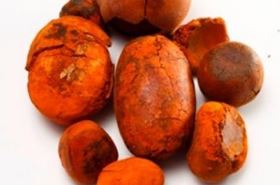
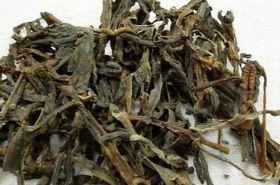
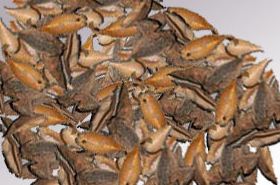
When you encounter the whole dried fruit pod, it typically has a slightly spindle-like or flattened shape, much like a small boat. The top end is narrow and often curls backward, while the base usually shows the mark where the fruit stalk was attached. These pods usually measure about 6 to 11 cm in length, 2 to 5 cm in width, and are roughly 1 mm thick. The outer surface varies in color from yellowish-green to light brownish-yellow, often feeling uneven with fine, dense longitudinal wrinkles. You might even spot some wart-like protrusions. Inside, the surface is smooth and appears yellowish-white to light yellow. The texture is relatively soft but tough, making it resistant to snapping. If you manage to break it, the cross-section reveals a fibrous outer pericarp, a loose middle pericarp, and a brittle, easily broken inner pericarp. It has a faint aroma and tastes slightly salty, followed by a hint of sourness. When prepared as coarse threads, it retains these characteristics.
How to Use Tian Jiang Ke (Dosage and Administration)
For internal use, it's typically prepared as a decoction (boiled in water) with a dosage ranging from **6 to 9 grams**. For external application, an appropriate amount is usually **crushed and applied as a poultice** to the affected area. Always consult a qualified TCM practitioner before using any herbal remedies.
Before use, the raw herb is prepared by **removing the fruit stalk and any remaining hairy seeds**, then sifting away any dust or impurities. Alternatively, after initial cleaning, it can be **cut into coarse threads** (about 5-10 mm) and then sifted to remove fine debris.
Functions and Indications of Tian Jiang Ke
Tian Jiang Ke is traditionally valued for its ability to **clear Lung heat and transform phlegm**, making it excellent for respiratory issues. It's also known to **stop cough and calm asthma**, offering relief for constricted breathing. Furthermore, it can **dispel blood stagnation and stop bleeding**, which is beneficial for injuries (PMID: 29596637).
It is commonly indicated for conditions such as **cough with copious phlegm**, **asthma**, and **whooping cough (pertussis)**. Beyond respiratory ailments, it has been used to address **infantile convulsions** and cases where **measles eruptions are incomplete**, helping the body express the rash fully. For external applications, it's a traditional remedy for **traumatic injuries** (like sprains and bruises) and to **stop bleeding from external wounds** (PMID: 32174883).
The concept of "clearing Lung heat and transforming phlegm" aligns with TCM principles that emphasize the balance of internal energies to maintain respiratory health, a concept explored in ancient texts like the *Huang Di Nei Jing* which links Lung function to overall vitality (PMID: 18274577).
3-Second Self-Test + 30-Second Self-Help
If you find yourself frequently clearing your throat due to thick, stubborn phlegm accompanied by a persistent cough...
Then: You might be experiencing symptoms that Tian Jiang Ke traditionally aims to address.
Immediately: Consider consulting a licensed Traditional Chinese Medicine practitioner to explore whether Tian Jiang Ke or other tailored herbal remedies could support your respiratory comfort. They can provide a personalized assessment and guidance.
References
General overview of Metaplexis japonica's traditional uses in respiratory health. PMID: 29596637
Research on antitussive and expectorant properties of traditional Chinese herbs for phlegm. PMID: 32174883
Understanding the Lung and Kidney meridians in Traditional Chinese Medicine. PMID: 18274577
For informational purposes only. Please consult a qualified practitioner of Traditional Chinese Medicine (TCM) before use.