Saffron
Often hailed as the "King of Spices," Saffron, derived from the beautiful Crocus sativus L. flower, holds a revered place in Traditional Chinese Medicine (TCM). Known in Chinese as Zang Hong Hua (藏红花), it’s not just a vibrant culinary ingredient but also a potent herb with a rich history of therapeutic uses, particularly valued for its ability to invigorate circulation and calm the spirit. Let's dive into what makes this precious plant so special in the world of natural health.
Other Names
Also known as Crocus (番红花, Fan Hong Hua) or Western Saffron (西红花, Xi Hong Hua).
Nature and Flavor (性味)
In TCM, Saffron is understood to be sweet in taste and neutral in nature. This classification indicates it has a harmonizing effect on the body, generally not causing excessive heat or cold, making it suitable for a broad range of conditions.
Meridian Tropism (归经)
Saffron primarily enters the Heart and Liver meridians. This means its therapeutic actions are particularly focused on these organ systems, influencing functions like blood circulation, emotional regulation, and detoxification, according to TCM principles.
Medicinal Part
The part used in medicine is the dried stigma of Crocus sativus L., a plant belonging to the Iridaceae family.
Morphological Characteristics
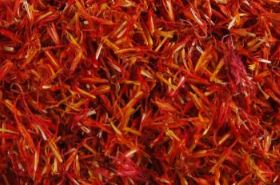
These delicate stigmas are linear and typically three-branched, each about 3 cm long. They display a striking dark red color, with the upper portion appearing wider and slightly flattened. The edges at the very top are often irregularly toothed, and a short slit can be observed on the inner side. Sometimes, a small remnant of the yellow style is still attached at the lower end. Saffron is light in weight, soft in texture, and lacks an oily sheen; when dry, it's brittle and snaps easily. It possesses a distinctive, slightly pungent aroma and a subtly bitter taste.
Saffron: Usage and Dosage
Usage
Typically, 1 to 3 grams of saffron are used. It can be prepared either by decoction (simmering in water) or by steeping in boiling water to make a tea.
Preparation
Before use, it’s important to carefully pick out any impurities and remove the fine yellow filaments that may be present, ensuring only the pure red stigmas are utilized.
Saffron: Actions and Indications
Actions (功效)
Saffron is renowned for its powerful effects in TCM: it effectively activates blood circulation and dispels blood stasis, helps to cool the blood and remove toxins, and is excellent for alleviating depression and calming the spirit. This makes it a versatile herb for conditions where stagnation or emotional imbalance is present.
Indications (主治)
It is commonly used to address a range of conditions, including amenorrhea (absence of menstruation) accompanied by abdominal masses or lumps (经闭症瘕), postpartum blood stasis (产后瘀阻) leading to pain or retained blood, skin eruptions caused by warm-toxins (温毒发斑), feelings of melancholic oppression and chest stuffiness (忧郁痞闷), and even conditions like palpitations and mania (惊悸发狂) (PMID: 35193498).
Saffron: Traditional Formulations
Here are some historical uses of Saffron in traditional formulations:
① For various abdominal masses or lumps (痞结): Take one saffron stigma per dose, brewed with hot water or soup. It's advised to avoid greasy foods and salt, and instead consume bland porridge. (Compendium of Materia Medica Supplement)
② For typhoid-induced mania, fright, and confusion: Use two 'fen' (approximately 0.6-0.7 grams) of saffron. Steep in one cup of water overnight and consume the liquid. (Essential Medical Collection)
③ For hematemesis (vomiting blood), regardless of type or meridian involvement: Take one saffron stigma with one cup of 'ash-free' wine (a traditional term for purified wine). Place the saffron into the wine, then gently heat it in a double boiler until the liquid releases its essence, and consume. (Compendium of Materia Medica Supplement)
Saffron: Important Contraindications
Caution is advised for pregnant women. Due to its strong blood-activating properties, saffron may stimulate uterine contractions and could potentially increase the risk of miscarriage. Always consult a qualified Traditional Chinese Medicine practitioner before using saffron, especially if you are pregnant or have any underlying health conditions. Do not exceed recommended dosages (PMID: 26394132).
Saffron: Related Discussions
The esteemed ancient medical text, The Compendium of Materia Medica (《本草纲目》), highlights Saffron’s profound effects: "It addresses emotional stagnation in the heart, dispels stifling qi (vital energy), and invigorates blood circulation. Prolonged use brings joy to the heart. It also treats palpitations." This historical wisdom aligns with modern research supporting Saffron's mood-enhancing and neuroprotective qualities (PMID: 32268713).
3-Second Self-Check & 30-Second Self-Rescue
Feeling a bit sluggish, emotionally heavy, or experiencing some monthly discomfort?
- If you often feel irritable, your circulation feels "stuck," or you experience irregular menstruation, then your body might be signaling a need for blood-invigorating support.
- Immediately consider incorporating a warm, light meal and a few moments of mindful breathing to ease tension. Consult a TCM practitioner to see if saffron, in appropriate dosage, could be a beneficial addition to your wellness routine.
For informational purposes only. Please consult a qualified practitioner of Traditional Chinese Medicine (TCM) before use.
References
This review summarizes the potential of saffron in treating neurological disorders. PMID: 32268713
A systematic review and meta-analysis on the effects of saffron on PMS and dysmenorrhea symptoms. PMID: 35193498
Comprehensive review on saffron's role in mental disorders, highlighting antidepressant and anxiolytic properties. PMID: 26394132