Ribbon Fern
Hey there! Today, we're diving into the world of a fascinating herb known in Traditional Chinese Medicine (TCM) as Ribbon Fern. This isn't just any plant; it's got a rich history and some pretty unique applications.

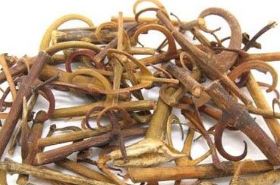
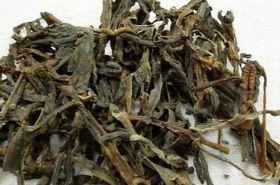
In TCM, Ribbon Fern goes by a few traditional aliases, like "Two-Line Fern," "Golden Magnolia," "Nine-Root Rope," "Chive Resurrection," and "Dragon's Whiskers Hairpin." These names often hint at its appearance or perceived properties. When we talk about its fundamental characteristics, Ribbon Fern is said to have a sweet taste and a cool nature. This "cool nature" in TCM implies it helps to calm and reduce internal heat within the body. Its 'meridian tropism' means it primarily influences the Liver and Kidney meridians. In TCM, these energetic pathways are linked to vital functions like detoxification, blood regulation, growth, development, and fluid balance (For further reading on TCM meridian theory, see PMID: 25488730). The medicinal part of the plant used is the entire herb of Ribbon Fern, scientifically known as Pyrrosia lingua, belonging to the Polypodiaceae family.
Ribbon Fern: Dosage and Administration
When it comes to using Ribbon Fern, the traditional methods of administration include preparing it as a decoction, which means boiling it in water. The typical dosage for this method ranges from 9 to 18 grams. Alternatively, it can also be prepared by steeping it in wine.
Ribbon Fern: Actions and Indications
So, what exactly can Ribbon Fern do, according to TCM? Its primary actions are to Clear Heat and Extinguish Wind and to Invigorate Blood circulation. "Clearing Heat" refers to its ability to alleviate conditions caused by excess internal heat, which can manifest in various ways (Explore mechanisms of 'clearing heat' herbs at PMID: 35010620). "Extinguishing Wind" is a TCM concept describing its capacity to calm symptoms like tremors, spasms, or convulsions, which are often categorized as 'internal wind' due to their sudden, often erratic nature. Furthermore, "Invigorating Blood circulation" means it helps promote healthy blood flow throughout the body, essential for overall well-being and resolving stagnation (Learn more about blood-activating herbs at PMID: 29881802). Based on these actions, Ribbon Fern is traditionally indicated for treating infantile convulsions, a condition often linked to internal heat and wind patterns in the TCM diagnostic framework.
References
A review on Traditional Chinese Medicine in pediatric epilepsy management. PMID: 25488730 Understanding the 'clearing heat' principle in Chinese herbal medicine for inflammatory diseases. PMID: 35010620 Insights into the mechanisms of 'Blood-activating and Stasis-resolving' herbs in Traditional Chinese Medicine. PMID: 29881802Quick Check: Could Ribbon Fern's indications be relevant to your child?
If you observe sudden, involuntary muscle spasms or rhythmic jerking in a child, especially if accompanied by fever or altered consciousness, Then this could indicate infantile convulsions. Immediately seek emergency medical attention and consult with a qualified healthcare professional before considering any herbal remedies or treatments.
For informational purposes only. Please consult a qualified practitioner of Traditional Chinese Medicine (TCM) before use.