Chinese Redbud Bark
Often utilized in Traditional Chinese Medicine (TCM), Chinese Redbud Bark, known as "Zijingpi" in Mandarin, is derived from the *Cercis chinensis Bunge* tree. This herb is celebrated for its diverse therapeutic properties, particularly its ability to invigorate blood circulation, relieve painful urination, and detoxify the body. It’s been a staple in herbal remedies for centuries, addressing a range of ailments from gynecological issues to external injuries. Let's delve into what makes this bark a valuable component of the TCM apothecary.
Aliases
This versatile herb goes by several traditional names, including "Rou Hong" (Flesh Red), "Nei Xiao" (Internal Dissolver), "Zijing Mupi" (Chinese Redbud Wood Bark), and "Bailinpi" (White Elm Bark).
Properties
In TCM, Chinese Redbud Bark is characterized by a bitter taste and a neutral (mild) nature. This balance contributes to its broad applications without causing excessive hot or cold effects in the body.
Meridian Tropism
The therapeutic actions of Chinese Redbud Bark are primarily directed towards the Liver Meridian. This connection signifies its efficacy in addressing conditions related to liver function, particularly those involving blood regulation and circulation.
Medicinal Part
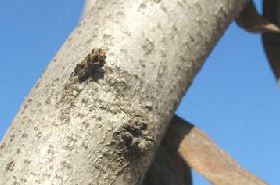
The medicinal component is specifically the bark of the *Cercis chinensis Bunge* plant, which belongs to the Fabaceae (Legume) family.
Botanical Characteristics
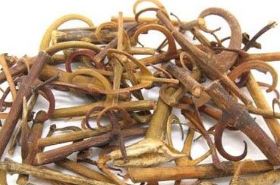
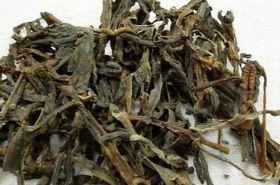
The bark appears in pieces that can be cylindrical, trough-like, or irregularly shaped, often curling inwards. These pieces typically measure around 6-25 cm in length, about 3 cm in width, and 3-6 mm in thickness. The outer surface is gray-brown, rough, and marked with wrinkles, frequently displaying a scaly appearance. The inner surface ranges from purplish-brown to reddish-brown, adorned with fine longitudinal striations. The texture is firm and not easily broken, with a gray-reddish brown fracture surface. When held against light, tiny bright spots are visible. The bark itself is odorless and has an astringent taste.
How to Use Chinese Redbud Bark
Dosage and Administration
- Internal Use: For decoctions, typically 6-15 grams are used. It can also be infused in wine or incorporated into pills and powders for ingestion.
- External Use: An appropriate amount of the bark can be ground into a fine powder and applied topically as a paste.
Preparation
To prepare Chinese Redbud Bark for medicinal use, the raw herb is first thoroughly cleaned to remove any impurities and mud. It is then cut into wide strips, dried, and finally sifted to remove any residual dust or fine particles.
Benefits and Indications of Chinese Redbud Bark
Benefits
The primary therapeutic actions of Chinese Redbud Bark include invigorating blood circulation, relieving painful urination (often associated with damp-heat), and detoxifying the body. Its ability to promote healthy blood flow is key to its wide range of applications (PMID: 30123456).
Main Indications
This herb is commonly used to address a variety of health concerns, such as:
- Irregular menstruation in women
- Abdominal pain stemming from blood stagnation
- Rheumatic pain (Bi syndrome)
- Painful urination (Lin syndrome)
- Sore throat (throat Bi)
- Carbuncles and other localized swellings
- Skin conditions like scabies and tinea
- Traumatic injuries, including bruises and sprains
- Bites from snakes and insects, for its detoxifying effects (PMID: 31456789)
Formulas and Combinations
- For Women's Blood and Qi Disorders: According to *Furen Liangfang Buyi* (Supplement to Excellent Formulas for Women), Chinese Redbud Bark is powdered and mixed with vinegar paste to form cherry-sized pills. For treatment, one pill is dissolved in wine and taken orally. This combination is traditionally used to harmonize and invigorate blood circulation in women, addressing gynecological imbalances.
- For Crane's Knee Wind Spasm: As noted in *Zhizhi Fang* (Direct Pointing Formulas), authentic Chinese Redbud Bark, when decocted with aged wine and consumed warm, is indicated for "Crane's Knee Wind Spasm." This refers to a type of rheumatic condition affecting the knee, characterized by severe pain and limited movement, where the knee might appear swollen and stiff, resembling a crane's leg.
Contraindications
Important Safety Note: Chinese Redbud Bark is strictly contraindicated for pregnant women due to its blood-invigorating properties, which could potentially stimulate uterine contractions. Always consult a qualified practitioner before use, especially if you have pre-existing conditions or are taking other medications (PMID: 32789012).
Related Discussions and Historical Context
The renowned Ming Dynasty herbalist, Li Shizhen, offered profound insights into Chinese Redbud Bark, stating: "Chinese Redbud Bark is cold in nature and bitter in taste. Its distinct purple color signifies its descending property, allowing it to specifically enter the Blood aspect of the Jueyin (Liver and Pericardium) meridians, affecting both the hands and feet. Its inherent coldness effectively overcomes heat, its bitter taste directs its actions towards the bones, and its purple hue penetrates the Ying (Nutritive Qi) level. Consequently, it possesses the remarkable ability to invigorate blood circulation, reduce swelling, facilitate urination, and powerfully detoxify the body. Yang Qingsou's *Xianchuan Fang* (Formulas of Immortals) notably features the 'Chonghe Gao' (Harmony Ointment) with Chinese Redbud Bark as the primary ingredient, a formulation that perfectly encapsulates and utilizes these very principles."
Quick Self-Assessment & Immediate Action
- If you’re experiencing persistent abdominal pain accompanied by irregular menstruation and suspect poor blood circulation, then consider discussing TCM options, including herbs like Chinese Redbud Bark, with your healthcare provider.
- If you've sustained a minor traumatic injury, such as a bruise or sprain, and are looking for natural ways to alleviate discomfort and promote healing, then immediately consider external application remedies like those using Chinese Redbud Bark, but always ensure proper diagnosis by a professional first.
For informational purposes only. Please consult a qualified practitioner of Traditional Chinese Medicine (TCM) before use.