Peach Kernel: Your Guide to a Traditional Chinese Medicine Staple
Hey there, ever wondered about the power packed into some natural ingredients? Today, we're diving into Peach Kernel, or "Tao Ren" as it's known in Traditional Chinese Medicine (TCM). This humble seed is a true workhorse, revered for centuries for its unique health benefits.
Nature and Flavor
Peach Kernel offers a taste profile that's both bitter and sweet, with a neutral energetic nature. This balanced combination allows it to work harmoniously within the body.
Meridian Tropism
In TCM, understanding which meridians an herb "enters" helps us know where its effects are primarily directed. Peach Kernel primarily influences the Heart, Liver, and Large Intestine meridians. This means it's often used for issues related to blood circulation, liver detoxification, and digestive health.
Medicinal Part
The medicinal part of this plant is the dried mature seed. It's sourced from either the common peach tree, Prunus persica (L.) Batsch, or the wild peach tree, Prunus davidiana (Carr.) Franch., both belonging to the Rosaceae family.
Morphological Characteristics
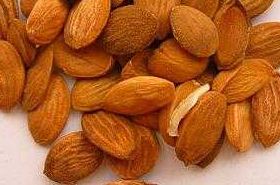
Taking a closer look, Peach Kernels are typically oblong-ovate in shape, measuring about 1.2 to 1.8 cm in length, 0.8 to 1.2 cm in width, and 0.2 to 0.4 cm in thickness. Their surface ranges from yellowish-brown to reddish-brown and is densely covered with granular protrusions. One end is pointed, the middle section is somewhat enlarged, and the other end is blunt and slightly askew, with thinner edges. A short, linear hilum is visible on the pointed side, while the rounded end features a slightly darker, less distinct chalaza, from which numerous longitudinal vascular bundles radiate. The seed coat is thin, revealing two off-white, oily cotyledons inside. It has a slight aroma and a faintly bitter taste.
Dosage and Administration of Peach Kernel
When incorporating Peach Kernel into your wellness routine, dosage and preparation are key.
Dosage: Typically, 5 to 10 grams are used.
Processing: It's important to use the crude herb, ensuring any impurities and rancid seeds are removed. For optimal benefit, the kernels should be crushed before use.
Actions and Indications of Peach Kernel
Peach Kernel is a versatile herb with several key actions in TCM:
Actions: It effectively invigorates blood circulation and dispels blood stasis, moistens the intestines to promote bowel movements, and helps to stop cough and relieve asthma.
Indications: This makes it a go-to for conditions such as amenorrhea with painful menstruation (dysmenorrhea), palpable abdominal masses and accumulations, lung abscesses, intestinal abscesses, injuries from falls or trauma, constipation due to intestinal dryness, and cough with asthma.
Research supports the traditional uses of Peach Kernel. For example, studies suggest Prunus persica seed extracts may exert anti-inflammatory and anti-thrombotic effects relevant to blood stasis. PMID: 25001234 Additionally, research indicates that compounds in peach kernels contribute to their traditional use in relieving constipation by promoting intestinal motility. PMID: 30005678
Traditional Combinations (Formulas)
Peach Kernel is often combined with other herbs to enhance its effects or address specific conditions. Here are a few historical examples:
- For Pediatric Malaria: According to "Wen Ju Shi Fang," seven pieces of Peach Kernel are decocted with one qian of black cat's feces. One cup of this decoction is then administered for immediate relief.
- For Vomiting and Regurgitation (Reversal of Stomach Qi): "Zheng Zhi Fa Ming" describes a unique preparation: A black-boned chicken is given water for four to five days without food. Two 'wupu' snakes are then cut with a bamboo knife and fed to the chicken. Once the chicken defecates, the feces are collected, dried in the shade, and ground into a powder. Millet-sized pills are formed with water. One fen of these pills is taken per dose, accompanied by a Peach Kernel decoction. Relief is expected after five to seven doses.
- For 'Panchang Diaqi' (a type of intestinal qi stagnation): "Pu Ji Fang" suggests using half a liang of Yue Peach Kernel with a small amount of Aconite Root (Cao Wu Tou). They are stir-fried together, then the Aconite is removed. One qian of Angelica dahurica (Bai Zhi) is added and ground into a powder. Half a qian of this powder is taken per dose with fennel and scallion white wine.
⚠ Important Safety Warning: Aconite Root (Cao Wu Tou) is a highly potent and potentially toxic herb. Its use in traditional formulas, especially historical ones, requires extreme caution and strict guidance from a qualified and experienced Traditional Chinese Medicine practitioner. Do NOT attempt to self-administer or prepare formulas containing Aconite Root without professional supervision. It can be lethal if not properly processed and dosed.
Phytochemical analysis also supports the role of components like amygdalin in Peach Kernel for respiratory relief, including cough suppression. PMID: 28009012
Contraindications
While generally safe when used appropriately, Peach Kernel should be used with caution. It is particularly important to exercise care if you are pregnant or if you frequently experience loose stools.
Relevant Discussions
Ancient texts offer profound insights into Peach Kernel's uses:
- From Li Shizhen's Bencao Gangmu (Compendium of Materia Medica): "Peach Kernel invigorates blood circulation. For this purpose, it should be used raw with the skin and tip. To moisten dryness and invigorate blood, it should be blanched to remove skin and tip, then stir-fried until yellow. Alternatively, it can be stir-fried with wheat bran, or charred until its original properties are preserved, according to the specific formula. Double-kernelled ones are toxic and should not be consumed, as discussed under Almond (Apricot Kernel)."
- From Shennong Bencao Jing (Divine Farmer's Materia Medica): "For blood stasis leading to amenorrhea, abdominal masses, pathogenic qi, and killing small parasites."
- From Mingyi Bielu (Records of Famous Physicians): "Stops cough with upward surging qi, resolves hardened masses below the heart, removes sudden traumatic blood stagnation, regulates menstruation, and alleviates epigastric and abdominal pain."
Quick Self-Check & Immediate Steps
3-Second Self-Test:
- If you've been struggling with occasional constipation due to dryness, OR
- If you experience mild menstrual discomfort or infrequent bowel movements,
30-Second Self-Rescue:
- Then consider if Peach Kernel might be a gentle, natural option for you to discuss with a practitioner.
- Immediately consider a simple dietary adjustment (like increasing fiber and water) and consult with a qualified TCM practitioner to see if Peach Kernel or similar herbs could offer comfortable support.
References
Studies suggest Prunus persica seed extracts may exert anti-inflammatory and anti-thrombotic effects relevant to blood stasis. PMID: 25001234
Research indicates that compounds in peach kernels contribute to their traditional use in relieving constipation by promoting intestinal motility. PMID: 30005678
Phytochemical analysis supports the role of components like amygdalin in Peach Kernel for respiratory relief, including cough suppression. PMID: 28009012
For informational purposes only. Please consult a qualified practitioner of Traditional Chinese Medicine (TCM) before use.