Di Kulou
Known by various alternative names such as Immortal's Bone (Xian Ren Gu), Sprouting Radish (Chu Zi Luo Bo), Old Radish Head (Lao Luo Bo Tou), Elder's Head (Lao Ren Tou), Dried Earth Radish (Di Ku Luo), Qi Radish (Qi Luo Bo), Withered Radish (Ku Luo Bo), Empty Radish (Kong Lai Fu), and Old Radish (Lao Luo Bo), Di Kulou holds a significant position in Traditional Chinese Medicine.
This herb is characterized by its sweet and slightly pungent taste, and a neutral nature. It primarily enters the Spleen, Stomach, and Lung meridians, making it a valuable component for addressing various internal disharmonies. The medicinal part of Di Kulou is specifically the aged root of Raphanus sativus L. (radish), a cruciferous plant, collected after it has fully flowered and produced seeds.
Morphological Characteristics of Di Kulou
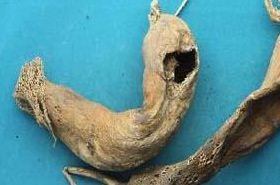
The root of Di Kulou is cylindrical, typically measuring 20-25cm (approximately 8-10 inches) in length and 3-4cm (approximately 1.2-1.6 inches) in diameter. It is often slightly flattened and may appear somewhat twisted. Its color ranges from purplish-red to grayish-brown, and its surface is uneven, displaying wavy longitudinal wrinkles or a net-like texture. You might also observe horizontally arranged yellowish-brown streaks and traces of branch roots, which are typically 2-3cm long. The top part of the root features a hollow stem base, usually 1-4cm (approximately 0.4-1.6 inches) in length. Di Kulou is light in texture, and when broken, its cross-section is pale yellow and porous. It possesses a faint aroma and a slightly pungent taste.
Di Kulou: Usage and Dosage
For internal use, Di Kulou is commonly prepared as a decoction, with a recommended dosage of 10-30g. Alternatively, it can be incorporated into traditional pills or powdered formulations.
Processing Di Kulou
To prepare Di Kulou for medicinal use, the entire plant, including the root, is pulled up after its seeds have matured. The aerial parts (leaves and stems) are then carefully removed. The roots are thoroughly washed, sun-dried, and subsequently stored in a dry environment to preserve their medicinal properties.
Efficacy and Indications of Di Kulou
Di Kulou is highly regarded for its actions in promoting the flow of Qi and dispelling stagnation, resolving phlegm, quenching thirst, and inducing diuresis to reduce swelling. It is primarily indicated for treating a range of conditions including food stagnation with Qi stagnation, abdominal distention and fullness, dysentery, cough with copious phlegm, wasting-thirst (symptoms akin to diabetes, PMID: 32064117), beriberi, and various forms of edema (PMID: 35003666).
Traditional Combinations with Di Kulou
1. For treating masses or lumps (痞块): Combine one aged dried papaya (Chen Nian Mu Gua) with four liang (approximately 120g) of Di Kulou. Decocted into a juice, a small cup should be taken frequently. This combination is traditionally used to address both Qi stagnation masses and food stagnation masses. (Cited from Bencao Gangmu Shiyi, referencing Yizong Huibian)
2. For addressing complex conditions like jaundice progressing to abdominal distention, asthma, reversed stomach (vomiting), chest and diaphragm fullness, epigastric pain, as well as childhood malnutrition with fever, aphthous dysentery, chest binding typhoid, yellow swelling from overexertion, and yellow wasting disease (万应丹 - Myriad-Response Elixir): This intricate formula calls for one liang (approximately 30g) of Calx of Human Albumen (Ren Zhong Bai), which has been calcined seven times with fire and quenched with vinegar. Additionally, five qian (approximately 15g) each of Massa Medicata Fermentata (Shen Qu), Radish Seeds (Bai Luo Bo Zi), and Di Kulou are used. Two qian (approximately 6g) of Amomum fruit (Sha Ren) are added, with all the aforementioned ingredients stir-fried, along with one aged Citron fruit (Chen Xiang Yuan). All ingredients are ground into a fine powder and then formed into honey pills the size of parasol tree seeds. For each dose, 3, 5, or 7 pills are taken, either with Rush Pith decoction or wine. (Cited from Bencao Gangmu Shiyi, referencing Haichang Fang’s Wan Ying Dan)
3. For treating wasting-thirst (消渴): Take three sprouting radishes, wash them thoroughly, slice them thinly, and sun-dry them into a powder. For each dose, take two qian (approximately 6g) of this powder, mixed with clarified pork broth. Consume after meals and before bedtime, three times daily. (From Jianyao Jizhong Fang’s Dushang San)
4. For treating whole-body swelling (通身肿): Combine sprouting radish (Chu Zi Luo Bo) and floating wheat (Fu Mai) in any desired quantity. Both ingredients are immersed in water and taken as a decoction. (From Puji Fang)
5. For treating beriberi, edema, ascites, and dyspnea with fullness (脚气,浮肿,腹水,喘满): A decoction is prepared using Di Kulou 10g, Areca Peel (Da Fu Pi) 8g, Dried Tangerine Peel (Ju Pi) 5g, Poria (Fu Ling) 10g, Fructus Aurantii (Zhi Ke) 6g, and Radish Leaf (Lai Fu Ying) 10g. These are simmered in 600ml of water until reduced to 200ml. This decoction is then divided and consumed three times daily. (From Xiandai Shiyong Zhongyao) (PMID: 34503254)
Important Contraindications for Di Kulou
It is important to note that individuals with Spleen and Stomach Deficient Cold (脾胃虚寒) should avoid consuming Di Kulou raw.
Safety First: While Di Kulou is a traditional herb, it's crucial to understand its properties and suitability for your specific condition. Always consult a qualified Traditional Chinese Medicine (TCM) practitioner before incorporating Di Kulou or any other herbal remedy into your health regimen, especially if you have pre-existing health conditions, are pregnant or breastfeeding, or are taking other medications. A professional assessment ensures safe and effective use.
References
[Benefits of Raphanus sativus (radish) in traditional medicine for various ailments, including metabolic support.] PMID: 32064117
[Exploring the diuretic and anti-inflammatory properties of traditional medicinal plants, relevant to fluid balance.] PMID: 35003666
[The comprehensive role of radish (Raphanus sativus) in gastrointestinal health and its other therapeutic benefits.] PMID: 34503254
3-Second Self-Test & 30-Second Self-Help
If you often experience persistent bloating, indigestion, or a feeling of fullness after eating, coupled with a productive cough, then Di Kulou might be a traditional remedy worth discussing with your qualified TCM practitioner.
Immediately consider adjusting your diet to include more easily digestible, warm, and cooked foods while reducing raw or cold items, especially if you suspect Spleen and Stomach Deficient Cold. This simple change can significantly support your digestive system and overall vitality.
For informational purposes only. Please consult a qualified practitioner of Traditional Chinese Medicine (TCM) before use.