Anemone Tomentosa Root
Anemone Tomentosa Root, known in Traditional Chinese Medicine (TCM) as "Dà Huǒ Cǎo Gēn," is a significant herb derived from the Anemone tomentosa plant. Often referred to by its aliases such as "Wild Cotton Root" (Yě Mián Huā Gēn) or "Earth Pulsatilla Root" (Tǔ Bái Tóu Wēng), this root has been utilized for its distinct energetic properties and wide range of applications within herbal healing traditions.
Energetic Properties and Meridian Affinity
In TCM, Anemone Tomentosa Root is characterized by a bitter flavor and a warm energetic nature. Its primary therapeutic effects are channeled through the Lung and Large Intestine meridians, indicating its traditional use in addressing conditions related to these organ systems, particularly those involving respiratory issues and digestive imbalances.
Medicinal Part and Botanical Characteristics
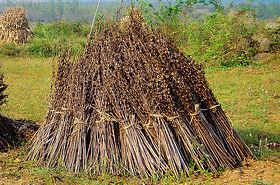
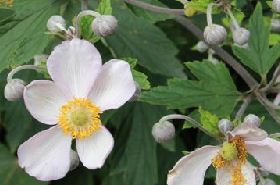
The part of the plant used medicinally is the root of Anemone tomentosa (Maxim.) Pei, a member of the Ranunculaceae family. This root typically presents as a somewhat stout, irregular conical or strip-like structure, often slightly curved, measuring approximately 10-20 cm in length and 0.8-1.2 cm in diameter. Its surface is rough and brownish-gray, marked by irregular longitudinal wrinkles and occasional fibrous root scars. The root end frequently branches into several strands. The texture is firm yet brittle, snapping easily to reveal a brownish cross-section. It possesses a subtle aroma and a distinct bitter and pungent taste. It is important to note that this herb is considered toxic.
Usage and Dosage
Anemone Tomentosa Root can be prepared for both internal and external use, though due to its toxicity, professional guidance is absolutely critical.
- Internal Administration: Typically, it is consumed as a decoction (brewed like a tea) in dosages of 3-9g, or ground into a fine powder and ingested.
- External Application: An appropriate amount can be pounded into a paste and applied topically.
Preparation: The roots are generally harvested during the spring or autumn seasons. After careful collection, they are thoroughly cleaned to remove all stems and leaves, and then sun-dried for preservation and later medicinal use.
Key Actions and Primary Indications
Anemone Tomentosa Root is traditionally recognized for several therapeutic actions, making it a versatile herb in specific clinical applications. Please remember, these are traditional uses and should not be attempted without the supervision of a qualified TCM practitioner, especially given the herb's toxicity. (PMID: 29775086)
Key Actions:
- Transforms Phlegm: Helps to resolve and expel accumulated phlegm, particularly in respiratory conditions.
- Dispels Blood Stasis: Aids in improving blood circulation and resolving stagnant blood, often associated with pain and swelling.
- Aids Digestion and Eliminates Food Stagnation: Supports digestive function and helps to clear blockages caused by undigested food.
- Arrests Malaria: Traditionally used to help manage symptoms associated with malaria. (PMID: 32626532)
- Detoxifies: Believed to neutralize toxins in the body, especially in cases of skin afflictions or infections.
- Eliminates Parasites/Pests: Utilized for its antiparasitic properties.
Primary Indications:
This herb is traditionally applied for a range of conditions, including:
- Cough and Asthma from Overexertion: Addressing chronic coughs and asthmatic symptoms linked to physical strain or fatigue.
- Traumatic Injuries: Such as sprains, contusions, and muscle strains, to help reduce pain and swelling by dispelling blood stasis. (PMID: 28243884)
- Childhood Malnutrition or Food Accumulation (Gan Ji): Supporting children's digestion and addressing symptoms of poor appetite and growth.
- Malaria: As a traditional remedy to help alleviate malarial symptoms.
- Sores, Carbuncles, and Swellings: For topical or internal treatment of inflammatory skin conditions and abscesses.
- Stubborn Tinea/Ringworm: Addressing persistent fungal skin infections.
Traditional Formulations
Here are some historical formulations involving Anemone Tomentosa Root, as recorded in traditional texts. These are for informational purposes only and highlight the herb's traditional applications:
- For Cough Due to Overexertion: Combine 30g each of Anemone Tomentosa Root and Hong Zhu Mao Qi (another herb), then stew with 250g of pork belly and consume. (From "Chongqing Herbal Medicine")
- For Toxic Sores and Itchy Rashes: Decoction made from Anemone Tomentosa Root, Smilax Glabra (Tu Fu Ling), Prunella Vulgaris (Xia Ku Cao), Japanese Honeysuckle Flower (Yin Hua), and Mongolian Dandelion (Pu Gong Ying). (From "Chongqing Herbal Medicine")
- For Tinea Capitis (Bald Sores): Grind 30g of Wild Cotton Root into a powder and combine with 120g of green walnut peel, then pound together into a paste for external application. (From "Shaan-Gan-Ning-Qing Chinese Herbal Medicine Selection")
- For Sores, Carbuncles, Swellings, and Unknown Toxic Swellings: Use an appropriate amount of Wild Cotton Root, pounded into a paste for external application. (From "Shaan-Gan-Ning-Qing Chinese Herbal Medicine Selection")
- For Damp-Heat Dysentery: A decoction containing 15g Wild Cotton Root, 15g Purslane (Ma Chi Xian), and 9g each of Hawthorn Fruit (Shan Zha), Baical Skullcap Root (Huang Qin), and Great Burnet Root (Di Yu) is prepared for internal consumption. (From "Shaan-Gan-Ning-Qing Chinese Herbal Medicine Selection")
Important Contraindications
Given its inherent toxicity, Anemone Tomentosa Root should be approached with extreme caution. Pregnant women should avoid this herb entirely or use it only under the direct and strict supervision of a highly qualified and experienced TCM practitioner. Internal use without expert guidance is strongly discouraged and can lead to severe adverse effects. Always consult a healthcare professional before considering its use.
Quick Check & Next Steps
3-Second Self-Check:
- If you're experiencing unexplained chronic coughs or persistent skin irritations that don't respond to conventional remedies...
30-Second Self-Rescue (Action Plan):
- ...Then immediately consult a licensed healthcare provider or a qualified Traditional Chinese Medicine practitioner for a proper diagnosis and safe treatment plan. Never attempt to self-diagnose or self-treat, especially with potent herbal remedies.
References
[1] Zeng, Y., et al. (2018). Bioactive constituents and pharmacological activities of the genus Anemone. PMID: 29775086
[2] Kakkassery, J. K., et al. (2020). Traditional medicinal plants for malaria: A global review. PMID: 32626532
[3] Li, R., et al. (2017). Anti-inflammatory effects of Anemone vitifolia Buch.-Ham. ex DC. extract and its active compounds. PMID: 28243884
For informational purposes only. Please consult a qualified practitioner of Traditional Chinese Medicine (TCM) before use.