Rehmannia
Other Names: Huai Rehmannia.
Nature and Flavor: Sweet, bitter, slightly cold.
Meridian Tropism: Enters the Heart, Liver, and Kidney Meridians.
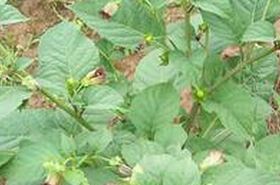
Part Used: The fresh or dried root tuber of Rehmannia glutinosa Libosch., a plant from the Scrophulariaceae family.
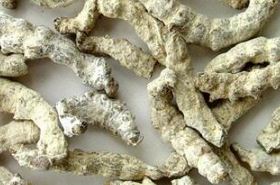
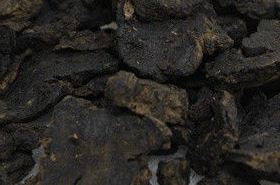
Morphological Characteristics: It appears as irregular clumps or elongated oval shapes, swollen in the middle and tapering slightly at both ends, typically 6-12 cm long and 3-6 cm in diameter. Some may be slender and strip-like, slightly flattened and twisted. The surface is gray-black or brownish-gray, deeply wrinkled, with irregular transverse wrinkles. It is heavy in weight and somewhat soft and pliable in texture. The cross-section is gray-black, brownish-black, or pitch-black, slightly lustrous, with a sticky texture. It has a faint aroma and a slightly sweet taste. The best quality roots are large, heavy, with a pitch-black, glossy cross-section and a sweet taste.
Usage and Dosage of Rehmannia
Internal Use: For decoction, use 10-15g, with larger doses up to 30g; it can also be prepared as a paste, or incorporated into pills and powders; alternatively, it can be soaked, pounded, and its juice extracted for drinking.
External Use: An appropriate amount, pounded and applied as a poultice.
Processing: Remove impurities, wash thoroughly, moisten, slice thickly, and dry.
Functions and Indications of Rehmannia
Functions: Nourishes Yin and clears heat, cools blood and tonifies blood.
Indications: Used for vexation and thirst in febrile diseases, internal heat-induced wasting-thirst (similar to diabetes symptoms), steaming bone fever (tidal fever), maculopapular eruptions in warm febrile diseases, vomiting blood, uterine bleeding, hematuria (blood in urine), and bloody stools caused by blood heat, pale-yellow complexion due to blood deficiency, dizziness and palpitations, and amenorrhea (absence of menstruation) due to blood deficiency.
Combinations of Rehmannia
1. For persistent bleeding after miscarriage: Take one Qian (approx. 3.7g) of Red Ochre powder, mix with half a bowl of fresh Rehmannia juice, and consume three to five times a day until symptoms resolve. (From Sheng Ji Lu)
2. For vomiting blood and epistaxis (nosebleeds): Take equal parts of Coptis chinensis (Hu Huang Lian) and Rehmannia (Sheng Di Huang), grind into a powder. Form into small pills the size of a wutong seed using pig bile juice. Take fifty pills with clear water (or straw flower decoction) at bedtime. (From Pu Ji Fang)
3. For dry mouth and agitated heart: Take five Liang (approx. 150g) of Prepared Rehmannia (Shu Di Huang), decoct with three bowls of water until one and a half bowls remain. Divide into three doses and consume within one day. (From Sheng Hui Fang)
4. For incessant vomiting blood: Take one Liang (approx. 37g) each of Turtle Shell (Bie Jia) and Clam Powder (Ha Fen) (stir-fried until yellowish), and one and a half Liang of Dried Prepared Rehmannia (Shu Di Huang). Grind into a fine powder. Take two Qian (approx. 7.4g) per dose after meals with tea. (From Sheng Ji Lu)
Contraindications of Rehmannia
Use with caution in individuals with Spleen deficiency leading to diarrhea, Stomach deficiency with reduced appetite, or excessive phlegm in the chest and diaphragm.
1. Leigong's Treatise on Preparation of Drugs: Do not allow Rehmannia to come into contact with copper or iron vessels, as this can lead to kidney wasting, premature graying of hair, and damage to Ying (nutritive) and Wei (defensive) Qi.
2. Compendium of Materia Medica: It combines well with Ophiopogon japonicus and clear wine. It is incompatible with Fritillaria and antagonistic to Wu Yi (Ailanthus altissima fruit).
3. Essentials of Materia Medica: Avoid consuming with radish, scallion whites, chive whites, and rakkyo (Chinese scallion whites).
4. Introduction to Medicine: Contraindicated for those with cold in the Middle Jiao (spleen/stomach area), abdominal fullness, and proneness to diarrhea.
Related Discussions on Rehmannia
1. Ben Cao Gang Mu (Compendium of Materia Medica): Raw Rehmannia (Sheng Di Huang) is used for blood heat in various meridians, nourishing Yin and reducing Yang. When made into honey pills, it treats consumptive fever in women. When decocted with honey, it treats high fever, vexation, thirst, and dullness in children. Prepared Rehmannia (Shu Di Huang) is used for consumptive fever due to blood deficiency, postpartum deficiency heat, and dry deficiency in the elderly. When powdered with raw Rehmannia and mixed with ginger juice paste, it treats consumptive fever in women.
2. Ben Jing Feng Yuan (Original Text of Materia Medica): Raw Rehmannia treats heart heat, heat in the palms, benefits kidney Yin, and cools heart blood. It is suitable for those with a strong, full pulse. If the pulse is deficient, prepared Rehmannia is more appropriate.
Quick Self-Check & Immediate Action
If... you frequently experience persistent thirst, a dry mouth, or feel unusually drained and light-headed, especially if your tongue appears pale or lacks moisture...
Then/Immediately... consider if your body might be signaling a need for deep nourishment and hydration. Immediately focus on increasing your intake of water and hydrating foods. While this isn't a substitute for professional advice, it's a 3-second check that points towards potential imbalances. For a 30-second self-help step, gently massage the inner ankles, a common area related to Kidney meridian points in TCM, which Rehmannia often targets for its nourishing properties. This simple act might help promote a sense of calm and well-being. Always consult with a qualified TCM practitioner to understand your specific constitution and whether herbs like Rehmannia are suitable for your health needs.
References
Rehmannia glutinosa exhibits various pharmacological effects, including anti-inflammatory, antioxidant, and immunomodulatory activities, which contribute to its traditional uses. PMID: 29775089
The components of Rehmannia glutinosa have been investigated for their beneficial impact on bone health, supporting its traditional application in conditions related to Yin deficiency. PMID: 28413627
Traditional Chinese Medicine (TCM) considers Rehmannia for its ability to clear heat and nourish Yin, which is relevant in managing various inflammatory diseases according to ancient texts and modern research. PMID: 30149021
For informational purposes only. Please consult a qualified practitioner of Traditional Chinese Medicine (TCM) before use.