Scrophularia
Other Names: Yuan Shen, Zhe Xuan Shen, Hei Shen, Chong Tai, Gui Zang, Zheng Ma, Lu Chang, Duan, Xuan Tai.
Flavor and Nature: Sweet, bitter, and salty; slightly cold.
Meridian Affinities: Enters the Spleen, Stomach, and Kidney meridians.
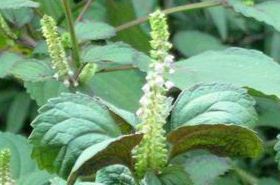
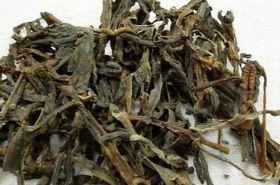
Medicinal Part: The root of Scrophularia ningpoensis (Xuan Shen) and Scrophularia buergeriana (Bei Xuan Shen) from the Scrophulariaceae family.
Dosage and Administration of Scrophularia
Internal Use: Decoct 9-15g; or incorporate into pills or powders.
External Use: Apply an appropriate amount, either pounded fresh or ground into a powder and mixed for topical application.
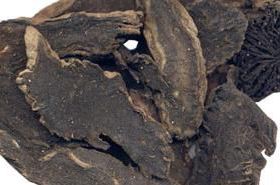
Preparation Method: Sort and clean impurities, remove the root crown, wash and thoroughly moisten, slice, then air-dry. Alternatively, wash and briefly soak, then steam thoroughly in a steamer basket. Remove and air-dry until 60-70% dry, then stew until uniformly black inside and out, slice, and finally air-dry.
Key Functions and Indications of Scrophularia
Key Functions: Clears heat and cools blood; nourishes Yin and reduces fire; detoxifies and disperses stagnation. PMID: 32675662
Indications: Warm-heat diseases affecting the nutritive and blood levels, body fever, intense thirst, crimson tongue, skin eruptions, steaming bone fever with chronic cough, restlessness and insomnia due to deficiency, constipation due to fluid depletion, dry and blurry vision, sore throat and swelling, scrofula and glandular swellings, carbuncles, furuncles, and toxic sores. PMID: 29871583
Contraindications for Scrophularia
Avoid use in individuals with dampness in the Spleen and Stomach, or Spleen deficiency with loose stools.
Classical Discussions on Scrophularia
1. From "Yi Xue Qi Yuan" (Medical Enlightenment): "Treats restlessness and agitation in the heart leading to insomnia, severe mental distress and near collapse, and blood stagnation causing difficult urination." PMID: 35306669
2. From "Ben Cao Gang Mu" (Compendium of Materia Medica): "When Kidney water is injured, true Yin is depleted, and isolated Yang lacks its root, leading to fire diseases, the method calls for strengthening water to subdue fire. Thus, Scrophularia shares similar functions with Rehmannia. Its ability to dispel scrofula is also a way to clear heat, as Liu Shou-zhen stated that nodules are often related to excessive heat."
3. From "Yao Pin Hua Yi" (Elaborations on Medicinal Products): "Dai Ren said that the Kidneys are fundamentally associated with coldness, but deficiency can lead to heat. For instance, excessive indulgence depletes vital essence, causing true Yin deficiency and upward-flaming deficient fire, for which Scrophularia nourishes Yin and suppresses fire. All instances of headaches, heat toxins, tinnitus, sore throat, throat obstruction, scrofula, Yang-toxicity in febrile diseases, and chest oppression are caused by rootless, floating fire. This herb has the effect of clearing heat from both the upper and lower body. When treating Kidney deficiency, there are significant distinctions: when the Kidney *Jing* (meridian) is deficient, manifesting as cold and dampness, warming tonics are suitable; when the Kidney *Zang* (organ) is deficient, manifesting as heat and dryness, cooling tonics are needed. Uniquely, Scrophularia cools, moistens, and nourishes the Kidneys, excelling over herbs like Anemarrhena and Phellodendron, truly a primary herb for Kidney health."
4. From "Ben Cao Zheng Yi" (Rectifying the Meaning of Materia Medica): "Scrophularia, possessing an intensely Yin nature, primarily treats heat-related conditions. Its bitter taste purges heat and promotes downward movement, thus effectively treating heat stagnation in internal organs. Its pungent and slightly salty taste allows it to directly enter the blood level to clear blood stagnation. It also circulates externally through the meridians to dispel heat-stagnation related carbuncles and swellings. It is cold but not excessively strong, moistening but not greasy. Its nature is similar to Anemarrhena, Phellodendron, and Raw Rehmannia, but it's gentler and has fewer potential drawbacks. Scrophularia, endowed with a Yin-cold nature, can resolve pathogenic heat, but it is not primarily a nourishing tonic. The 'Bie Lu' (Miscellaneous Records) claims of 'tonifying deficiency and benefiting vital essence' are already somewhat exaggerated, and 'Ri Hua Zi Ben Cao' (Ri Hua Zi's Materia Medica) even states it 'tonifies overstrain and general debility.' Jing Yue directly considers its sweet taste to nourish Yin, and Li Shi-zhen even equates its function to Rehmannia. Consequently, common practitioners use it for Yin deficiency with consumptive diseases. However, how can a rootless fire be directly quelled, leading to its rapid extinction? Even if its immediate harm isn't apparent, and the floating fire is suppressed, with symptoms like coughing perhaps showing slight improvement, uninformed individuals may attribute this to nourishing Yin and reducing fire, unaware that a sliver of vital Yang energy is gradually extinguished, making recovery difficult from that point. The harm caused by this excessively Yin and cooling approach is comparable to the indiscriminate use of Anemarrhena and Phellodendron; the term 'nourishing Yin' here can be misleading. It treats heat pathogens in the chest, diaphragm, Heart, and Lungs; clears heat stagnation in the Bladder, Liver, and Kidneys. It treats wind-heat sore throat, alleviates red eyes due to Liver Yang, stops spontaneous sweating and night sweats, and treats vomiting blood and nosebleeds."
5. From "Yi Xue Zhong Zhong Can Xi Lu" (Records of Traditional Chinese Medicine with Reference to Western Medicine): "Scrophularia, sweet and slightly bitter in taste, cool in nature, and rich in fluids, is originally an herb for clearing and nourishing the Kidney meridian. It can also enter the Lungs to clear blazing heat in the Lung system, detoxify, and resolve fire, making it highly suitable for Lung tuberculosis and Lung-heat cough. 'Shen Nong Ben Jing' (The Divine Farmer's Materia Medica) states that it treats postpartum and lactation ailments because of its cool but not cold nature, its excellent ability to nourish Yin, and its mild tonifying properties. Therefore, it is highly suitable for postpartum heat arising from blood deficiency, and postpartum febrile conditions where heat enters the Yangming channel. In my practice, for severe cases of postpartum external heat, I use White Tiger Decoction plus Ginseng, replacing Anemarrhena with Scrophularia. For milder cases, my self-formulated Nourish Yin and Clear Stomach Decoction (Scrophularia 2.5 liang, Angelica Sinensis 3 qian, Raw Hangzhou Peony 4 qian, Imperata Root 3 qian, Licorice 1.5 qian) can also achieve a cure. This is because postpartum women should avoid cooling herbs, yet when external heat pathogens are present, cooling herbs must be used to clear them. Only Gypsum and Scrophularia are explicitly mentioned in 'Shen Nong Ben Jing' for treating postpartum conditions, so I dare to use them boldly. However, Gypsum must be supplemented with Ginseng and should not be used in conjunction with Anemarrhena. Similarly, in the Nourish Yin and Clear Stomach Decoction, even with a heavy dose of Scrophularia, it must be assisted by Angelica and Peony from the Four-Substance Decoction. This is the principle of combining caution with boldness. 'Shen Nong Ben Jing' also states that Scrophularia can improve eyesight. This is because the Liver channel opens into the eyes, and Scrophularia can benefit water to nourish Liver Wood, thereby improving vision. Moreover, the ability of the eyes to see relies on the abundance of 'divine water' within the pupil, which is an external manifestation of Kidney essence. Using Scrophularia with Biota Seed and Goji Berry to treat blurry vision due to Liver and Kidney deficiency generating heat often yields quick results. Furthermore, after external febrile diseases have subsided, if the individual suffers from true Yin deficiency, a dry tongue with insufficient fluids, depletion of stomach fluids, a bitter taste in mouth, and poor appetite, I often use about two liang of Scrophularia with two to three qian of Codonopsis root. Several doses usually lead to recovery."
6. From "Bie Lu" (Miscellaneous Records): "Treats sudden apoplectic stroke, febrile disease with body heat, fullness and stiffness in the limbs, delirium, sudden loss of consciousness, warm malaria with intermittent chills, blood masses (Xue Jia), expelling cold blood, clears chest congestion, promotes urination, stops vexing thirst, disperses lumps below the neck, carbuncles, abdominal pain, and hard masses, calms the five Zang organs."
7. From "Yao Xing Lun" (Treatise on the Nature of Medicinals): "Effectively treats sudden intense heat, primarily treats wind-heat headaches, relapses of febrile disease due to overexertion, disperses tumors, goiter, and scrofula."
8. From "Ri Hua Zi Ben Cao" (Ri Hua Zi's Materia Medica): "Treats headaches due to wind-heat toxins, migratory rashes, tonifies deficiency and overstrain, alleviates palpitations, vexation, agitation, fatigue, steaming bone fever, pathogenic qi causing consumptive diseases, stops forgetfulness, and eliminates toxic swelling."
Quick Self-Check & Self-Care Tips:
If you often experience a dry throat, feel constantly thirsty, or have unexplained skin irritations, consider if your body might be signaling a need to clear heat or nourish Yin.
Immediately: Stay hydrated with cool, plain water. For throat discomfort, try a simple saline gargle. If symptoms persist or worsen, it's crucial to consult a qualified TCM practitioner or healthcare provider for personalized advice.
References:
[A comprehensive review of Scrophularia ningpoensis' traditional uses, phytochemistry, and pharmacology.] PMID: 32675662
[Research highlighting the anti-inflammatory and immunomodulatory activities of Scrophularia ningpoensis compounds.] PMID: 29871583
[A review on the pharmacological effects of Scrophularia ningpoensis, including its central nervous system and cardioprotective actions.] PMID: 35306669
For informational purposes only. Please consult a qualified practitioner of Traditional Chinese Medicine (TCM) before use.