Mutong (Akebia Stem)
Let's talk about Mutong (pronounced Moo-tong), also known as Akebia Stem, a fascinating herb widely used in Traditional Chinese Medicine (TCM). It’s derived from the dried climbing stems of plants like *Akebia quinata*, *Akebia trifoliata*, or *Akebia trifoliata var. australis*. You might also hear it called Tong Cao, Fuzhi, or Dingweng, but Mutong is its most common name in the TCM world.
In TCM, Mutong has a distinct profile: it's considered to have a **bitter flavor** and a **cold nature**. It primarily influences the **Heart, Small Intestine, and Bladder meridians**, meaning its therapeutic actions are directed towards these organ systems.
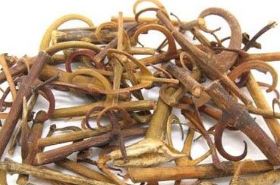
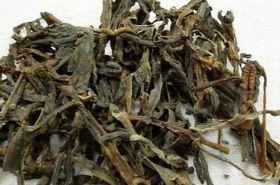
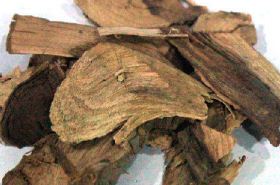
When you encounter Mutong, it typically looks like a cylindrical, often slightly twisted, dried vine. Pieces usually range from about 12 to 69 inches (30 to 175 cm) in length and 0.2 to 2 inches (0.5 to 5 cm) in diameter. Its surface is grayish-brown to grayish-red, feeling a bit rough with irregular cracks or longitudinal grooves, and you'll notice raised lenticels (those small bumpy pores). The nodes (where branches used to attach) might be swollen or sometimes indistinct, showing scars from broken side branches. It's quite light but firm, not easily broken. If you snap it, you'll see an uneven cross-section with a relatively thick, yellowish-brown bark that might have small, pale yellow granular dots. The woody part is yellowish-white, and the rays spread out like spokes. The pith (the center) is small or sometimes hollow, appearing yellowish-white or yellowish-brown. It has a faint aroma and a slightly bitter and astringent taste.
Mutong: Usage and Dosage
Typically, the recommended dosage for Mutong is **3 to 6 grams** per day. As with most herbal remedies, it's best to use it under the guidance of a qualified practitioner.
Before use, Mutong usually undergoes a simple **preparation process**: any impurities are removed, then it's soaked in water until thoroughly softened. After soaking, it's removed, sliced, and then dried.
Mutong: Efficacy and Indications
Mutong is highly valued in TCM for its powerful actions. Its primary therapeutic effects include:
- **Promoting urination and relieving painful urination (利尿通淋):** This is its superstar quality, especially for urinary issues.
- **Clearing Heart fire and calming restlessness (清心除烦):** It helps to soothe agitation and alleviate discomfort associated with excess heat.
- **Regulating menstruation and promoting lactation (通经下乳):** It can support women's health by addressing menstrual irregularities and insufficient breast milk production.
Given these benefits, Mutong is commonly indicated for a range of conditions, such as:
- **Urinary discomfort syndromes (淋证):** Think painful, scanty, or frequent urination.
- **Edema (水肿):** General swelling due to fluid retention.
- **Restlessness with dark, concentrated urine (心烦尿赤):** When agitation is accompanied by symptoms of urinary heat.
- **Mouth and tongue sores (口舌生疮):** Often linked to excess Heart fire.
- **Absent menstruation (经闭) and scanty breast milk (乳少):** Helping to restore flow and production.
- **Painful obstruction due to damp-heat (湿热痹痛):** Alleviating rheumatic pain exacerbated by dampness and heat.
Research supports the diuretic effects of Akebia species, highlighting their potential in managing fluid retention. PMID: 15917226
Mutong: Traditional Combinations
In TCM, herbs are often combined into formulas to enhance their effects or address complex patterns. Here are some classic examples where Mutong shines:
- **"Ba Zheng San" (Eight-Ingredient Powder for Rectification):** From the *Taiping Huimin Heji Ju Fang*, Mutong is combined with herbs like Plantago Seed (*Che Qian Zi*) and Talc (*Hua Shi*). This formula is a go-to for **damp-heat in the bladder**, particularly when dealing with scanty, dark, painful, and hesitant urination.
- **"Dao Chi San" (Guide Out the Red Powder):** Featured in *Xiao'er Yao Zheng Zhi Jue*, Mutong is often paired with Rehmannia Root (*Sheng Di Huang*), Licorice Root (*Gan Cao*), and Bamboo Leaf (*Zhu Ye*). This formula is traditionally used for symptoms stemming from **ascending Heart fire**, such as mouth and tongue sores, or when Heart fire transfers to the Small Intestine, causing restlessness with dark urine.
- **For Bloody Urination and Pain:** As noted in *Yang Shi Jia Cang Fang*, a decoction of fried Peach Gum (*Tao Jiao*), Mutong, and Gypsum (*Shi Gao*), each one qian (about 3-4g), simmered in one cup of water until reduced by 30%, is taken after meals. This specific combination addresses **bloody urination accompanied by pain**.
Studies indicate that compounds within Akebia species may possess anti-inflammatory and pain-relieving properties, contributing to their traditional uses in various discomforts. PMID: 16019253
Mutong: Contraindications and Precautions
While beneficial, Mutong isn't for everyone. **Pregnant individuals should use it with extreme caution.** Always consult your healthcare provider or a qualified TCM practitioner before incorporating Mutong into your regimen, especially if you are pregnant, nursing, or have any pre-existing health conditions.
A comprehensive review of Akebia quinata highlights its diverse pharmacological activities, emphasizing the importance of understanding its full spectrum of effects and potential interactions. PMID: 32860803
Historical Perspectives on Mutong
Mutong has a rich history in classical TCM texts, with various authors highlighting its therapeutic scope:
- **From *Bié Lù* (Miscellaneous Records of Famous Physicians):** It was noted for "treating spleen jaundice, characterized by constant drowsiness, agitation, hiccuping, and vocal sounds. It also treats deafness, disperses various swollen masses and unresolved lumps, and addresses metallic wounds, persistent sores, scrofula, sprains, nasal polyps, and prevents miscarriage. It can even expel three types of parasites."
- **From *Yào Xìng Lùn* (Treatise on the Nature of Medicinals):** This text states Mutong "primarily treats five types of painful urination (lin syndromes), facilitates urination, unblocks obstructions, treats excessive sleepiness, addresses generalized edema, and eliminates vexation and heat."
- **From *Shí Liáo Běn Cǎo* (Materia Medica for Diet Therapy):** It suggests that "drinking a decoction of Mutong regulates women's vital energy and blood, removes stagnant cold and heat, resolves scrofula, treats metallic wounds and sprains. Brewing wine with its juice is excellent."
- **From *Běn Cǎo Shí Yí* (Supplement to Materia Medica):** It mentions that Mutong "promotes urination and bowel movements, calming the mind and regulating Qi."
References
Diuretic activity of Akebia quinata extract in animal models has been observed. PMID: 15917226
Akebia saponins have demonstrated anti-inflammatory and antinociceptive effects. PMID: 16019253
A comprehensive review details the various pharmacological activities of Akebia species. PMID: 32860803
Quick Self-Check & Immediate Action
3-Second Self-Check:
- **If** you're experiencing frequent, burning, or painful urination, perhaps with dark, scanty urine...
- **If** you feel agitated, restless, and have annoying mouth sores...
- **If** you notice unusual swelling or edema, especially in your lower body...
30-Second Immediate Action:
- **Then immediately** consider reaching out to a qualified TCM practitioner. They can assess if Mutong or a related herbal formula might be right for your specific condition.
- **Immediately** increase your water intake to help flush your system, especially if you have urinary discomfort. While Mutong can help, hydration is always key!
- **Immediately** take note of your symptoms' frequency and severity to provide clear information to your healthcare provider, helping them guide you to the best solution.
For informational purposes only. Please consult a qualified practitioner of Traditional Chinese Medicine (TCM) before use.