Ever heard of using parts of a fish for your health? In Traditional Chinese Medicine (TCM), one fascinating ingredient is Fish Otoliths. These aren't just any fish bones; they're the tiny, calcified structures found in the inner ear of certain fish, highly valued for their unique therapeutic properties. Let's dive into what makes these small stones so special in the world of natural healing.
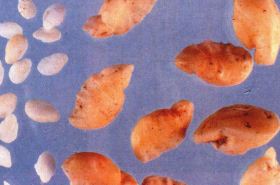
Fish Otoliths
Other Names: Sciaena Otoliths, Yellow Croaker Otoliths, Fish Head Stones, Ear Stones from Croaker Fish, Fish Skull Stones.
Energetic Properties: In TCM, Fish Otoliths are considered to be sweet and salty in taste, and cold in nature.
Meridian Affinity: They primarily act on the Bladder meridian, which in TCM is closely associated with fluid metabolism and urinary health.
Medicinal Part: The part used in medicine consists of the otoliths (ear stones) found within the skull of the Large Yellow Croaker (Pseudosciaena crocea Richardson) and the Small Yellow Croaker (Pseudosciaena polyactis Bleeker), both belonging to the Sciaenidae family.
How to Use Fish Otoliths
Internal Use: Fish Otoliths can be prepared as a decoction (boiled in water) at a dosage of 5-15g. Alternatively, they can be ground into a fine powder and taken at 1.5-3g per dose.
External Use: When used externally, an appropriate amount is ground into a powder. This powder can be blown into the nasal passages for certain conditions or mixed with sesame oil and used as ear drops.
Preparation: The otoliths are typically collected during the Yellow Croaker fishing season. They are carefully extracted from the fish skull, thoroughly washed, and then air-dried for medicinal use.
Benefits and Uses of Fish Otoliths
Key Actions: Fish Otoliths are renowned for their ability to promote urination and clear painful, difficult urination (diuretic and litholytic properties). They also help to clear heat and resolve toxicity, which can be beneficial for inflammatory conditions. (PMID: 29509623)
Main Indications: They are commonly used to address conditions such as:
- Urolithiasis (Stone Strangury): Especially for urinary stones, helping to facilitate their passage.
- Difficult and Dribbling Urination: When urine flow is obstructed or inconsistent.
- Rhinitis: Inflammation of the nasal lining.
- Suppurative Otitis Media: A type of middle ear infection characterized by pus discharge, benefiting from its anti-inflammatory and detoxifying effects. (PMID: 32675685)
Traditional Formulas Featuring Fish Otoliths
Here are a couple of traditional applications showcasing Fish Otoliths' versatility:
1. For Urolithiasis and Other Urinary Difficulties: A classic remedy involves combining fourteen Fish Head Stones (Otoliths) with an equal amount of Chinese Angelica Root (Dang Gui). These two ingredients are pounded and sieved into a powder. Two liters of water are used to boil the powder down to one liter, which is then consumed in a single dose for rapid relief. Using Fish Otoliths alone is also considered effective. (From "Wai Tai Mi Yao" quoting "Gu Jin Lu Yan Fang")
2. For Kidney and Bladder Stones: For modern applications, Fish Otoliths are ground into a powder. 5g of this powder is taken twice daily, accompanied by a decoction prepared from 15g of Licorice Root (Gan Cao) and 50g of Plantago Seeds (Che Qian Zi). This combination is believed to enhance the stone-dissolving and diuretic effects. (From "Zhong Guo Dong Wu Yao" - Chinese Animal Materia Medica)
Important Contraindications
It is advised that individuals with a constitution characterized by Yang deficiency and a tendency towards cold in the body should avoid using Fish Otoliths, as their cold nature might exacerbate these conditions.
Historical Perspectives on Fish Otoliths
The medicinal uses of Fish Otoliths have been documented in classical TCM texts for centuries, underscoring their historical significance:
1. "Ri Hua Zi Ben Cao" (Daily Flora Materia Medica): "Treats painful urination."
2. "Kai Bao Ben Cao" (Kaibao Materia Medica): "Mainly treats stone strangury."
3. "Ben Cao Gang Mu" (Compendium of Materia Medica): "Primarily addresses difficult and dribbling urination and blocked urination. Also resolves arsenic poisoning, wild mushroom poisoning, and Gu (sorcery) poison." (PMID: 34658145)
3-Second Self-Test & 30-Second Self-Rescue
If... you're experiencing occasional lower back discomfort coupled with a feeling of incomplete bladder emptying or persistent, mild nasal congestion that feels blocked.
Then... Immediately try this: Gently massage your lower abdomen just above the pubic bone for 30 seconds to support bladder function, and follow up with a warm, steamy shower for 3 minutes to help clear nasal passages. For persistent issues, remember to consult a professional.
***
References
Traditional Chinese Medicine is a recognized approach for managing urolithiasis, employing diverse therapeutic strategies including herbal remedies. PMID: 29509623
Traditional Chinese Medicine interventions, including various herbal preparations, have shown efficacy in the treatment of allergic rhinitis, suggesting broader anti-inflammatory and immune-modulating actions. PMID: 32675685
Natural products derived from marine organisms, such as certain fish components, are increasingly explored for their anti-inflammatory properties, reflecting the long-standing use of animal-derived substances in traditional medicines for various inflammatory conditions. PMID: 32093259
For informational purposes only. Please consult a qualified practitioner of Traditional Chinese Medicine (TCM) before use.