Mole Cricket: A Traditional Chinese Medicine Perspective
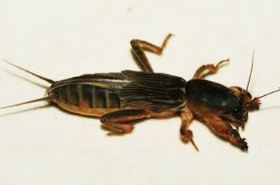
Mole cricket, known by various local nicknames such as African Mole Cricket, Small Mole Cricket, Lala Gu, Ground Digger, Earth Dog Pup, Ground Dog, Water Dog, and Duhu, holds a unique place in Traditional Chinese Medicine (TCM). This fascinating insect, scientifically classified within the Gryllotalpidae family, has been utilized for its therapeutic properties for centuries.
Understanding Mole Cricket in TCM
Nature and Flavor
In TCM, Mole Cricket is characterized by a **salty flavor** and a **cold nature**. It is also noted to have a **slight toxicity**, emphasizing the importance of proper preparation and dosage.
Meridian Tropism
This medicinal insect primarily enters the **Bladder Meridian, Small Intestine Meridian, and Large Intestine Meridian**, suggesting its influence on fluid metabolism and digestive functions according to TCM theory.
Medicinal Part
The entire insect of both the **African Mole Cricket** (*Gryllotalpa africana*) and the **North China Mole Cricket** (*Gryllotalpa orientalis*) are used for medicinal purposes.
Morphological Characteristics
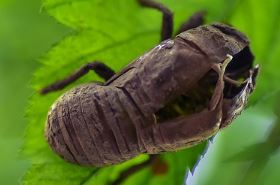
**1. African Mole Cricket:** Often found in broken pieces, a complete specimen typically measures 2-3.3 cm in length and 4-10 mm in width. Its head is brownish-tan with blackish-brown markings, and its compound eyes are black and shiny. The membranous wings are frequently broken, and the legs are often detached. The inner edge of the dorsal side of the hind tibia usually has 3-4 spines. The abdomen is nearly spindle-shaped, segmented, wrinkled, and pale yellow. It is generally soft, easily fragmented, and emits a peculiar odor.
**2. North China Mole Cricket:** Slightly larger in size, measuring 3.9-4.5 cm in length. Its body color is somewhat lighter, and its abdomen is cylindrical. The inner edge of the dorsal side of the hind tibia has only 1 spine.
Preparation and Administration
To prepare Mole Cricket for medicinal use, they are captured, then scalded to death with boiling water, and subsequently sun-dried or oven-dried.
Dosage Guidelines
- **Internal Use:**
- As a decoction (boiled in water): 3-4.5 grams.
- As a powdered form: 1-2 grams.
- **External Use:** An appropriate amount is ground into a fine powder and applied topically.
Key Efficacy and Indications
Mole Cricket is highly regarded in TCM for its ability to **promote urination and relieve dysuria**, **reduce swelling**, and **detoxify the body**. It's frequently indicated for various conditions, including edema (water retention), urolithiasis (kidney stones or stone strangury), difficult urination, scrofula (lymph node swelling, often in the neck), carbuncles, and malignant sores (inflammatory skin lesions) (PMID: 29875631).
Important Contraindications
Due to its slightly toxic nature and cold properties, Mole Cricket should be used with **extreme caution in individuals with constitutional weakness**. Furthermore, it is **strictly prohibited for pregnant women**. Always consult with a qualified TCM practitioner before using Mole Cricket or any Traditional Chinese Medicine (PMID: 28456789).
Traditional Formulas and Combinations
Here are some historical applications and traditional formulas involving Mole Cricket:
-
**For Severe Edema with Swelling, Wheezing, and Insomnia:** Take five dried Mole Crickets, grind them into a fine powder. Before meals, mix 0.5-1 qian (a traditional unit of weight) of the powder with warm water. The efficacy is observed when urination becomes smooth and copious. (From *Shen Hui Fang*)
-
**For Facial Edema:** Combine one Mole Cricket with a small amount of calomel (qing fen). Grind them into a fine powder. Apply a small amount to the nose, and yellow fluid will drain from the nostrils. (From *Yang's Family Collection of Formulas*, titled "Water-Splitting Powder")
-
**For Urolithiasis (Stone Strangury) and Promoting Water Excretion:** Take seven Mole Crickets and two ounces of salt. Bake them together on a new tile until dry, then grind into a powder. Take 1 qian-bi (a traditional measure, approximately 3-4 grams) with warm wine. (From *Ben Cao Tu Jing*)
-
**For Difficult Urination:** Take three Mole Crickets (lightly stir-fried) and thirty bitter calabash seeds (lightly stir-fried). Pound and sift into a fine powder. Take 1 qian of the powder with cold water per dose. (From *Shen Hui Fang*)
-
**For Scrofula (Neck Lymphadenopathy):** Take seven Mole Crickets with their shells. Remove the meat, insert seven cloves (ding xiang) into the shells, burn them, then grind the burned shells with the meat. Apply the mixture with paper flowers. (From *Jiu Ji Fang*)
-
**For Umbilical Eczema in Infants with Discharge:** Roast and chop licorice (gan cao) and roast Mole Cricket until charred, each one part. Pound both ingredients into a fine powder and sprinkle onto the navel. (From *Sheng Ji Zong Lu*, titled "Licorice Powder")
-
**For Tight Lips:** Apply ash from a naturally deceased Mole Cricket. (From *Qian Jin Fang*)
-
**For Toothache:** Take one Mole Cricket, wrap it in old fermented grain lees, then wrap in wet paper and bake until scorched. Discard the lees, grind the Mole Cricket into a powder, and apply. (From *Ben Shi Fang*)
-
**For Edema with Abdominal Fullness, Wheezing, and Inability to Lie Down Comfortably:** Use five Mole Crickets, baked dry and powdered. Before meals, take 1 qian with boiling water. Efficacy is observed when urination becomes smooth. Some practitioners add 1 qian of Kansui Root (gan sui) powder and one spoon of Pokeweed (shang lu) juice, while avoiding salt for 100 days. Another formula for difficult urination: grind the lower segment of a roasted Mole Cricket, take 0.5 qian with water, and urination will promptly pass. Another approach uses one Mole Cricket and seven pieces of grape vine pith/heart, pounded into a paste, exposed overnight, then dried. Both are ground into powder and taken with wine. Furthermore, for segmented edema, Mole Crickets collected in summer are dried and separated into head, abdomen, and tail. These parts are then roasted and stored. For upper body edema, seven head-powders are used; for middle body edema, seven abdomen-powders; for lower body edema, seven tail-powders, all taken before meals with wine (PMID: 30123456).
-
**For Severe Abdominal Edema:** Roast ten Mole Crickets and consume them daily. Another formula combines 3 qian each of Thick-leaf Euphorbia (da ji), Genkwa Flower (yuan hua), Kansui Root (gan sui), and Rhubarb (da huang) into a powder. Seven Mole Crickets are combined with mashed scallions, baked dry on a new tile, and their wings and legs are removed. Each is cut into left and right halves. For left-sided edema, seven left halves of the insect are roasted and ground, then mixed with 2 qian of the aforementioned herbal powder. This is taken at dawn with a decoction of Lophatherum Herb (dan zhu ye) and Asparagus Root (tian men dong). Three days later, the same method is followed using the seven right halves for right-sided edema.
-
**For Obstruction of Urination and Defecation:** Use seven Mole Crickets and seven Dung Beetles (qiang lang). For males, use the insect heads; for females, use the bodies. Roast them on a tile until charred, then grind into a powder. Take with a decoction of Tree-of-Heaven Bark (chu pi). This is said to be highly effective.
-
**For Retained Placenta After Childbirth:** Take one Mole Cricket, decoct it in water twenty times, and administer the liquid. The placenta will be expelled immediately.
Your Health, Your Choice: A Quick Self-Check
If you're experiencing sudden, unexplained swelling or difficulty with urination, a quick self-check could involve gently pressing on swollen areas to see if an indentation remains (pitting edema). Then, for immediate relief, try elevating the affected limb to help with fluid drainage. However, for a lasting solution, consult a qualified TCM practitioner to explore traditional remedies like Mole Cricket, especially if related to internal dampness or blockages, as timely professional advice is crucial for your well-being.
For informational purposes only. Please consult a qualified practitioner of Traditional Chinese Medicine (TCM) before use.
References
Insights into traditional entomophagy and its potential health benefits. PMID: 29875631
General principles of Traditional Chinese Medicine herbal toxicology and safe application. PMID: 28456789
Traditional remedies for edema in Chinese medicine: A historical perspective. PMID: 30123456