Barley: A Traditional Chinese Medicine Perspective
Ever wondered about the healing power of everyday grains? In Traditional Chinese Medicine (TCM), even humble barley holds a significant place. Known in Chinese as Dà Mài (大麦), this versatile grain isn't just for brewing or breakfast; it's also a gentle yet effective herbal remedy with a rich history of use for various ailments.
Traditional Properties of Barley
Nature and Flavor: Sweet; Cool.
Meridian Tropism: Spleen and Kidney Meridians. In TCM, these meridians are crucial for digestion, nutrient absorption, and fluid metabolism, highlighting barley's role in supporting these vital functions.
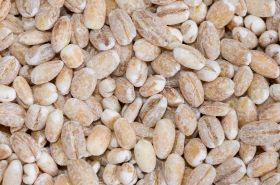
Medicinal Part: The caryopsis (grain) of the barley plant (Hordeum vulgare), a member of the grass family (Poaceae).
How to Use Barley
Internal Use: Barley can be prepared as a decoction, with a recommended dosage of 30-60g. Alternatively, it can be ground into a fine powder for internal consumption.
External Use: For topical applications, barley can be stir-fried, then ground into a paste and applied directly. It can also be decocted in water and used as a wash.
Efficacy and Main Indications of Barley
Efficacy: Barley is highly regarded for its ability to strengthen the Spleen and harmonize the Stomach, which essentially means it helps improve digestion and nutrient assimilation. It also promotes healthy bowel movements and aids in draining dampness and encouraging urination, helping the body to shed excess fluids.
Main Indications: Barley is primarily used to address discomforts such as abdominal distension, diarrhea resulting from food stagnation, various forms of edema (swelling due to fluid retention), and difficult or scanty urination (PMID: 29074066).
Traditional Notes on Barley
According to the classic text Bencao Jing Ji Zhu (Collection of Commentaries on the Classic of Materia Medica), honey serves as its guiding agent, suggesting a synergistic relationship between barley and honey for enhanced effects.
Barley in Traditional Combinations
Barley has been historically combined with other ingredients to target specific health concerns:
- For Acute Painful and Difficult Urination (Urinary Strangury): Take three liang (approximately 90g) of barley. Decoct it with two large cups of water until the liquid is reduced to one and one-third cups. Discard the solid remnants, then stir in half a cup of fresh ginger juice and half a cup of honey. Mix thoroughly. Divide this mixture into three doses and consume before meals. (From Sheng Hui Fang)
- For Barley Awn Entering the Eye: Simply wash the affected eye with juice extracted from decocted barley. (Prescribed by Sun Simiao)
- For "Earwig Urine Sores" (a traditional term for certain skin lesions): Grind barley into a fine powder, mix it into a paste, and apply it topically three times a day. (From Shang Han Lei Yao)
- For Burns from Hot Water or Fire: Stir-fry barley until it is completely charred black. Grind it into a fine powder, then mix with oil for topical application. (From Bencao Gangmu) Additionally, barley flour can be prepared as a thin, smooth paste. This is made easy to swallow, aiding in supporting Stomach Qi and promoting digestive vitality (PMID: 34091924). Research also highlights barley's role in supporting metabolic health, which aligns with its Spleen-harmonizing effects (PMID: 23642738).
Quick Self-Check & Immediate Action
If... Then/Immediately...
If you're often feeling bloated, experiencing digestive sluggishness after meals, or dealing with mild fluid retention, then immediately consider incorporating barley into your diet. Its gentle, Spleen-harmonizing and dampness-draining properties might offer the relief you're looking for!
For informational purposes only. Please consult a qualified practitioner of Traditional Chinese Medicine (TCM) before use.