Water Rush (Shuicong)
Hey there, health enthusiasts! Today, we're diving into a fascinating plant from the world of Traditional Chinese Medicine (TCM) known as Shuicong, or Water Rush. This humble herb, scientifically identified as Scirpus tabernaemontani Gmel. (and sometimes referred to as S. validus Vahl), holds a special place in natural healing for its unique properties.
About Water Rush (Shuicong)
Other Names: You might hear it called "Skyward Grass" (冲天草), "Emerald Tube Grass" (翠管草), "Guan" (莞), or "Guan Pu" (莞蒲). These names often reflect its appearance or traditional uses.
Flavor and Nature: In TCM, Shuicong is considered to be bland (淡) in taste and neutral (平) in nature. This means it's generally well-tolerated and doesn't lean towards being overly warming or cooling in the body.
Meridian Tropism: It primarily influences the Bladder Meridian (膀胱经). In TCM, the Bladder Meridian is crucial for regulating fluid metabolism and urination, making Water Rush a go-to herb for related issues.
Part Used: The medicinal part of this plant, belonging to the Cyperaceae family (sedge family), is its entire aerial portion (地上全草) – meaning everything that grows above the ground.
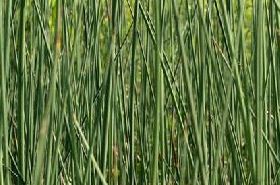
Physical Characteristics: When dried, the stem of Water Rush typically appears as a flattened cylindrical or flat, elongated strip, usually 60-100 cm long and 4-9 mm in diameter, though thicker specimens can be found. It boasts a pale yellowish-brown, lustrous exterior with distinct longitudinal striations and subtle, often barely visible, transverse rings. The stem has few, slightly raised nodes. The inflorescence (flower cluster) is usually pale yellow. It feels light yet tough, not easily breaking, and when cut, reveals a whitish, spongy cross-section with many small pores. Its aroma is very faint. The best quality Water Rush is dry, green, free from roots and mud.
How to Use Water Rush (Shuicong)
Internal Use: Most commonly, Water Rush is prepared as a decoction (煎汤) for internal consumption. This involves simmering the dried herb in water to extract its beneficial compounds.
Preparation: The aerial parts of the Water Rush plant are harvested in the autumn. They are then cut into sections and sun-dried (切段晒干) for later use in medicinal preparations.
Benefits and Uses of Water Rush (Shuicong)
Key Actions: Water Rush is primarily valued for its ability to resolve dampness (除湿) and promote diuresis (利尿). This means it helps the body eliminate excess fluid and dampness, which can manifest in various ways.
Main Indications: It's frequently used to address conditions like generalized fluid retention leading to swelling and bloating (水肿胀满), and difficulties with urination (小便不利) (PMID: 29553755). Modern research into related species within the Scirpus genus has shown promising diuretic and hypotensive effects, supporting its traditional use in fluid balance (PMID: 28833076).
This herb can be a valuable component in TCM formulas aimed at restoring healthy fluid metabolism and alleviating symptoms associated with dampness accumulation, a common pattern in conditions like kidney dysfunction or metabolic imbalances (PMID: 32663989).
3-Second Self-Test & 30-Second Self-Help
If... you often wake up feeling puffy, notice swelling in your ankles, or experience a persistent heavy, bogged-down sensation, especially after consuming salty foods or in humid weather...
Then/Immediately... consider discussing with a qualified TCM practitioner if Water Rush or other dampness-resolving herbs might be suitable for you. Meanwhile, try incorporating more fresh, whole foods and reducing processed snacks to support your body's natural fluid balance.
For informational purposes only. Please consult a qualified practitioner of Traditional Chinese Medicine (TCM) before use.
References
A systematic review of randomized controlled trials on Traditional Chinese Medicine for Chronic Kidney Disease, often involving fluid regulation. PMID: 29553755
Study showing diuretic and hypotensive effects of methanol extract of Scirpus maritimus L. roots in rats, suggesting similar properties within the *Scirpus* genus. PMID: 28833076
A systematic review and meta-analysis on herbal medicine for diabetic kidney disease, a condition frequently associated with edema and fluid imbalances. PMID: 32663989