Known in Traditional Chinese Medicine (TCM) as Konjac (Amorphophallus konjac K. Koch), this fascinating plant has a long history of use. Beyond its more common name, you might also hear it referred to by other aliases such as Konnyaku, Spotted Stem Arisaema, Spotted Stem Lotus, Hemp Taro Seed, or Flower Umbrella Handle.
Understanding Konjac's Nature in TCM
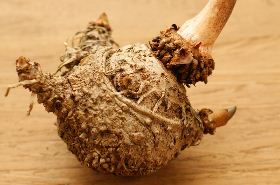
In TCM, Konjac is characterized by its pungent and bitter taste, possessing a cold nature. Crucially, it is also classified as toxic. The part of the plant primarily used in medicinal preparations is its spherical tuber (corm).
How Konjac is Traditionally Used
When it comes to preparation and dosage, safety and specific methods are paramount due to its inherent toxicity.
- Internal Use: For internal consumption, Konjac is typically decocted (boiled) in water. A recommended dosage is 9-15 grams, but it's critical to simmer it for an extended period, generally over two hours, to mitigate its toxic properties.
- External Use: For topical applications, an appropriate amount of the tuber is either pounded into a paste and applied as a poultice or ground and mixed with vinegar before application.
- Preparation (Pao Zhi): The raw material must be thoroughly cleaned to remove impurities, then moistened until soft. It is then sliced into thick pieces, dried, and sifted to remove any fine dust. This specific processing is vital for its safe use.
Traditional Functions and Indications
Konjac is highly valued in TCM for several key functions:
- Resolving Phlegm and Reducing Stagnation: It helps clear dampness and phlegm and breaks down accumulations within the body.
- Detoxifying and Dispelling Lumps: It is believed to neutralize toxins and help disperse various masses or nodules.
- Promoting Blood Circulation and Relieving Pain: Konjac can facilitate the movement of blood, which in turn helps alleviate pain.
Based on these functions, Konjac has been traditionally used to address a range of conditions, including:
- Phlegm-related coughs
- Food stagnation and digestive accumulations
- Malaria
- Scrofula (lymph node swelling) and abdominal masses or growths (Zheng Jia)
- Traumatic injuries (e.g., sprains, bruises)
- Skin conditions like carbuncles, boils, and erysipelas (Dan Du)
- Burns and scalds
- Snake bites
Important Safety Information and Contraindications
Given Konjac's toxic nature, adhering to safety guidelines is absolutely critical. **It should never be consumed raw.** Internal use must be strictly monitored and not exceed the recommended dosage. Improper consumption of raw or inadequately processed Konjac, or taking too much, can lead to severe poisoning symptoms, including a burning sensation, itching, and swelling of the tongue and throat.
Historical texts further emphasize these warnings:
- The *Kaibao Materia Medica* states, "Raw (konjac root) can cause bleeding from the human throat." This highlights the acute irritation and danger of unprocessed Konjac.
- The *Sanyuan Yanshou Shu* advises, "Individuals with a cold constitution should consume it sparingly." This refers to its cold nature in TCM, which might exacerbate symptoms in certain body types.
- The *Anhui Chinese Herbal Medicine* warns, "This product is toxic; external application should not be prolonged to avoid blistering. For internal use, do not exceed the dosage, and it should be decocted for 2-3 hours to reduce its toxicity." This reinforces the need for careful preparation and duration of use. **Always consult a qualified TCM practitioner or healthcare professional before considering Konjac for medicinal purposes, especially due to its potent nature and potential for toxicity if not prepared correctly.** (PMID: 34188544)
Historical Perspectives on Konjac
Across various classical texts, Konjac has been a subject of discussion and documentation:
*Bencao Tujing* (Illustrated Materia Medica): "In Jiangnan and Wuzhong, white Konnyaku, also known as 'Ghost Taro,' grows abundantly in low-lying, flat wetlands. Its roots resemble Arisaema. It is difficult to distinguish when harvested, and what is often collected in markets as Arisaema is actually Konjac. However, Arisaema has a fine texture, while its front stem has purple variegated flowers; Arisaema stems have no variegation and yellow flowers, which is the difference."
*Bencao Gangmu* (Compendium of Materia Medica): "To process Konnyaku, roots are harvested after autumn, thoroughly scrubbed, or pounded into pieces. These are then boiled for over ten times with strong lye water, then rinsed with water. This process is repeated by changing the water and boiling five or six more times until it forms a jelly. It can then be sliced and eaten soaked in bitter wine and other seasonings. Without lye water, it won't form. When cut into fine shreds, blanched in boiling water, and seasoned, it resembles jellyfish strands. Ma Zhi's claim that its seedling resembles Pinellia, and Yang Shen's *Dianqian Lu* stating that Konjac is the same as Konjias, are both incorrect. Zheng Hui's *Nong Shu* (Agricultural Book) states that for famine relief, mountainous areas have the benefits of kudzu powder, Konnyaku, and acorns, indicating that this plant is also beneficial to the people. Its variegated stem belongs to the Arisaema genus."
*Bencao Gangmu Shiyi* (Supplement to the Compendium of Materia Medica): "According to *Luofu Zhi*, Konjac grows in deep valleys, resembling a potato. Mountain people, upon finding it, cut it into four pieces, grind it into a paste in a sandy basin, then cook it into a gel in a pot. Once cool, it solidifies into a cake. This cake is then cut into four pieces, water is added, and it's cooked into a gel again. This process of cooking, solidifying, and re-cooking is repeated three to four times before it can be safely eaten to satiety. One tuber, once processed, can feed dozens of people, hence its name 'Ghost Taro.' This taro has four unusual characteristics: first, it initially grows without a discernible seedling, and morning dew falling from its leaves to the ground forms new seeds – this is one oddity; second, women and chickens/dogs must not see its harvesting and preparation, or it turns into water – this is the second; third, when grinding and cooking, the stirring spoon must always be rotated clockwise; stirring counter-clockwise will turn it into water – this is the third; fourth, one tuber grows into four, then sixteen, then sixty-four, like the numbers of a hexagram – this is the fourth oddity. It is heard that Mount Lu and Mount Heng also have 'Ghost Taro,' with different harvesting and processing methods." (PMID: 30048123)
References
Always seek professional guidance when using traditional remedies, especially for potent herbs like Konjac.
A comprehensive review of the safety of konjac glucomannan in food and health applications. PMID: 34188544
Amorphophallus konjac K. Koch: A review of its traditional uses, phytochemistry, pharmacology, and toxicology. PMID: 30048123
Influence of processing methods on the properties and applications of konjac glucomannan: A review. PMID: 36768789
Quick Check & Action Guide
3-Second Self-Test: Have you accidentally consumed raw Konjac, or experienced burning/itching/swelling in your mouth or throat after consuming any Konjac product?
30-Second Self-Rescue:
- If you suspect you've consumed raw Konjac or are experiencing any severe discomfort like burning, itching, or swelling in your mouth or throat, Then Immediately seek emergency medical attention.
- If you are considering using Konjac for a health condition, Then Immediately consult with a qualified Traditional Chinese Medicine practitioner to ensure proper diagnosis, preparation, and safe dosage. Do not self-medicate with this potent herb.
For informational purposes only. Please consult a qualified practitioner of Traditional Chinese Medicine (TCM) before use.