Caoguo
Known in Traditional Chinese Medicine (TCM) as Caoguo (草果), this potent herb is also referred to by its aliases: Caoguo Ren (Caoguo Seed), Caoguo Zi (Caoguo Fruit), or Lao Kou (Old Cardamom). It's a key ingredient valued for its distinct energetic properties and wide range of applications.

Flavor: Pungent. Nature: Warm. Meridian Tropism: Spleen and Stomach meridians. These channels are crucial in TCM for digestion and nutrient absorption.
Medicinal Part of Caoguo
The part of the plant used medicinally is the dried mature fruit.
Botanical Characteristics of Caoguo
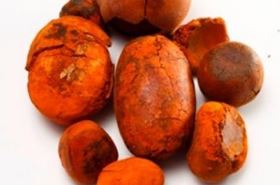
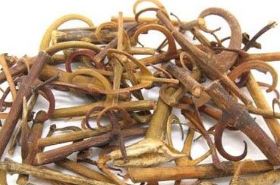
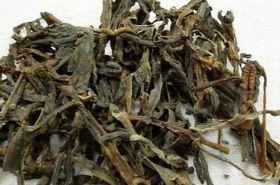
Caoguo fruits are typically oblong-ellipsoid, featuring three blunt ridges. They generally measure about 2-4 cm in length and 1-2.5 cm in diameter. The surface ranges from grayish-brown to reddish-brown, marked with longitudinal grooves and ridges. At the apex, there's a circular, raised stylar base, while the base may show a fruit stalk or its scar. The fruit peel is tough and firm, easily torn lengthwise. Upon peeling the outer skin, you'll find yellowish-brown partitions inside, dividing the seed mass into three segments, with each segment containing typically 8-11 seeds. The seeds themselves are cone-shaped polyhedrons, approximately 5 mm in diameter, with a reddish-brown surface covered by a grayish-white, membranous aril (false seed coat). A longitudinal groove marks the raphe, and the chalazal end has a concave hilum. The seeds are hard, with a grayish-white endosperm. Caoguo possesses a distinctive aromatic scent and tastes pungent with a slightly bitter undertone.
How to Use Caoguo: Dosage and Preparation
Recommended Dosage: 3-6 grams.
Preparation Methods:
- Caoguo Ren (Caoguo Seed/Kernel): Take the Caoguo fruit, stir-fry it until it turns yellowish-brown and slightly puffs up. Remove the outer shell and extract the kernel. Crush the kernels before use.
- Ginger-Prepared Caoguo Ren: Take clean Caoguo kernels and stir-fry them with ginger juice until thoroughly dried. Crush the kernels before use. This method is often employed to enhance its warming and digestive properties.
Functions and Therapeutic Actions of Caoguo
Key Functions: Dries dampness and warms the Middle Jiao (the central energy burner associated with the Spleen and Stomach), interrupts malarial cycles, and expels phlegm. Caoguo's ability to dry dampness and warm the digestive center makes it particularly effective for conditions rooted in cold and damp accumulation.
Main Indications: Caoguo is traditionally used for a range of conditions, including internal obstruction due to cold-dampness, abdominal distension and pain, epigastric fullness and discomfort often accompanied by vomiting, the characteristic alternating chills and fever of malaria, and various epidemic febrile diseases. Its powerful aromatic properties help to cut through dampness and clear stagnation, as supported by research into its traditional uses. PMID: 26508930
Traditional Formulas Featuring Caoguo
Caoguo is often incorporated into herbal formulas to enhance its therapeutic effects:
- For Alternating Chills and Fever with Phlegm-Dampness: This formula from Wei Sheng Jia Bao (Family Treasure for Health) combines 4 liang (approx. 120g) of Caoguo kernels, 2 liang (approx. 60g) of Licorice (Gancao), and 5 liang (approx. 150g) of Fresh Ginger (Shengjiang). These ingredients are finely chopped, soaked in water, and then decocted over a moderate heat until dry. The resulting mixture is baked, ground into a fine powder, and taken at a dosage of 1 qian (approx. 3g) with boiling salted water.
- For Treating Alternating Chills and Fever of Malaria: According to Ci You Xin Shu (New Book for Childcare), Caoguo is often used in combination with other anti-malarial herbs such as Changshan (Dichroa root), Zhīmǔ (Anemarrhena rhizome), and Bīnláng (Areca seed) to address the complex patterns of malarial fever. Studies have investigated the antimalarial activities of compounds found in Amomum tsaoko. PMID: 31448834
Contraindications for Caoguo
While generally safe when used appropriately, Caoguo should be used with caution in individuals diagnosed with Yin deficiency and Blood dryness. These patterns in TCM indicate a lack of nourishing fluids and often manifest as dryness, heat, or restlessness, which could be exacerbated by Caoguo's warm and drying nature. Always consult a qualified practitioner before incorporating new herbs into your regimen.
Classical Discourses on Caoguo
Across centuries, esteemed TCM texts have highlighted the therapeutic value of Caoguo:
- From Bencao Fengyuan (Collected Essentials of Materia Medica): "Caoguo treats illness by utilizing its pungent, hot, floating, and dispersing nature. It is capable of entering the Taiyin (Spleen) and Yangming (Stomach) meridians, expelling cold and drying dampness, alleviating stagnation and aiding digestion, clearing phlegm from above the diaphragm, and neutralizing various food-related toxins from flour, fish, and meat."
- From Bencao Jing Fengyuan (Commentary on the Classic of Materia Medica): "It dispels cold, dries dampness, alleviates stagnation, aids digestion, and clears phlegm from above the diaphragm." This emphasizes its core functions.
- From Bencao Zhengyi (Rectification of Materia Medica): "Caoguo is pungent, warm, intensely drying, and fiery. It excels at dispelling cold-dampness and warming and drying the Middle Jiao. Therefore, it is a primary herb for cold-dampness in the Spleen and Stomach." This highlights its specific efficacy for digestive complaints rooted in cold-dampness.
- From Bencao Qiuzhen (Seeking Truth in Materia Medica): "Caoguo and Caodoukou (Fructus Alpiniae Katsumadai) are described in various texts as having similar flavor and efficacy, both capable of warming the stomach and expelling cold. However, Caoguo's flavor and vital energy (qi) are particularly floating and dispersing; for those exposed to mountain mists, irregular qi, or malarial fevers, taking it directly addresses the ailment and proves effective." The unique dispersing quality of Caoguo makes it particularly suited for certain acute conditions. Understanding the characteristics of medicinal plants like Amomum tsaoko provides insights into their clinical application in TCM. PMID: 29330107
References
These references provide further scientific and traditional context for the uses and properties of Caoguo. * A review on the traditional uses and chemical constituents of Amomum tsaoko. PMID: 29330107 * Investigation into the antimalarial activity of compounds derived from Amomum tsaoko. PMID: 31448834 * Exploring Amomum tsaoko as a traditional Chinese medicine for gastrointestinal disorders. PMID: 26508930Quick Self-Check & Self-Help
If: You're experiencing a persistent feeling of abdominal fullness, bloating, or mild nausea, especially after consuming cold or raw foods, and generally feel sluggish or cold in your core... Then/Immediately: Try warming up your meals with spices like ginger or black pepper, and avoid iced drinks. For persistent or severe symptoms, it's crucial to consult a qualified Traditional Chinese Medicine (TCM) practitioner to properly diagnose your condition and determine if a warming and dampness-resolving herb like Caoguo is appropriate for your individual needs.
For informational purposes only. Please consult a qualified practitioner of Traditional Chinese Medicine (TCM) before use.