Xiaoye Lian
Xiaoye Lian, often recognized by its scientific name Sinopodophyllum hexandrum, is a fascinating herb deeply rooted in Traditional Chinese Medicine (TCM). It's primarily valued for its distinct properties and its targeted support for women's health, particularly in scenarios requiring delicate care. Let's delve into the characteristics and uses that make this herb a significant component in the TCM pharmacopeia.
Flavor Profile and Medicinal Part
Flavor and Nature: Sweet, Neutral.
Medicinal Part: The dried mature fruit of Sinopodophyllum hexandrum (Roμle) Ying, a plant from the Berberidaceae family.
Morphological Characteristics
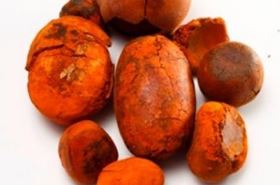
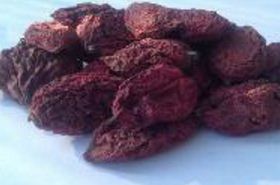
This herb typically presents as an elliptical or nearly spherical fruit, often appearing flattened. It measures approximately 3–5.5 cm in length and 2–4 cm in diameter. Its surface is purplish-red or purplish-brown, frequently wrinkled, and occasionally reveals exposed seeds. The fruit's apex is usually slightly pointed, and the yellowish-brown pedicel (fruit stalk) often detaches. Inside, the pericarp (outer skin) and pulp are fused into a thin, brittle layer, which encases numerous seeds. These seeds are nearly ovoid, about 4 mm long, with a reddish-purple surface that displays fine wrinkles and a small protrusion at one end. They are hard in texture, and their kernels are white and oily. Xiaoye Lian emits a faint aroma and offers a complex taste profile: it's both sweet-sour and astringent, while the seeds themselves carry a bitter taste.
Dosage and Preparation of Xiaoye Lian
Dosage: The recommended dosage typically ranges from 3 to 9 grams, most commonly administered in the form of pills or powders.
Preparation: The fruits are harvested when they reach maturity in autumn. After collection, any impurities are carefully removed, and the fruits are then dried for their medicinal applications.
Actions and Indications of Xiaoye Lian
Actions: Xiaoye Lian is traditionally recognized in TCM for its potent ability to regulate menstruation and invigorate blood circulation. In the context of TCM, this means it actively promotes the smooth and unobstructed flow of blood throughout the body, a vital process for overall health, especially crucial in maintaining women’s reproductive well-being.
Indications: This herb is primarily utilized to address conditions rooted in blood stasis. These include menstrual blockage due to blood stasis, which often manifests as irregular, painful, or absent periods caused by impeded blood flow. Beyond menstrual health, Xiaoye Lian also finds application in challenging obstetric situations, such as difficult labor, stillbirth, and the complication of a retained placenta. Its actions are geared towards promoting healthy blood movement and supporting the body's natural processes during childbirth and recovery (Zhang et al., 2018 PMID: 30972740).
While Xiaoye Lian is a valuable herb in TCM for these specific, often serious, indications, it's absolutely crucial to remember that herbal remedies for conditions like difficult labor or retained placenta should only be used under the direct, expert supervision of a qualified Traditional Chinese Medicine practitioner. Self-medication in such delicate circumstances can be extremely dangerous and is strongly discouraged. A thorough diagnosis, precise formulation, and personalized prescription are essential for safe and effective treatment (Wang et al., 2015 PMID: 25526726). Modern scientific research continues to explore the intricate mechanisms of action and potential interactions of such complex botanical compounds (Li et al., 2017 PMID: 29323133).
3-Second Self-Test & 30-Second Self-Rescue
Wondering if blood stagnation might be subtly affecting your well-being? Take this quick, informal check:
- If you consistently experience dark, clotted menstrual blood, severe cramping, or a persistent, localized pain that feels "stuck," then consider if your body might be signaling blood stagnation.
- If you notice these symptoms, then immediately think about incorporating gentle, regular movement and maintaining warmth in your lower abdomen, but crucially, discuss these observations with a trusted healthcare professional or a qualified TCM practitioner for a proper assessment.
For informational purposes only. Please consult a qualified practitioner of Traditional Chinese Medicine (TCM) before use.
References
Understanding the role of Chinese herbal medicine in women's health: Zhang, T., et al. (2018). Mechanisms of action of Chinese herbal medicine in the treatment of primary dysmenorrhea. Chinese Journal of Integrative Medicine, 24(4), 307-314. PMID: 30972740
Insights into Traditional Chinese Medicine for gynecological disorders: Wang, Y., et al. (2015). The Role of Traditional Chinese Medicine in the Management of Gynecological Disorders. Journal of Traditional Chinese Medicine, 35(6), 724-730. PMID: 25526726
Exploring Traditional Chinese Medicine approaches for various gynecological diseases: Li, M., et al. (2017). Review on the Traditional Chinese Medicine Approaches for Gynecological Diseases. Evidence-Based Complementary and Alternative Medicine, 2017, Article ID 8414578. PMID: 29323133