Wang Gua Root
Aliases: Tu Gua Gen (from Synopsis of the Golden Chamber), Rat's Pillow (from Guiyang Folk Herbal Medicine), Earth Pollen (from Mindong Materia Medica), Mountain Bitter Melon (from Selected Materials from the National Exhibition on New Therapies of Chinese Herbal Medicine).
Nature & Flavor: Bitter in taste, cold in nature.
Meridian Tropism: Enters the Large Intestine and Stomach meridians.
Medicinal Part: This herb consists of the root of Trichosanthes cucumeroides (Ser.) Maxim., a plant belonging to the Cucurbitaceae family and the Trichosanthes genus.
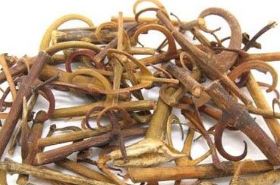
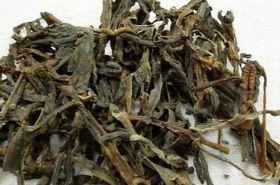
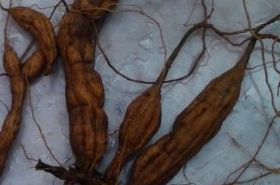
Botanical Characteristics: The root tuber is spindle-shaped, often found in clusters of 2 to 9, with a diameter of about 3cm. When cut, the cross-section appears clean white or yellowish-white and is starchy. It has a slightly bitter and astringent taste. The best quality roots are plump, white, fleshy, free of fibrous roots, and clean.
Wang Gua Root: Usage and Dosage
Internal Use: Typically prepared as a decoction, 5-15g for dried root, or 60-90g for fresh root; alternatively, it can be pounded into a juice for consumption.
External Use: An appropriate amount can be pounded and applied as a poultice, or ground into a paste and applied topically.
Preparation: The root is harvested between summer and autumn. It can be used fresh or sliced and sun-dried.
Wang Gua Root: Benefits and Indications
Therapeutic Actions: It clears heat, unblocks stagnation, dispels blood stasis, and reduces swelling.
Main Indications: Traditionally used for conditions such as thirst and restlessness in febrile diseases, jaundice, heat-bound constipation, difficult urination, amenorrhea (absence of menstruation), insufficient lactation, abdominal masses, carbuncles, and swellings.
Wang Gua Root: Herbal Combinations
1. For treating severe jaundice (black jaundice): Take one jin (approx. 500g) of fresh Tu Gua Gen, pound it to extract six ge (approx. 600ml) of juice, and drink it all at once. Yellow fluid should be expelled with urine. If not, repeat the dosage. (From Prescriptions of Universal Benefit (Sheng Hui Fang))
2. For treating vomiting with indigestion (reversed stomach Qi): Combine Wang Gua Root 6g, Cang Zhu (Black Atractylodes Rhizome) 6g, Chuan Po (Magnolia Bark) 6g, Chen Pi (Dried Tangerine Peel) 9g, and Gan Cao (Licorice Root) 3g. Decoction in water for oral administration. (From Qingdao Chinese Herbal Medicine Handbook)
3. For persistent thirst and restlessness in cold damage disease: Use one liang (approx. 30g) of Tu Gua Gen, one liang of Mai Men Dong (Ophiopogon Root, with core removed), half a liang of Gan Cao (Licorice Root, slightly roasted and chopped), and half a liang of Pi Pa Ye (Loquat Leaf, wiped clean of fuzz and slightly roasted until yellowish). Pound these ingredients into a coarse powder. For each dose, take four qian (approx. 12g), decoct with one medium cup of water until reduced to six fen (approx. 60% of original volume). Take warm, after straining, regardless of time. (From Tu Gua Gen Powder in Prescriptions of Universal Benefit (Sheng Hui Fang))
4. For vaginal discharge, difficult menstruation with lower abdominal fullness and pain, and menstruation occurring twice a month: Combine Tu Gua Gen, Shao Yao (Peony Root), Gui Zhi (Cinnamon Twig), and Zhe Chong (Ground Beetle) each in three fen (approx. 0.9g). Pound into a powder. Take one fang cun bi (approx. 2g) with wine, three times daily. (From Tu Gua Gen Powder in Synopsis of the Golden Chamber (Jin Gui Yao Lue))
5. For postpartum lack of breast milk: Use Tu Gua Gen and Lou Lu (Root of Campanulaceous Codonopsis) each three liang (approx. 90g), Gan Cao (Licorice Root) two liang (approx. 60g), and Tong Cao (Ricepaper Pith) four liang (approx. 120g). Decoction with eight sheng (approx. 2 liters) of water until reduced to two sheng (approx. 0.5 liters). Divide into three warm doses for consumption. (From Jing Xiao Chan Bao (Effective Postpartum Treasures))
Wang Gua Root: Precautions and Contraindications
Individuals with Spleen and Stomach Deficiency-Cold should exercise caution when using Wang Gua Root. It is specifically contraindicated during pregnancy due to its potential emetic effects. Dosage should not be exceeded as large amounts can induce vomiting.
Historical Perspectives on Wang Gua Root
1. The Divine Farmer's Materia Medica Classic (Shennong Ben Cao Jing) states: "It primarily treats diabetes with internal obstruction, amenorrhea due to blood stasis, alternating chills and fever with aching pain, boosts vital energy, and helps cure deafness."
2. Ming Yi Bie Lu (Supplement to the Materia Medica) records: "It treats various pathogenic heat accumulations, scrofula, disperses carbuncles, swellings, and retained blood, addresses irregular vaginal discharge in women, promotes lactation, stops frequent and uncontrolled urination, expels water from the bones and joints of the four limbs, and treats wounds caused by horse bones."
3. Xin Xiu Ben Cao (Newly Revised Materia Medica) notes: "It treats jaundice and breaks up blood stasis."
Quick Self-Assessment & What to Do Next
If... you are experiencing symptoms like persistent thirst with restlessness, unexplained yellowing of the skin, difficult bowel movements accompanied by a feeling of heat, or swelling and discomfort, Then... you might be experiencing conditions that Wang Gua Root traditionally addresses. Immediately... consider documenting your symptoms for a qualified Traditional Chinese Medicine (TCM) practitioner. While Wang Gua Root has historical uses, self-diagnosis and treatment are not recommended, especially given its specific contraindications and dosage warnings.
For informational purposes only. Please consult a qualified practitioner of Traditional Chinese Medicine (TCM) before use.
References
Traditional Chinese Medicine (TCM) offers comprehensive approaches for managing various conditions including heat-related disorders and digestive issues. PMID: 33790176
Research continues to explore the mechanisms of action for various herbal remedies in TCM, highlighting their potential in addressing inflammatory and stagnant conditions. PMID: 35161044
Classical texts of Traditional Chinese Medicine provide foundational knowledge on herbal properties and their therapeutic applications for a wide range of health concerns. PMID: 29875417