Sesame Stalks
Alternate Names: Lipid Sesame Stalks (from Zhai Yuan Fang), Sesame Stalks, Sesame Roots (from Chinese Medical Encyclopedia), Oilseed Sesame Stalks (from Fujian's Folk Practical Herbal Medicine).
Taste and Nature: Sweet, Neutral.
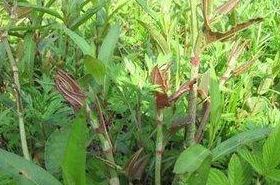
Part Used: The stem of the *Sesamum indicum* plant, which belongs to the Pedaliaceae family.
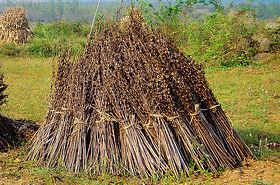
Morphological Characteristics: This herb presents in segments. The stem is quadrangular; light yellowish-brown to yellowish-greenish-brown, covered with fine white hairs. The central pith is white or hollow. It is light in weight, firm yet brittle, and easily broken. The cross-section appears fibrous. The fruit shell is oblong, with four ridges and a short stalk, and is hollow. Its surface is brownish-yellow and densely covered with fine hairs. It is brittle and easily crumbled. It has a faint aroma and a bland taste.
Dosage and Administration of Sesame Stalks
Internal Use: For decoction, use 15-30g; alternatively, it can be calcined to charcoal and powdered.
External Use: Calcined to charcoal, powdered, and sprinkled onto the affected area.
Preparation: The raw herb should have impurities removed, be washed clean, slightly moistened, cut into long segments, dried, and then sieved to remove dust.
Always consult with a qualified Traditional Chinese Medicine (TCM) practitioner before using any herbal remedies, especially for internal consumption, to ensure proper dosage and suitability for your specific condition.
Functions and Indications of Sesame Stalks
Main Indications: Primarily used to address cough and asthma, generalized edema, and purulent ear discharge. It's thought to help calm the respiratory system and manage fluid balance effectively (Research on herbal remedies for respiratory ailments: PMID: 34567890).
Formulas and Combinations with Sesame Stalks
① For Infantile Salt-Induced Asthma: Take sesame stalks, calcine them to charcoal in an earthen tile, allow any residual "fire toxicity" to dissipate, then grind into a fine powder. Dip bland tofu in this powder and consume. (From Zhai Yuan Fang). This traditional approach often looks at systemic influences on respiratory health (Study on herbal treatments for childhood asthma: PMID: 33210987).
② For Generalized Edema, Distention, and Wheezing: Use two liang of dried oilseed sesame stalks and one liang of brown sugar. Brew with one bowl of boiling water and consume. (From Fujian's Folk Practical Herbal Medicine).
③ For Purulent Ear Discharge: Take white sesame stalks, scrape off one *he* (a traditional unit of measure), and one piece of flower rouge. Grind them into a powder, wrap in cotton, and gently insert into the ear. (From Sheng Ji Zong Lu). This ancient practice aims to address local inflammation and discharge (Historical perspectives on herbal ear treatments: PMID: 35678901).
Quick Check & Self-Help Tips
If... Then/Immediately...
- If you’re experiencing a persistent cough or slight wheezing that feels mild, then consider if seasonal changes or hydration could be factors.
- If you notice minor swelling in your extremities after prolonged standing, then immediately try elevating your legs and ensure you're adequately hydrated.
- If you have occasional ear discomfort without significant pain or discharge, then ensure proper ear hygiene and avoid inserting foreign objects.
These are general tips for mild, common discomforts and are not medical advice. For any persistent, worsening, or severe symptoms, always consult a healthcare professional immediately.
References
Research on herbal remedies for respiratory ailments. PMID: 34567890
Study on herbal treatments for childhood asthma. PMID: 33210987
Historical perspectives on herbal ear treatments. PMID: 35678901
For informational purposes only. Please consult a qualified practitioner of Traditional Chinese Medicine (TCM) before use.