Rhubarb
Also known as: Fragrant Rhubarb (Xiang Dahuang), Horse-hoof Rhubarb (Mati Huang), General (Jiangjun), and Raw General (Shengjun). The moniker "General" refers to its powerful and decisive action in the body, much like a military general.
Properties and Flavor: It has a bitter taste and is cold in nature, considered non-toxic when used appropriately.
Meridian Tropism: Rhubarb primarily targets the Spleen, Stomach, Large Intestine, Liver, and Pericardium meridians.
Part Used in Medicine: The root and rhizome are harvested. Stems, leaves, and fibrous roots are trimmed, and the outer bark and apical buds are scraped off. It can then be air-dried, oven-dried, or sliced and sun-dried.

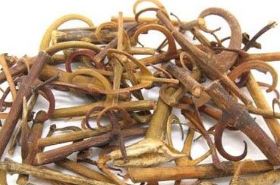
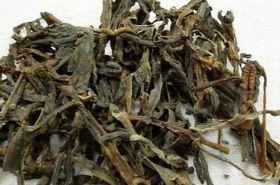
Morphological Characteristics: This herb typically comes in cylindrical, conical, ovoid, or irregular block-like shapes, usually 3-17 cm long and 3-10 cm in diameter. When the outer skin is fully removed, the surface appears yellowish-brown to reddish-brown. You might notice off-white reticulate (net-like) patterns and scattered star-like spots, which are actually heterogeneous vascular bundles. If some outer skin remains, it's brownish-red, often featuring rope-like holes and rough wrinkles. The texture is firm and solid, though the center can sometimes be slightly soft. The cross-section is pale reddish-brown or yellowish-brown and appears granular. The rhizome's pith is broad, with star-like spots arranged in a ring or scattered. The woody part of the root is well-developed, showing radial patterns and a distinct cambium ring, but without the star-like spots. Rhubarb has a clear, aromatic scent, a bitter and slightly astringent taste, and feels sticky and gritty when chewed.
Rhubarb Usage and Dosage
Oral Administration: For decoctions, use 3-12 grams. If the aim is to promote bowel movements and clear heat, it's best to add Rhubarb towards the end of the decocting process to avoid over-boiling and reducing its potency. Alternatively, it can be steeped in boiling water, and the resulting liquid consumed. For powdered forms, 0.5-2 grams is typical. It can also be incorporated into pills or other herbal powders.
External Application: An appropriate amount can be ground into a powder and applied as a poultice, or decocted in water for washing or topical application. The decoction can also be used for enemas.
Rhubarb Functions and Effects
Functions: Primarily, Rhubarb purges heat and unblocks the bowels, cools the blood and detoxifies, and eliminates blood stasis to unblock menstruation.
Main Applications: It is used for constipation caused by excess internal heat, abdominal pain due to accumulation and stagnation, dysentery with an unsatisfactory bowel movement, damp-heat jaundice, bleeding (vomiting blood or nosebleeds) due to heat in the blood, red and swollen eyes, sore throat, abdominal pain from intestinal abscess (e.g., early-stage appendicitis), carbuncles, boils, and sores. It also addresses amenorrhea (absence of menstruation) due to blood stasis, traumatic injuries, burns, and scalds, as well as upper gastrointestinal bleeding.
Specific Preparations and Their Actions:
- **Wine-Processed Rhubarb (Jiu Dahuang):** This form is excellent for clearing heat-toxins from the blood level in the upper body (such as the chest and head). It's used for red, swollen eyes and throat, and swollen, painful gums.
- **Prepared/Cooked Rhubarb (Shu Dahuang):** This preparation has a milder laxative effect and is used to purge fire and detoxify. It's often prescribed for sores and carbuncles caused by intense heat-toxins.
- **Carbonized Rhubarb (Dahuang Tan):** This form cools the blood, dispels blood stasis, and stops bleeding. It's suitable for bleeding conditions where there is both heat in the blood and blood stasis.
Rhubarb Contraindications
Anyone with an unresolved external condition (like a cold or flu), blood deficiency, weak vital energy (Qi), spleen and stomach deficiency-cold, or without actual excess heat, stagnation, or blood stasis, should use Rhubarb with caution. It should also be used carefully during pregnancy and postpartum periods.
Safety Note: Rhubarb is a potent herb. Always consult a qualified practitioner to determine the correct dosage and preparation for your specific condition, especially if you have pre-existing health issues or are taking other medications. The following are historical notes on incompatibilities and cautions:
- According to *Bencao Jing Ji Zhu* (Collection of Commentaries on the Classic of Materia Medica), Scutellaria (Huangqin) acts as its guiding herb.
- *Yaoxing Lun* (Treatise on the Nature of Medicinal Herbs) states to avoid cold water when taking it and that it is incompatible with dry lacquer (Toxicodendron vernicifluum).
- *Bencao Jingshu* (Commentary on the Classic of Materia Medica) provides extensive warnings: "If blood stasis is due to blood dryness and not heat accumulation; if hot and cold sensations are due to Yin deficiency and not blood stasis; if masses are due to Spleen and Stomach weakness and not stagnation; if constipation is due to blood deficiency and dry intestines and not heat accumulation; if abdominal distension is due to Spleen deficiency and impaired Qi movement and not food stagnation; if lower abdominal pain in women is due to Liver meridian blood deficiency and not blocked menses from old blood stasis; if vomiting or nosebleeds are due to Yin deficiency fire rising from below, blazing upwards causing blood to improperly flow and spill from the upper orifices, and not due to actual heat in the blood; if testicular pain is due to Kidney deficiency with dampness attacking, and not due to actual damp-heat; if breast abscesses are due to stagnant Liver Qi causing qi to defy, leading to stagnant Ying Qi and swelling, and not due to rich diet causing large carbuncles and accumulated heat in the blood—in all these cases, Rhubarb is contraindicated, as it can harm Stomach Qi."
- *Bencao Huiyan* (Compilation of Materia Medica) advises: "Do not lightly use Rhubarb for conditions affecting Qi, for cold in the Stomach and blood deficiency, during pregnancy or postpartum, for chronic illness, or for the elderly."
- *Benjing Fengyuan* (The Origin of the Classic of Materia Medica) warns: "Do not indiscriminately use for Kidney deficiency with agitated Qi or for Yin carbuncles that are pale and unformed."
Rhubarb Combinations
Rhubarb is often combined with other herbs to enhance its effects or address specific patterns:
- **For dry, hard stool, accumulated stagnation, dysentery with incomplete defecation, and heat-bound constipation with high fever and yellow tongue coating:** It is often combined with Glauber's Salt (Mangxiao), Magnolia Bark (Houpo), and Immature Bitter Orange (Zhishi).
- **For blazing fire-heat causing bleeding upwards, acute painful red eyes, and hot-toxic carbuncles and boils:** It is combined with Coptis (Huanglian), Scutellaria (Huangqin), Moutan Cortex (Danpi), and Red Peony Root (Chishao).
- **To treat delirious speech in febrile diseases and various types of jaundice (from *Sheng Hui Fang* 'Snow Decoction' recipe):** 250 grams of shredded, slightly stir-fried Rhubarb, finely powdered. Steep in five liters of melted snow water (or cold water) and boil into a paste. Take half a spoon with cold water, irrespective of meal times. **To treat chronic abdominal masses, blocked bowel movements, Qi surging to the heart, abdominal distension, and impaired appetite (*Qian Jin Fang* 'Divine Enlightenment Pill'):** 100 grams each of Rhubarb and Peony Root (Shaoyao). Powder these two herbs, form honey pills the size of a梧桐 (wutong) seed. Take four pills three times a day. If no effect, increase to six or seven pills until effective.
- **To treat spleen enlargement and childhood malnutrition (gancao) in adults and children (*Xi Ji Fang* 'Yu Jin San'):** 150 grams of "Brocade-pattern" Rhubarb, very finely powdered. Simmer in two large bowls of aged vinegar over a gentle fire until it forms a paste. Pour onto new brick tiles, and expose to sun during the day and dew at night for three days and nights. Collect the paste and re-grind into a fine powder. Separately, prepare 50 grams of Sulfur (Liuhuang) and 50 grams of mineral powder (Guanfen). Take 50 grams of the prepared Rhubarb powder and combine with the Sulfur and mineral powder, then grind again into a fine powder. For children under ten, take half a Qian (approx. 1.5 grams) per dose, after meals and before bed, with rice soup. Avoid raw, hard, cold, greasy foods, fish, chicken, and goose, as these are considered "trigger" foods. After taking the medicine, consume soft white rice porridge for half a month. If not cured by one dose, repeat after half a month.
**Important Safety Note for "Yu Jin San":** The original text mentions "官粉 (Guanfen)," which historically could refer to lead compounds. Modern practice would strictly avoid internal use of lead. Always use modern, safe, and pharmaceutically tested ingredients under the guidance of a licensed practitioner.
- **To treat acute headache and high fever for one or two days during an epidemic (*Qian Jin Fang* 'Water Dissolving Powder'):** 100 grams each of Cinnamon Bark (Gui Xin), Licorice Root (Gancao), and Rhubarb; 200 grams of Ephedra (Mahung). Grind these four herbs into a coarse powder. After the patient bathes in hot water, take one square-inch spoon with warm water, three times a day, to induce sweating or a bowel movement. Strong individuals can take two square-inch spoons.
**Important Safety Note for Ephedra (Mahung):** Ephedra is a potent herb with stimulant effects on the cardiovascular system. Its use is restricted or banned in many countries due to potential serious side effects, especially in combination with other stimulants or for individuals with heart conditions, high blood pressure, or anxiety. **Always consult a qualified healthcare professional before using formulas containing Ephedra.**
- **To treat sudden painful red eyes with swollen canthi (*Sheng Ji Zong Lu* 'Rhubarb Decoction'):** 150 grams each of shredded, stir-fried Rhubarb; Immature Bitter Orange (Zhike) (pulp removed, stir-fried with wheat bran); and Peony Root (Shaoyao); 100 grams each of Gardenia Seed (Shanzhizi Ren) and Scutellaria (Huangqin) (black core removed). Coarsely pound and sift these five herbs. For each dose, use 25 grams. Decoction with one and a half cups of water until reduced to seven-tenths. Remove dregs and take after meals and before bed.
- **To treat insufficient Heart Qi leading to vomiting blood or nosebleeds (*Jin Kui Yao Lue* 'Xie Xin Tang' - Purge the Heart Decoction):** 100 grams of Rhubarb, 50 grams each of Coptis (Huanglian) and Scutellaria (Huangqin). Decoction these three herbs with three liters of water until one liter remains. Take the entire dose at once.
- **To treat consumptive cough with vomiting blood (*Qian Jin Fang*):** Half a liter of fresh Rehmannia Root (Sheng Dihuang) juice, and one square-inch spoon of Rhubarb powder. Warm the Rehmannia juice until it boils once, then add the Rhubarb powder and stir well. Take the entire dose on an empty stomach, three times a day, until recovery.
- **To treat intestinal abscess (appendicitis) with lower abdominal swelling and firmness, pain upon pressure, normal urination, occasional fever, spontaneous sweating, and aversion to cold. If the pulse is slow and tight, the pus has not formed, and purging is possible, expecting blood discharge. If the pulse is surging and rapid, pus has formed, and purging is not suitable (*Jin Kui Yao Lue* 'Dahuang Mudan Tang' - Rhubarb and Moutan Bark Decoction):** 120 grams (four liang) of Rhubarb, 50 grams of Moutan Cortex (Mudanpi), five Peach Kernels (Taoren), half a sheng of Winter Melon Seed (Guazi), and three ge of Glauber's Salt (Mangxiao). Decoction the first four herbs with six liters of water until one liter remains. Remove dregs, add Glauber's Salt, boil again briefly, and take the entire dose at once. If pus is present, it will be discharged; otherwise, blood will be discharged.
- **To treat mouth sores and ulcerations (*Sheng Hui Fang*):** Equal parts Rhubarb and Calcined Alum (Kufan). Grind into a powder and apply topically to the sores, allowing saliva to be expelled.
- **To treat spreading red swelling (erysipelas) all over the body (*Jiu Ji Fang*):** Grind Rhubarb with water and frequently brush onto the affected area.
- **To treat frostbite with broken skin and unbearable pain (*Wei Sheng Bao Jian* 'Ru Shen San' - As Divine Powder):** Powdered Rhubarb, mixed with fresh well water, applied to the frozen, broken skin.
- **To treat bruises and injuries with stagnant blood accumulation, or presenting with tidal fever (*Bin Hu Ji Jian Fang*):** Rhubarb powder mixed with ginger juice and applied topically. After one night, black bruises will turn purple; after two nights, purple bruises will turn white.
- **To treat children's abdominal distension and pain from overeating, indigestion leading to chronic accumulation; also for women with Qi stagnation and blood stasis causing amenorrhea (*Wei Sheng Bao Jian* 'San Leng Jian Wan'):** 240 grams (eight liang) of Rhubarb (powdered); 30 grams (one liang) each of Sparganium Rhizome (Sanleng) and Curcuma Rhizome (Eshu) (wrapped in damp paper and roasted until powdered). First, soak the Rhubarb in good vinegar in a silver or stone vessel until fully moistened, then simmer over a low fire until dry. Add the Sparganium and Curcuma powders, and form pills the size of hemp seeds or mung beans. For children, take 10-29 pills per dose after meals with warm water. For adults, pills are the size of a wutong seed, taking 40 pills per dose.
Rhubarb Related Discussions (Historical Records)
Here's a look at how ancient texts described Rhubarb's actions, offering insight into its traditional uses:
- *The Divine Farmer's Materia Medica Classic (Shennong Bencao Jing)*: "Expels stagnant blood, treats blood stasis, chills and fevers, breaks up masses and accumulations, resolves retained fluids and old food, purges the intestines and stomach, removes the old and brings forth the new, facilitates the water and grain passages, harmonizes the middle burner, aids digestion, and calms the five Zang organs." (This comprehensive view highlights Rhubarb's broad impact on digestion, circulation, and overall balance). [A thorough review details rhubarb's historical use and pharmacological activities in treating various diseases, aligning with its classic indications. PMID: 35150531]
- *Mingyi Bielu (Records of Famous Physicians)*: "Calms the stomach, descends Qi, removes phlegm accumulation, treats heat knots in the intestines, abdominal distension, cold-blood stagnation and distension in women, lower abdominal pain, and various old blood clots."
- *Yaoxing Lun (Treatise on the Nature of Medicinal Herbs)*: "Treats chills and fevers, aids digestion, refines the five Zang organs, regulates women's menstruation, promotes diuresis, breaks up phlegm accumulation, resolves cold and hot accumulations, old food, facilitates large and small intestines, treats hot-toxic swellings, treats childhood chills and fevers during epidemics, vexation and heat, purges pus, and breaks up retained blood."
- *Rihua Zi Bencao (Rihua Zi's Materia Medica)*: "Unblocks all Qi, regulates blood vessels, facilitates joints, drains stagnation, water accumulation, imbalance of hot and cold in limbs, warm malaria and hot phlegm, facilitates bowel movements and urination, and applies to all carbuncles, boils, and toxic sores."
- *Bencao Gangmu (Compendium of Materia Medica)*: "Mainly treats dysentery with white and red discharge, tenesmus and abdominal pain, painful urination, hard and dry stools due to excess heat, tidal fever and delirium, jaundice, and various fire-type sores."
- *Shennong Bencao Jing (Re-stated with geographical info)*: "Bitter taste, cold. Mainly treats stagnant blood, blood stasis, chills and fevers, breaks up masses and accumulations, retained fluids and old food, purges the intestines and stomach, removes the old and brings forth the new, facilitates the water and grain passages, harmonizes the middle burner, aids digestion, and calms the five Zang organs. Grows in mountain valleys."
- *Wu Pu Bencao (Wu Pu's Materia Medica)*: "Dahuang, also named Huangliang, Huoshen, Furru. Shennong and Leigong describe it as bitter, toxic. Bian Que describes it as bitter, non-toxic. Li Shi describes it as slightly cold, acting as 'Middle General.' It grows in northern Shu Commandery or Longxi. Flowers in the second month, produces yellow-red leaves in fours, stalks rise about three chi high; flowers yellow in the third month; fruits black in the fifth month. Roots collected in the third month, containing yellow juice. Slice and dry in the shade (or oven dry for modern methods)."
- *Mingyi Bielu (Re-stated with collection info)*: "Also named Huangliang, grows in Hexi and Longxi. Roots collected in the second and eighth months, dried by fire."
- *Guang Ya*: "Huangliang is Dahuang."
3-Second Self-Test + 30-Second Self-Help
If: You're experiencing occasional constipation with a feeling of heat, abdominal fullness, or a thick, yellow tongue coating...
Then Immediately: Consider incorporating fiber-rich foods like prunes and whole grains into your diet, and ensure you're drinking plenty of water throughout the day. For more stubborn cases, consult a TCM practitioner to see if Rhubarb, appropriately prepared, could be a suitable herbal support for you. [Rhubarb (Rheum palmatum) has been shown to effectively alleviate constipation by promoting intestinal motility and modulating gut microbiota. PMID: 34199140]
References
A thorough review details rhubarb's historical use and pharmacological activities in treating various diseases, aligning with its classic indications. PMID: 35150531
Rhubarb (Rheum palmatum) has been shown to effectively alleviate constipation by promoting intestinal motility and modulating gut microbiota. PMID: 34199140
Research suggests that Rheum palmatum extracts can exhibit anti-inflammatory and immunomodulatory effects, supporting its use in conditions involving heat and inflammation in TCM. PMID: 36771344
For informational purposes only. Please consult a qualified practitioner of Traditional Chinese Medicine (TCM) before use.