Phyllanthus Urinaria (Pearl Grass)
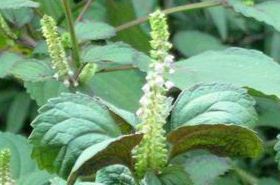
Known in Traditional Chinese Medicine (TCM) as 珍珠草 (Zhēn Zhū Cǎo), Phyllanthus Urinaria is a remarkable herb celebrated for its diverse healing properties. This small plant, often found growing in shaded, moist areas, has been a staple in folk medicine across Asia for centuries, particularly for conditions related to liver and kidney health. Its name, "Pearl Grass," refers to the tiny, pearl-like seeds found underneath its leaves.
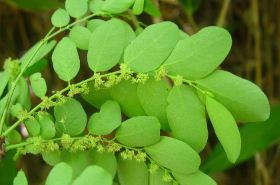
Also known as: 叶下珠 (Yè Xià Zhū - Pearl Under Leaf), 叶下珍珠 (Yè Xià Zhēn Zhū - Pearl Under Leaf), 叶后珠 (Yè Hòu Zhū - Pearl Behind Leaf), 十字珍珠草 (Shí Zì Zhēn Zhū Cǎo - Cross Pearl Grass), 夜合草 (Yè Hé Cǎo - Night-Closing Grass), 夜合珍珠 (Yè Hé Zhēn Zhū - Night-Closing Pearl).
Nature and Flavor: Sweet and Bitter, Cool.
Channel Tropism: Enters the Liver and Lung meridians.
Medicinal Part: The whole herb or the whole herb with roots of Phyllanthus urinaria (family Euphorbiaceae).
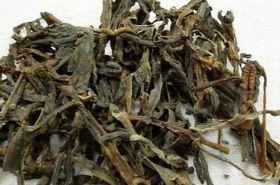
Morphological Characteristics: The dried whole herb with roots features a shallow brown rhizome surface with pith. The main root is underdeveloped, with numerous shallow grey-brown fibrous roots. The stem is about 2-3 mm thick; older stem bases are grey-brown. Stems and branches have longitudinal wrinkles, appearing grey-brown, greyish-brown, or reddish-brown; they are brittle and easily broken, with a hollow cross-section. Branches show longitudinal wrinkles and inconspicuous membranous winged ridges. The leaves are thin and small, grey-green, wrinkled, and easily detach. The flowers are tiny, axillary beneath the leaves, and often withered. Some specimens bear flat, brownish, disc-shaped fruits. The herb has a faint aroma, and the leaves taste slightly bitter.
Usage and Dosage of Phyllanthus Urinaria
Internal Administration: Decoct (boil in water) for a tea, 9-15 grams.
Efficacy and Indications of Phyllanthus Urinaria
Efficacy: Pacifies the Liver and Clears Heat, Promotes Diuresis and Detoxifies.
Indications: Traditionally used to treat enteritis, dysentery, infectious hepatitis, nephritis with edema, urinary tract infections, infantile malnutrition (often called "Gan Ji"), red and swollen eyes with corneal opacity, mouth sores and head sores, and undiagnosed swellings or toxic sores.
Traditional Combinations with Phyllanthus Urinaria
Here are some traditional uses and combinations of Phyllanthus Urinaria:
① For red and white dysentery: Take 30-60 grams of fresh Phyllanthus Urinaria. Decoct with water; for red dysentery, add white sugar; for white dysentery, add brown sugar and take orally. (From *Fujian Chinese Herbal Medicine*).
② For infectious hepatitis: Take 30-60 grams (one to two liang) of fresh Phyllanthus Urinaria. Decoct with water and take orally once a day, continuously for one week. (From *Xuzhou Selection of Folk Remedies and New Medical Therapies*).
③ For bacterial dysentery and cystitis: Decoct 30 grams of fresh Phyllanthus Urinaria, 20 grams of Honeysuckle leaves, and 20 grams of brown sugar, then take orally. Alternatively, wash an appropriate amount of Phyllanthus Urinaria, add cold boiled water, press for juice, add brown sugar, and take one dose daily, divided into 2-3 administrations, for 3-5 days.
④ For summer heat-induced fever: Decoct 30 grams of Phyllanthus Urinaria with water, add honey, and take orally.
⑤ For red, swollen and painful eyes, night blindness, blurred vision: Take 30-60 grams of Phyllanthus Urinaria, stew with 120 grams of pig liver or duck liver, drink the soup and eat the liver. PMID: 30372076
⑥ For acute or acute exacerbation of pyelonephritis: Decoct 40 grams of fresh Phyllanthus Urinaria, 30 grams of Oldenlandia diffusa (White Flower Snake-Tongue Grass), and 20 grams of Plantago asiatica (Plantain Grass) with water. Take one dose daily, divided into 3 administrations, for 2-5 days. PMID: 32679813
⑦ For infantile malnutrition (Gan Ji): Stew 15 grams each of fresh Phyllanthus Urinaria root and fresh *Portulaca oleracea* (Purslane) root, then take orally. Alternatively, cook Phyllanthus Urinaria with pig liver or chicken liver and consume.
⑧ For conjunctivitis and night blindness caused by infantile malnutrition: Steam 15 grams of Phyllanthus Urinaria with 50 grams of pig liver, then drink the soup and eat the liver.
⑨ For infantile malnutrition with persistent fever: Steam 40 grams of fresh Phyllanthus Urinaria with pig liver or lean pork, then drink the soup and eat the liver.
⑩ For simple indigestion: Decoct 15 grams of Phyllanthus Urinaria with water and take orally.
⑪ For acute icteric hepatitis: Take 30 grams each of fresh Phyllanthus Urinaria, *Serissa japonica* (Snow-in-June), and *Artemisia capillaris* (Yin Chen). Decoct one dose daily, divided into 2 administrations. PMID: 26038891
⑫ For bamboo viper snakebite: Wash fresh Phyllanthus Urinaria, extract juice, mix with an appropriate amount of rice wine or rice soup, and take orally. Apply the dregs to the affected area.
⑬ For paronychia (fingertip snake sore) and herpes zoster (flying snake egg): Pound Phyllanthus Urinaria with realgar powder and apply to the affected area.
⑭ For summer boils on a child's head and face: Pound Phyllanthus Urinaria for juice, mix with realgar powder, and apply to the affected area.
3-Second Self-Test & 30-Second Self-Help
If... you've been experiencing persistent digestive issues, unexplained swelling, or recurring eye irritation that aligns with the traditional indications of Phyllanthus Urinaria,
Then Immediately... consider consulting a qualified Traditional Chinese Medicine (TCM) practitioner. They can assess your specific constitution and symptoms to determine if Phyllanthus Urinaria or related herbal remedies are appropriate for you.
For informational purposes only. Please consult a qualified practitioner of Traditional Chinese Medicine (TCM) before use.