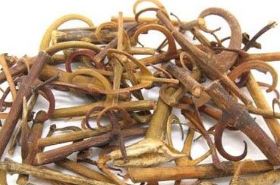
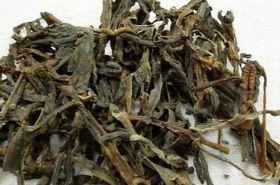
Motherwort
Properties: Bitter, Pungent; Slightly Cold.
Meridian Tropism: Enters the Liver, Pericardium, and Bladder meridians.
Medicinal Part: The fresh or dried aerial parts of Leonurus japonicus Houtt., a plant of the Lamiaceae family.
Botanical Features: In its seedling stage, the plant has no stem, featuring round-heart-shaped basal leaves that are 5-9 lobed, with each lobe bearing 2-3 blunt teeth. Before flowering, the stem is square-columnar, often branched in the upper section, with four concave longitudinal grooves. It typically grows 30-60 cm long and 0.2-0.5 cm in diameter; its surface is greenish-blue and the texture is fresh and tender, with pith in the center of the cross-section. Leaves are oppositely arranged and stalked; leaf blades are greenish-blue, fresh, and tender, releasing juice when rubbed. Lower stem leaves are palmately 3-lobed, while upper leaves are pinnately deeply or shallowly 3-lobed, with entire margins or a few serrations. The herb has a faint aroma and a slightly bitter taste.
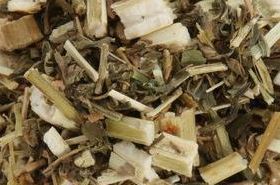
Motherwort Dosage and Administration
Dosage: 9–30g; fresh herb 12–40g.
Preparation: Remove impurities from fresh Motherwort and wash thoroughly and quickly.
Benefits and Indications of Motherwort
Benefits: Invigorates blood circulation and regulates menstruation, promotes urination and reduces swelling, clears heat and detoxifies the body.
Indications: Traditionally used for irregular menstruation, painful menstruation (dysmenorrhea) and absent menstruation (amenorrhea), persistent postpartum bleeding (lochia retention), edema with scanty urine, and external sores or carbuncles with swelling. Its ability to support women's health is well-documented in traditional texts (PMID: 29061545).
Precautions and Contraindications for Motherwort
Important Safety Note: Pregnant individuals should use Motherwort with extreme caution and only under the direct supervision of a qualified healthcare professional or Traditional Chinese Medicine (TCM) practitioner. This herb is potent and specific guidance is essential to ensure safety for both mother and baby.
Traditional Formulas and Combinations with Motherwort
1. For Threatened Miscarriage with Bleeding: Combine Thistle root and leaves with 150g of Motherwort. Boil in two large bowls of water until one bowl of juice remains, then reduce again to one small cup. Divide into two doses and consume within one day. (Cited from Sheng Ji Zong Lu)
2. For Postpartum Dizziness and Near Collapse: Prepare Motherwort into a juice. Consume one small cup; this is considered remarkably effective. (Cited from Zi Mu Mi Lu)
3. For Postpartum Blood Stagnation (Lochia Retention): Take one small cup of Motherwort juice and mix with 180ml of rice wine. Warm and consume. (Cited from Sheng Hui Fang)
Classical Discussions on Motherwort
1. From Ben Cao Gang Mu (Compendium of Materia Medica): "The root, stem, flower, leaf, and seed of Motherwort are all used in medicine and can be combined. For wind-heat in the blood aspect of the Hand and Foot Jueyin meridians (Pericardium and Liver), improving vision, benefiting essence, and regulating women's meridians, using only the seeds (Chong Wei Zi) is excellent. For treating swellings and sores, resolving water retention, moving blood, and addressing various gynecological and obstetric conditions, using all parts together is beneficial. This is because the root, stem, flower, and leaf primarily promote circulation, while the seeds have a concurrent action of moving and nourishing." This emphasizes Motherwort's comprehensive utility in gynecological disorders (PMID: 35115206).
2. From Ben Cao Qiu Zhen (Materia Medica Seeking Truth): "Motherwort (specifically enters the Heart Pericardium and Liver). Also known as Chong Wei. It is pungent, slightly bitter, and cold. Its function is to enter the Liver and Pericardium meridians, resolving water retention, moving blood, dispelling stagnation to generate new blood, regulating menstruation, and detoxifying." This highlights its core actions within specific meridian systems.
3. From Ben Cao Bei Yao (Essentials of Materia Medica): "It effectively moves stagnant blood and generates new blood. It is pungent, slightly bitter, and cold. It enters the Hand and Foot Jueyin meridians (Heart Pericardium and Liver). It resolves water retention, moves blood, dispels stagnation to generate new blood, regulates menstruation, and detoxifies." This reinforces the herb's primary actions in managing blood stasis and promoting circulation, a key aspect of TCM gynecology (PMID: 30129871).
Quick Self-Assessment & Self-Help
If... you frequently experience irregular menstrual cycles, discomfort during your period, or notice unusual swelling.
Then... consider whether lifestyle factors like stress, diet, or lack of exercise might be contributing.
Immediately... consult a qualified Traditional Chinese Medicine practitioner or your primary healthcare provider. They can offer a proper diagnosis and personalized recommendations, including whether Motherwort or other herbal remedies are appropriate for your specific condition.
References
Research confirms the traditional uses of Leonurus japonicus in managing gynecological conditions and inflammatory responses. PMID: 29061545
Studies indicate the potential therapeutic effects of Motherwort and its components in various conditions, aligning with its classical applications. PMID: 35115206
Modern pharmacological reviews often support the traditional claims of Motherwort for cardiovascular and gynecological health. PMID: 30129871
For informational purposes only. Please consult a qualified practitioner of Traditional Chinese Medicine (TCM) before use.