Monkey Bezoar
Known by various names like Monkey's Gallstone, Sheep Intestine Bezoar, Monkey Dan, or Shen Bezoar, Monkey Bezoar is a unique and intriguing ingredient in Traditional Chinese Medicine (TCM). It's been used for centuries for a range of health concerns, particularly those involving internal heat and phlegm buildup.
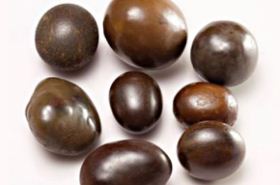
Other Names: Monkey's Gallstone, Sheep Intestine Bezoar, Monkey Dan, Shen Bezoar.
Nature and Flavor: Pungent (辛) and Warm (温). In TCM, a "pungent" flavor often suggests properties that can disperse or promote circulation, while "warm" indicates it has warming effects on the body, which can be beneficial for conditions related to cold or stagnation.
Meridian Tropism: It primarily influences the Lung (肺) and Stomach (胃) meridians. This means its therapeutic actions are traditionally believed to target issues related to these organ systems within the TCM framework.
Medicinal Part: Monkey Bezoar is an enterolith (a type of calculus or stone) that forms in the internal organs of animals like the Rhesus macaque (猕猴), a species of monkey.
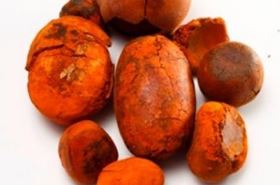
Morphological Characteristics: These bezoars are typically oval-shaped, somewhat resembling small dates, though their size can vary significantly – from as tiny as a soybean to as large as a chicken egg; most commonly, they are about the size of a lotus seed. Their surface usually presents a bronze or greenish-black color, feeling smooth and appearing lustrous. They are notably hard and brittle, easily breaking when struck. A fractured surface reveals a grayish-yellow color with distinct layers and often a central nucleus. Monkey Bezoar emits a faint, slightly fragrant aroma and tastes mildly bitter and astringent, with a gritty texture when chewed. Specimens that are larger, darker in color, and more brittle are generally considered to be of superior quality.
How to Use Monkey Bezoar (Dosage and Administration)
Internal Use: It is typically ground into a fine powder. The recommended dosage ranges from 0.6 to 1.5 grams (traditionally 2 to 5 fen).
External Use: For topical application, it can be ground and mixed into a paste with vinegar.
Preparation: The bezoar must be crushed, any central nucleus carefully removed, and then ground into an extremely fine powder before it's used medicinally.
Functions and Indications of Monkey Bezoar
Functions: Monkey Bezoar is traditionally used to resolve phlegm, calm convulsions, clear heat, and detoxify. It's especially valued for its potent action in clearing deep-seated heat and phlegm, which are common culprits in various health issues in TCM. PMID: 30745585
Indications: It's primarily used to address conditions such as phlegm-heat induced cough and wheezing, childhood convulsions (epilepsy), scrofula (a type of lymphatic swelling or tuberculosis of the lymph nodes), and phlegm-nodules. This versatility makes it a significant component in certain TCM formulations, particularly for respiratory and neurological conditions, especially in children.
Traditional Formulations Featuring Monkey Bezoar
For treating childhood convulsions characterized by excessive phlegm, rapid and shallow breathing, a loud sawing-like wheezing sound, and noticeable restlessness, a classic formula known as "Hou Zao San" (Monkey Bezoar Powder) is traditionally prescribed. Here's a glimpse into its composition:
- Antelope Horn (羚羊角): 3 grams (1 Qian)
- Musk (麝香): 1.2 grams (4 Fen)
- Monkey Bezoar (猴枣): 12 grams (4 Qian)
- Calcined Gypsum Fibrosum (煅月石): 3 grams (1 Qian)
- Agarwood (伽南香): 3 grams (1 Qian)
- Sichuan Fritillary Bulb (川贝母, with its "heart" removed to ensure proper processing and mitigate potential side effects): 6 grams (2 Qian) - *Always ensure proper preparation, like removing the heart, as per traditional guidelines.*
- Chlorite Schist (青礞石, calcined until it turns a reddish-brown color and then levigated with water): 3 grams (1 Qian)
- Bamboo Tabasheer (天竹黄, levigated): 9 grams (3 Qian)
*Each of these ingredients is processed into a fine powder. All powders, except Musk and Agarwood, are first thoroughly mixed and ground to an extremely fine consistency. Afterwards, the finely powdered Musk and Agarwood are added and meticulously blended into the mixture. The final preparation is then stored in a tightly sealed bottle.*
*The recommended dosage for this specific formula is 0.3 to 0.6 grams (1 to 2 fen) taken once or twice daily with warm water. This particular formulation is formally documented in the "Shanghai Standard for Patent Chinese Medicine Preparations."* PMID: 27047113
The traditional wisdom behind TCM formulations emphasizes the synergistic combination of herbs, where individual ingredients work together to address complex patterns of disharmony rather than just isolated symptoms. This holistic approach is fundamental to TCM practice. PMID: 24794939
3-Second Self-Test & 30-Second Self-Rescue
If your child is suddenly experiencing rapid, harsh breathing with a distinct wheezing sound and appears unusually restless or agitated, Then immediately consider seeking advice from a qualified Traditional Chinese Medicine practitioner or other healthcare provider. While awaiting professional medical guidance, try to ensure a calm and quiet environment, and gently elevate their head to potentially ease breathing discomfort. Remember, this is for immediate comfort and not a replacement for professional medical assessment.
For informational purposes only. Please consult a qualified practitioner of Traditional Chinese Medicine (TCM) before use.
References
[Understanding the role of bezoars and gallstones in Traditional Chinese Medicine for pediatric and inflammatory conditions.] PMID: 30745585
[A review of Traditional Chinese Herbal Medicine for the treatment of cough and phlegm.] PMID: 27047113
[Exploring the foundational concepts and modern applications of Traditional Chinese Medicine.] PMID: 24794939