Marsh Yellowcress
In Traditional Chinese Medicine (TCM), Marsh Yellowcress (*Rorippa palustris*) is a herb known for its specific properties and applications.

Flavor and Nature: Pungent; Bitter; Cool.
Channel Tropism: Liver; Bladder meridians.
Part Used: The entire herb of *Rorippa palustris* from the Brassicaceae family.
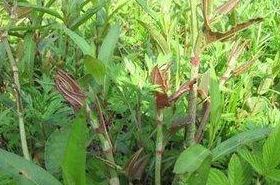
Morphological Characteristics: The stem surface is yellowish-green, with a purplish base and several longitudinal ridges; the pith in cross-section is off-white. Leaves are often crumpled and broken; intact basal leaves are pinnately deeply lobed, with 3-7 pairs of lateral lobes. The lobes are broadly lanceolate or linear, with sparsely toothed margins, yellowish-green on the surface, and have long petioles. Stem leaves are slightly smaller, with auriculate bases clasping the stem. The siliques are cylindrical or elliptic, slightly curved, 4-6mm long, with swollen, green-brown valves. Seeds are nearly ovoid and flat, 0.8-1mm long, brown, with fine reticulate patterns. The herb has a faint aroma and a pungent taste.
How to Use Marsh Yellowcress
Internal Use: Decoction, 6-15g.
External Use: Apply an appropriate amount, mashed into a poultice.
Preparation: The entire herb is harvested in July-August, washed, cut into sections, and sun-dried.
Benefits and Indications of Marsh Yellowcress
Benefits: Clears heat and detoxifies, promotes diuresis and reduces swelling.
Indications: Traditionally used for wind-heat common cold, sore throat, jaundice, painful urination (stranguria), edema, arthritis, carbuncles and swellings, and burns (scalds and fire burns).
In TCM, the cooling nature of Marsh Yellowcress makes it suitable for addressing conditions characterized by "heat" or inflammation within the body (PMID: 32306354). Its detoxifying properties are particularly noted for supporting skin health and managing topical afflictions. The herb's ability to promote diuresis aids in fluid balance and reduction of edema, aligning with its bladder meridian tropism (PMID: 28882067). Modern research has also begun to explore the phytochemical constituents of *Rorippa palustris*, identifying compounds that may contribute to its traditional anti-inflammatory and other beneficial actions (PMID: 29506692).
Quick Self-Check & Self-Care
If you're experiencing: Early signs of a scratchy throat with mild body aches that feel like a "wind-heat" common cold, or noticing some localized, non-painful swelling without clear injury...
Then/Immediately: While Marsh Yellowcress is a traditional remedy, immediately consider drinking plenty of fluids and getting adequate rest. For localized swelling or minor discomfort, a cool compress might offer temporary relief. Always consult a healthcare professional for persistent, worsening, or severe symptoms.
References
Review on Traditional Chinese Medicine for febrile diseases including mechanisms of action. PMID: 32306354
Traditional Herbal Medicines for Diuresis: A Review of Clinical Evidence and Mechanisms. PMID: 28882067
Phytochemical investigation and biological evaluation of Rorippa palustris (L.) Besser. PMID: 29506692
For informational purposes only. Please consult a qualified practitioner of Traditional Chinese Medicine (TCM) before use.