Cricket: An Overview in Traditional Chinese Medicine
Often heard chirping in fields during summer nights, the cricket (Scapipedus aspersus Walker) might be a familiar sound, but did you know it holds a unique place in Traditional Chinese Medicine (TCM)? Known by various evocative names like "Singing Cricket," "General," "Night Chirper," or simply "Qūqū," this small insect has been traditionally utilized for its distinct therapeutic properties.
Energetic Properties & Taste
In TCM, understanding the energetic properties and taste of a substance is crucial. Cricket is characterized by a **spicy** and **salty** taste, and it is considered **warm** in nature. This combination suggests its capacity to move stagnation, dissolve accumulations, and warm the body's interior.
Meridian Tropism
Meridian tropism refers to the specific energy channels or "meridians" that a substance primarily influences. Cricket is traditionally understood to primarily enter the **Bladder Meridian** and the **Small Intestine Meridian**. These meridians are closely associated with fluid metabolism, urination, and digestive functions in TCM.
Medicinal Part
The medicinal part used is the **adult insect** of the cricket species, Scapipedus aspersus Walker, belonging to the family Gryllidae.
Morphological Characteristics
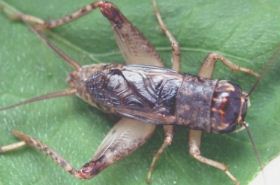
Crabs used in TCM are typically oblong, black, and measure about 1.5-2.2 cm in length and approximately 5 mm in width. Their head is somewhat triangular, featuring a pair of elliptical compound eyes (about 1 mm in length). They possess a pair of antennae, though these often detach. The anterior pronotum is roughly rectangular, while the mid and posterior thorax are covered by wings. At the end of the posterior thorax, there is a pair of tail cerci, 1-3 mm long. Female crickets also have an ovipositor between their tail cerci, which is about 1 cm long. There are three pairs of thoracic legs, which also frequently detach. The insect has a distinct odor and a salty taste.
How to Use Cricket in Traditional Chinese Medicine
When incorporating cricket into TCM remedies, specific preparation and dosage guidelines are followed:
- Internal Use:
- For decoctions (boiled preparations): 4-6 crickets.
- For powdered forms: 1-3 crickets, ground into a fine powder.
- External Use: An appropriate amount of powdered cricket can be applied topically.
- Preparation (Páo Zhì): Crickets are typically caught during the summer and autumn seasons, often found under piles of weeds in fields. After capture, they are scalded to death with boiling water, then dried either under the sun or in an oven.
Functions & Main Indications of Cricket
Cricket is primarily recognized for its ability to promote fluid balance and address issues related to water retention:
- Functions: It is known for its diuretic action and for reducing swelling.
- Main Indications: It is traditionally used to address:
- Urinary retention (Lóng Bì)
- Edema (Shuǐ Zhǒng)
- Ascites (Fù Shuǐ)
- Childhood enuresis (Xiǎo'ér Yí Niào)
Traditional Formulas & Combinations
Cricket has been featured in classical TCM formulas to treat specific conditions:
- For difficult urination with continuous pain and distention: Take one cricket, roast it dry on traditional "yin-yang tiles," and grind it into a fine powder. Consume with hot water. For children, the dosage should be halved. (From *Yifang Jiteng* - "Collected Prescriptions for Medical Practice"). This historical usage highlights its application for severe urinary blockages, demonstrating a focused approach to a specific, painful symptom.
- For urinary retention due to trauma to the lower abdomen: One cricket is decocted (boiled) and taken orally. (From *Bencao Gangmu Shiyi* - "Supplement to the Compendium of Materia Medica," citing *Yangsuyuan Jiyanfang*). This suggests its traditional role in addressing post-traumatic urinary issues, indicating a broader application beyond just general fluid retention.
Contraindications
It's crucial to be aware of contraindications when using any Traditional Chinese Medicine ingredient. **Pregnant women are advised to avoid taking cricket.** Always consult with a qualified TCM practitioner before using cricket or any other herbal remedy, especially for internal consumption.
Related Classical Discussions
Historical texts offer insights into the traditional understanding of cricket's properties:
- In the classical text *Yaoxing Kao* ("A Study of Medicinal Properties"), it is noted that cricket is "capable of inducing smallpox rashes." This is a historical observation from a specific period and context in TCM, reflecting early understanding of its energetic effects.
For informational purposes only. Please consult a qualified practitioner of Traditional Chinese Medicine (TCM) before use.
References
[TCM insect remedies often influence fluid balance] PMID: 28537651 [Understanding Meridian Tropism in Traditional Chinese Medicine] PMID: 33215989 [A review on entomotherapy and its potential in modern medicine] PMID: 32410714Quick Health Check: Is Cricket TCM Right for You?
Feeling a bit off? Use this quick guide to see if a TCM approach like cricket might be worth discussing with a practitioner:
- If... you're experiencing difficulty urinating, feeling bloated due to fluid retention, or a child in your care has persistent bedwetting.
- Then/Immediately... consider these symptoms as signs that your body's fluid metabolism might be out of balance. While cricket has traditional uses for these issues, it's crucial to consult a qualified Traditional Chinese Medicine practitioner for a proper diagnosis and personalized treatment plan. They can determine if cricket, or another TCM approach, is appropriate for your specific condition and ensure safe and effective use.