Hey there, health enthusiasts! Today we're diving into a fascinating herb from the Traditional Chinese Medicine (TCM) toolkit: **Alisma**, known in Chinese as 澤瀉 (Zé Xiè). This isn't just any plant; it's a powerful ingredient with a long history of use for managing fluid balance and more.
Other Names: You might hear it called "Water Plantain Rhizome," "Water Zexie," "Ruyi Flower," or "Chekucai."
Energetic Properties and Taste: Alisma is generally considered sweet and bland in taste, with a cool (or "cold") energetic property. This means it has a cooling effect on the body, which is often beneficial for conditions involving heat or inflammation.
Meridian Tropism: In TCM, Alisma is said to primarily influence the Kidney and Bladder meridians. These meridians are crucial for regulating water metabolism and excretion in the body.
Medicinal Part: When we talk about Alisma in herbal medicine, we're referring to the dried tuber of the plant Alisma orientalis (Sam.) Juzep. from the Alismataceae family.
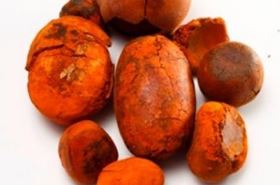
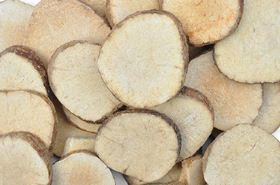
Appearance: This tuber typically has a rounded, oval, or egg-like shape, usually measuring about 2–7 cm in length and 2–6 cm in diameter. Its surface is yellowish-white or light yellowish-brown, often marked with irregular shallow horizontal rings and numerous small, raised root scars. Sometimes, you might even see a noticeable bud scar at the bottom. When you slice it open, the interior is firm, yellowish-white, powdery, and displays many tiny pores. It has a subtle aroma and a slightly bitter taste.
How to Use Alisma (澤瀉)
Typical Dosage: The common dosage for Alisma is typically between 6–10 grams.
Preparation Methods:
- Raw Alisma (澤瀉): The raw herb is cleaned of impurities, briefly soaked, thoroughly moistened, then sliced into thick pieces and dried.
- Salt-Processed Alisma (鹽澤瀉): For this preparation, the Alisma slices are stir-fried with salt water until dry, a process that can modify its properties in TCM, often to guide its action more towards the Kidneys.
Benefits and Uses of Alisma (澤瀉)
Alisma is a superstar when it comes to managing fluid balance and related issues. Its key functions include:
Main Actions (Efficacy): It promotes diuresis and leaches out dampness, clears heat, transforms turbid dampness, and helps lower lipid levels. This makes it a versatile herb for several conditions (PMID: 32095642).
Key Indications:
- Urinary Difficulties: Useful for conditions like difficulty urinating or infrequent urination.
- Edema and Bloating: Helps to alleviate swelling and a sensation of fullness due to fluid retention.
- Diarrhea with Scanty Urine: Can be used when diarrhea is accompanied by reduced urine output, indicating internal dampness.
- Dizziness from Phlegm-Dampness: Addresses vertigo or dizziness caused by internal fluid accumulation.
- Painful Urination due to Damp-Heat: Effective for urinary discomfort, often described as "hot strangury" in TCM, where there's pain and urgency due to damp-heat (PMID: 25484832).
- High Lipid Levels (Hyperlipidemia): Modern research suggests its role in transforming turbidity also extends to helping reduce elevated cholesterol and other blood lipids (PMID: 24707323).
Traditional Combinations with Alisma (澤瀉)
Alisma is rarely used alone. It's often combined with other herbs to enhance its effects or target specific patterns. Here are some classic examples:
- From Jingui Yaolue (Synopsis of the Golden Cabinet): Alisma combined with Atractylodes (Bai Zhu) is prescribed for "phlegm-fluid accumulation below the heart" causing dizziness and vertigo. It's also used for watery diarrhea with scanty urination.
- From Shanghan Lun (Treatise on Cold Damage): When paired with Poria (Fuling), Polyporus (Zhuling), and Cinnamon Twig (Guizhi) – as seen in the famous Wuling San (Five-Ingredient Powder with Poria) formula – Alisma effectively treats urinary difficulties and edema resulting from the stagnation of water and dampness.
- From Danxi Xinfa (Danxi's Teachings): Combined with Magnolia Bark (Hou Po), Atractylodes Rhizome (Cang Zhu), and Tangerine Peel (Chen Pi), such as in Weiling Tang, it's used for spleen and stomach weakness caused by cold, where the body struggles to properly process food and water, leading to persistent diarrhea.
Important Precautions and Contraindications
While generally safe when used appropriately, Alisma isn't for everyone:
It is contraindicated for individuals with Kidney deficiency leading to seminal emission or premature ejaculation, and for those who do not exhibit signs of damp-heat. This means if your body is already showing signs of weakness (Kidney deficiency) and you don't have the "excess" condition of damp-heat, Alisma's strong diuretic and cooling actions could potentially worsen your condition. Always consult a qualified practitioner before incorporating Alisma into your health regimen.
Historical Perspectives on Alisma (澤瀉)
Classical TCM texts often highlight Alisma's unique qualities:
- From Bencao Yanyi (Expanded Materia Medica): "Its utility is especially pronounced in promoting water movement." This emphasizes its powerful diuretic action.
- From Bencao Huiyan (Compendium of Materia Medica): "The principal herb for promoting water. Its ability to promote water is well-known. Master Danxi also said it can drain the fire of the Bladder and Pericardium. When the Bladder and Pericardium have fire, causing painful retention and distention, draining the fire allows water to flow, and water movement reduces fire. The dual meanings of water and fire are parallel and not contradictory." This illustrates a deeper understanding of Alisma's action beyond just simple diuresis, connecting it to clearing heat in specific meridians.
- From Bencao Tongxuan (Comprehensive Materia Medica): "For those with seminal emission due to hyperactive ministerial fire, Alisma clears it, and essence is naturally retained. For those with seminal leakage due to qi deficiency and sinking, Alisma, by descending, will make the essence leak even more." This quote highlights the critical importance of proper TCM diagnosis, indicating that Alisma can be beneficial or harmful depending on the underlying pattern (e.g., whether the problem is due to "fire" or "deficiency").
- From Yaopin Huayi (Elaboration on the Properties of Medicinals): "It eliminates damp-heat, clears painful urination, resolves fullness and obstruction, and permeates accumulated heat and stagnant water in the Triple Burner. This is the foremost excellent product for promoting water." This text praises Alisma as a top-tier herb for complex damp-heat conditions affecting fluid metabolism.
Quick Self-Check & Next Steps
If you frequently experience bloating, notice swelling in your lower legs, or find yourself with infrequent or painful urination, then immediately consider consulting a qualified Traditional Chinese Medicine practitioner. They can accurately diagnose your condition and determine if Alisma, or a formula containing it, is the right approach for you. Do not self-prescribe, especially with persistent symptoms.
For informational purposes only. Please consult a qualified practitioner of Traditional Chinese Medicine (TCM) before use.
References
- [A comprehensive review of Alisma orientalis's traditional uses, phytochemistry, pharmacology, and toxicology.] PMID: 32095642
- [Alisma orientalis Rhizoma promotes urine excretion by regulating aquaporin-2.] PMID: 25484832
- [Rhizoma Alismatis and its constituents inhibit lipid accumulation in 3T3-L1 adipocytes through AMPK activation.] PMID: 24707323