Start Small: How Dream Journaling Improves Mental Health
Dream journaling, or keeping a record of your dreams, offers a unique window into your subconscious. In Traditional Chinese Medicine (TCM), dreams are closely linked to the balance of the heart and liver.
The heart governs "shen" (mind and spirit), while the liver stores "hun" (the ethereal soul). Their harmony plays a vital role in emotional and mental well-being.
When dream patterns are documented and analyzed, they can reveal hidden emotional tensions and potential health issues.
By reflecting on your dreams, you might uncover stressors you overlooked during the day. For example, recurring dreams of unresolved situations may indicate anxiety or suppressed feelings.
These hidden emotions, if left unchecked, could disrupt the flow of "qi," or energy, which is like a blocked highway in your body. Over time, this imbalance might result in poor sleep, fatigue, or other health concerns.

Uncover Patterns: Emotional Awareness Made Easy
Dream journaling isn’t just about writing down what you see at night; it’s about discovering emotional patterns. Modern psychology supports this practice, emphasizing that dreams provide a mirror to our inner feelings.
As you record your dreams, you might notice recurring themes tied to stress or emotions you haven’t addressed. For instance, frequent dreams of being chased could signal unresolved fears.
From a TCM standpoint, such dreams may also hint at liver imbalances, which often manifest as irritability or frustration. Addressing this might involve lifestyle adjustments or using techniques like acupressure (/tcm-basics/acupoints-meridians/) to restore balance.
Release Stress: The Emotional Reset Button
Analyzing your dreams can serve as a cathartic experience. By understanding the messages behind your dreams, you can release pent-up emotions, recalibrate your mental state, and even prevent long-term stress buildup.
This process is comparable to the mindfulness benefits of meditation: a moment of deep self-awareness. In TCM, emotional stagnation is often linked to disrupted "qi" and blood flow.
Releasing these blockages can pave the way for better mental clarity and inner calm.
Some may find it helpful to pair dream journaling with other practices, like Qi Gong or Tai Chi (/tcm-basics/qi-gongtai-chi/), to further aid in emotional and physical balance. These practices work by harmonizing energy pathways, supporting both body and mind.
Track Progress: See the Growth in Your Mental Health
One of the underrated benefits of dream journaling is tracking your emotional growth over time. As you document and analyze your dreams, you’ll notice a gradual shift in recurring themes, from chaotic emotions to peaceful resolutions.
This is a tangible way to measure how lifestyle changes, therapy, or TCM interventions have positively influenced your well-being.
For example, a noticeable decrease in anxious dreams could coincide with better sleep patterns after trying diet therapy (/herbal-medicine/diet-therapy/) or herbal remedies. This feedback loop empowers you to take charge of your mental health with actionable insights.
Blend East and West: A Holistic Approach to Mental Wellness
For many Americans, dream journaling may feel similar to mindfulness or journaling practices in modern therapy. However, combining it with TCM adds a holistic layer.
TCM views the mind and body as interconnected, so analyzing dreams can reveal imbalances that might also affect physical health. For instance, vivid, restless dreams could point to excessive "yang" energy, which might be calmed through herbal medicine (/herbal-medicine/) or acupuncture.
The combination of recording your dreams and seeking natural remedies offers a dual approach to managing emotions and improving overall health. It’s not just about understanding your subconscious; it’s about acting on the insights it provides.
One-Step Forward: Simple Tips to Start Today
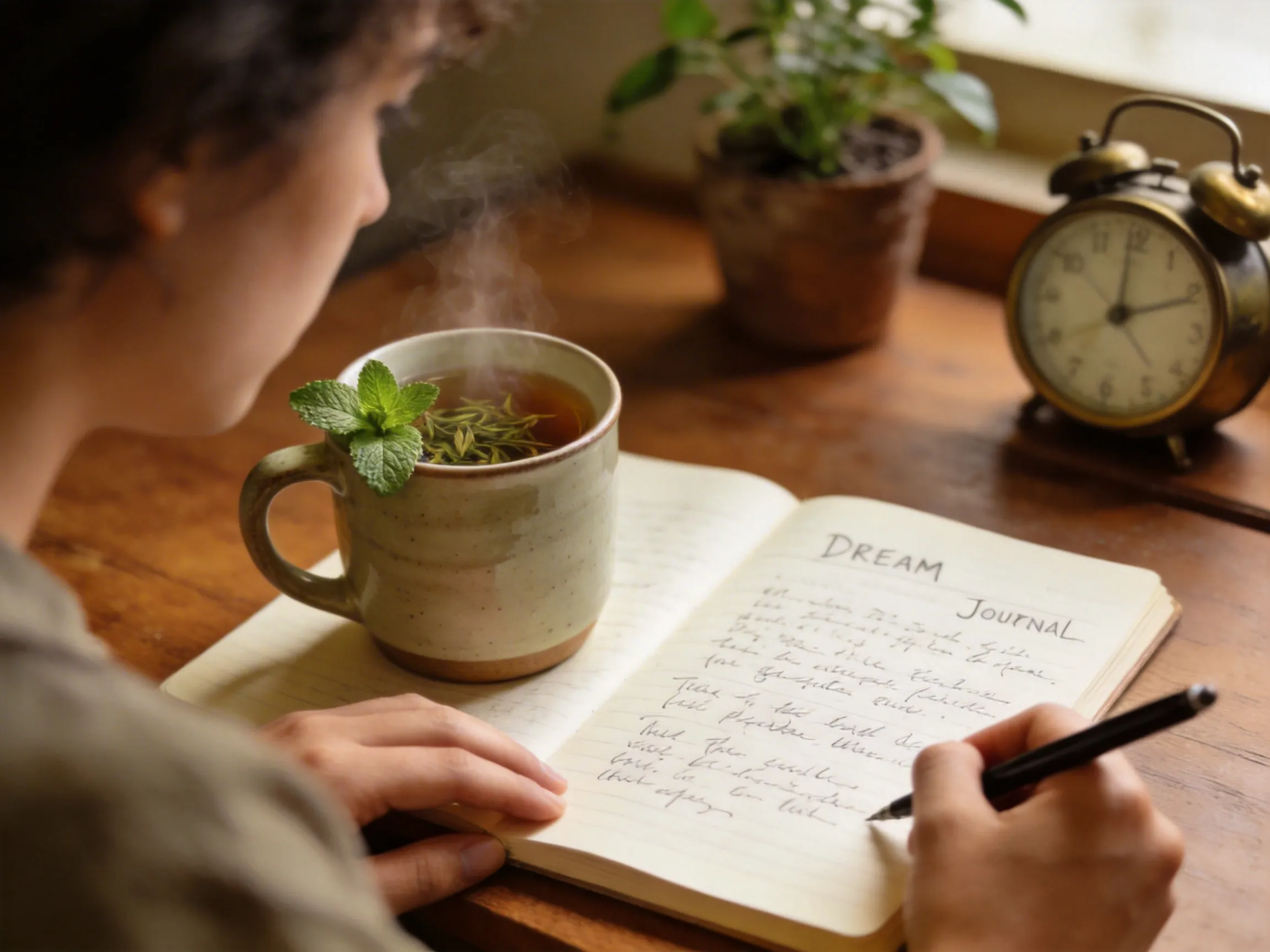
Starting a dream journal is straightforward. Keep a notebook near your bed and jot down your dreams as soon as you wake up.
If you’re short on time, just write key themes or emotions. Reflect on your entries weekly to spot patterns or emotional triggers.
Feeling stuck? Consider consulting a TCM practitioner to interpret your dreams’ connection to your body’s health.
References
1. "Dreams and Emotional Regulation," PubMed.
2. "The Heart's Role in Mental Balance," Huangdi Neijing.
3. "Liver Function and Emotional Health," PubMed.
Quick Fix: 3-Second Dream Check + 30-Second Reset
If you wake up recalling fragments of a stressful dream → jot down one word that describes the mood. Use this as a prompt to identify the emotion.
If you notice recurring themes → try acupressure on the "Shenmen" point to calm your mind.
By combining awareness with action, you’ll gain control over your emotions and promote better mental health.