Struggling with sleepless nights? The solution might not be in your bed, but on your plate. Research reveals that certain foods and the timing of your meals play a significant role in improving sleep quality. From a Traditional Chinese Medicine (TCM) perspective, balanced sleep hinges on the harmony of internal organs and the smooth flow of energy, or "Qi," in the body. Modern science agrees, highlighting key nutrients that influence sleep hormones. Let’s dive into the fascinating intersection of ancient wisdom and modern nutrition.
Pick Foods Wisely: Nutrients That Soothe Your Mind
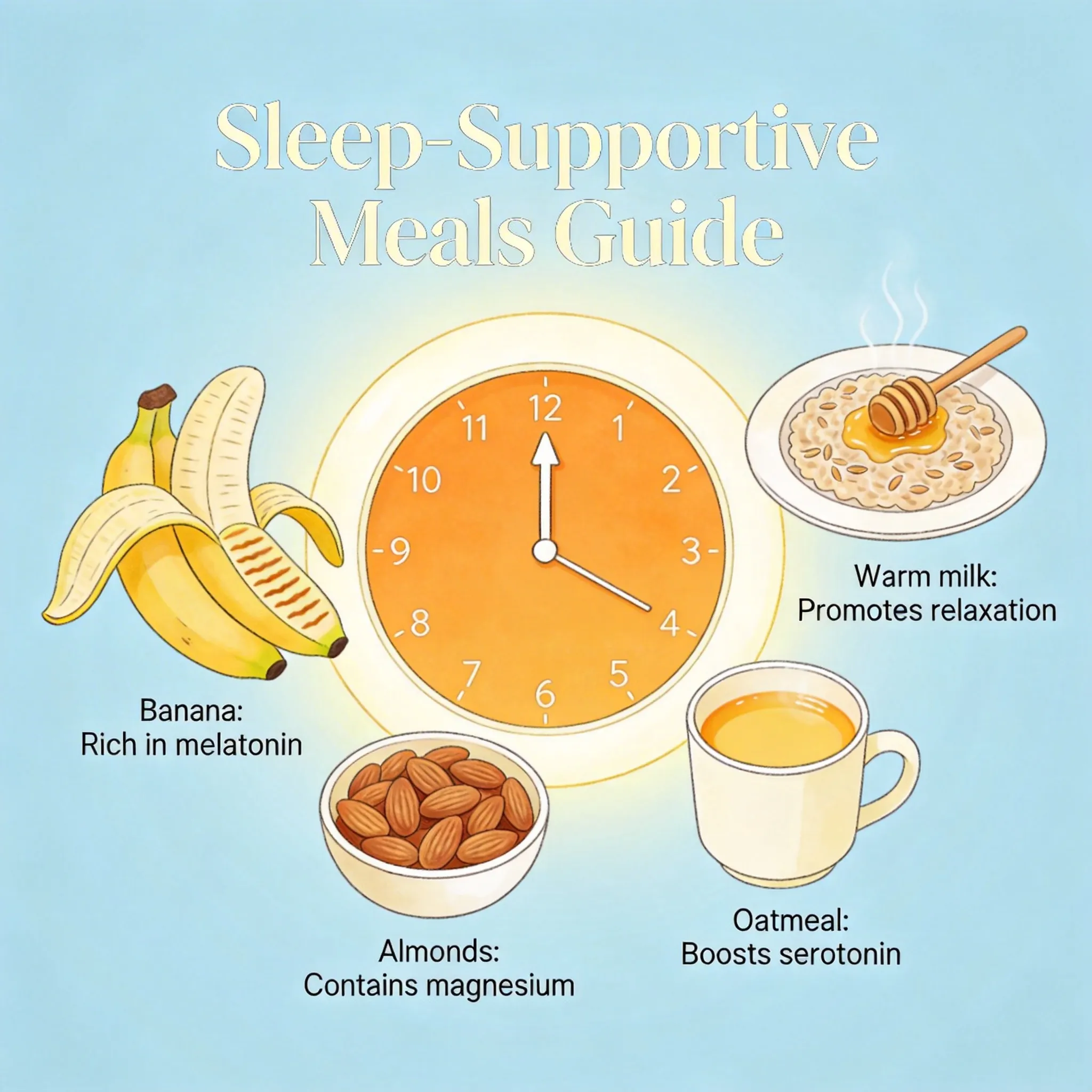
TCM teaches that foods like lotus seeds, longan, and sour jujube seeds help calm the mind and nourish the heart. These ingredients work like a natural reset button, promoting restful sleep by nurturing your body's internal balance. Meanwhile, modern research points to nutrients like tryptophan, magnesium, and melatonin. Found in bananas, nuts, milk, and cherries, these compounds regulate melatonin production, the hormone that signals your body it’s time to rest (PMID: 24533001).
Combine Timing + Food: The Path to Restful Nights
Timing matters as much as food choice. TCM suggests that eating too close to bedtime disrupts the stomach's ability to "harmonize," which could lead to tossing and turning. Modern studies echo this, recommending you avoid meals at least 2–3 hours before bedtime, especially heavy, fatty, or sugary foods. This not only keeps your digestive system calm but also prevents interference with sleep hormones (PMID: 31564434).
Sleep Better Tonight: 3 Foods to Add—and 1 to Avoid
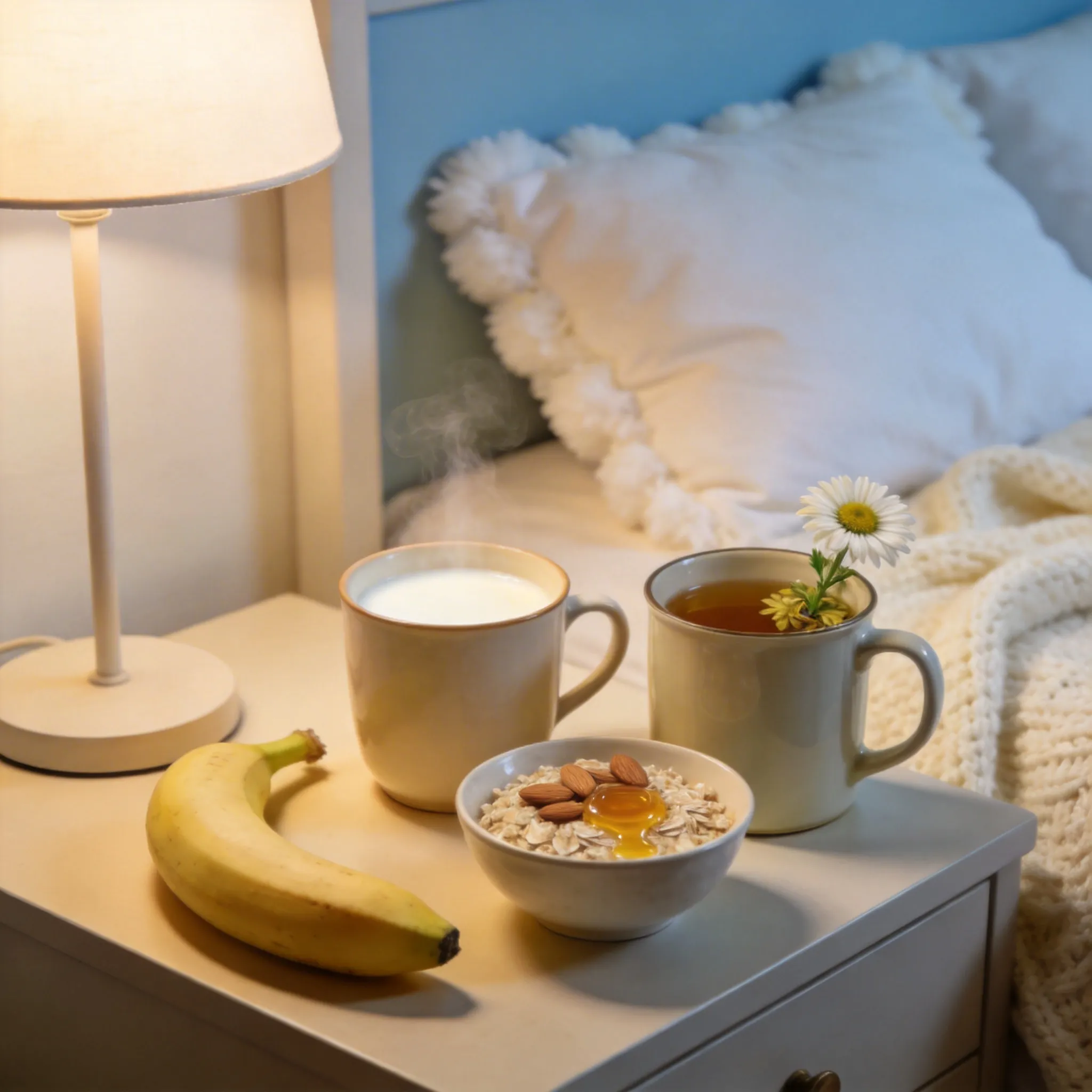
Not sure where to start? Add these sleep-friendly options to your plate: boiled lotus seeds (a TCM staple), a handful of almonds, or a glass of tart cherry juice. Avoid coffee, alcohol, or anything spicy before bed—they’re like hitting the "awake" button on your brain. Small adjustments can make a big difference. For more tips, check our Diet Therapy section.
Listen to Your Body: Customizing Your Sleep Routine
Everyone’s body is different. Some people sleep better after protein-rich snacks like yogurt, while others find carbs like oatmeal more effective. Experiment and track your results. Want to learn more about how foods support energy flow? Visit our Qi & Blood guide for deeper insights.
Simple Science + Ancient Wisdom: A Winning Sleep Formula
Combining the best of TCM and modern nutrition can help you build a personalized sleep routine. Whether it’s syncing your meals with your body clock or choosing the right sleep-enhancing snacks, the key is consistency. Start small—replace sugary desserts with a banana or a handful of seeds. Your body will thank you.
References
1. "Melatonin and sleep regulation." (PMID: 24533001)
2. "The role of meal timing in sleep and circadian rhythms." (PMID: 31564434)
3. "Traditional Chinese Medicine for insomnia: A systematic review." (PMID: 28190721)
If you find yourself wide awake at night → try a small bowl of warm oatmeal with a sprinkle of almonds. If heavy dinners leave you restless → eat lighter meals and finish 2-3 hours before bedtime. Want a deeper dive? Explore how Yin-Yang balance impacts sleep in our Yin & Yang guide.