Platycodon Root Decoction: Usage, Dosage, and Benefits
Ever wondered about the traditional remedies our ancestors used for common ailments? Let's dive into Platycodon Root Decoction, known as "Jie Geng Tang" in Traditional Chinese Medicine (TCM). This classic formula has been treasured for its ability to promote lung health and soothe the throat. We'll explore its various formulations and how it's been traditionally prepared and used for different conditions.
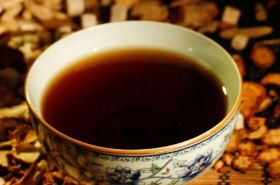
Traditional Usage and Dosage of Platycodon Root Decoction
Ingredients: Platycodon Root (Jie Geng) 3g, Licorice Root (Gan Cao) 6g.
Preparation: Simmer the ingredients in 300 mL of water until 200 mL remains. Strain the dregs and drink warm, divided into two servings.
Benefits and Indications of Platycodon Root Decoction
Benefits: Disperses Lung Qi and benefits the throat, clears heat and resolves toxicity.
Different Prescriptions of Platycodon Root Decoction
Prescription 1: From Synopsis of the Golden Cabinet
Source: Synopsis of the Golden Cabinet (Jin Kui Yao Lue Fang Lun).
Ingredients: Platycodon Root (Jie Geng) 15g, Licorice Root (Gan Cao) 30g.
Preparation: Simmer the two ingredients in 3 liters of water until 1 liter remains. Strain the dregs and drink warm, divided into two servings. This preparation helps to expel pus and blood.
Benefits: Promotes lung function to stop cough, expels phlegm and drains pus.
Indications: Lung abscess (Fei Yong), characterized by coughing with chest pain, chills, rapid pulse, dry throat without thirst, occasional discharge of turbid, foul-smelling sputum, and eventually spitting pus resembling rice porridge.
Modern research supports the anti-inflammatory and expectorant properties of Platycodon grandiflorum, which is the main ingredient in this decoction. PMID: 33919424
Prescription 2: From Revised Formulas of Yan Shi Ji Sheng Fang
Source: Revised Formulas of Yan Shi Ji Sheng Fang (Chong Ding Yan Shi Ji Sheng Fang).
Ingredients: Platycodon Root (Jie Geng, stalk removed), Fritillary Bulb (Bei Mu, core and membrane removed), Angelica Root (Dang Gui, stalk removed, steeped in wine), Trichosanthes Seed (Gua Lou Zi), Bitter Orange Peel (Zhi Ke, pith removed, stir-fried with bran), Job's Tears Seed (Yi Yi Ren, stir-fried), Mulberry Bark (Sang Bai Pi, honey-water baked), Stephania Root (Fang Ji) – 30g each. Licorice Root Node (Gan Cao Jie, raw), Apricot Kernel (Xing Ren, skin and tip removed, stir-fried with bran), Lily Bulb (Bai He, steamed) – 15g each. Astragalus Root (Huang Qi, stalk removed) 45g.
Preparation: Grind the above herbs into a coarse powder. For each serving, take 12g of the powder, add 220 mL of water and 5 slices of fresh ginger. Decoction until ready for consumption, to be taken warm at any time.
Indications: Lung abscess, chest and diaphragm qi stagnation, coughing pus and blood, restlessness and mental agitation, dry throat with excessive thirst, swollen legs, dark yellow urine, and difficult bowel movements.
Original Text: "Coughing with chest fullness and chills. Rapid pulse, dry throat without thirst. Occasional discharge of turbid, foul-smelling sputum. Prolonged discharge of pus resembling rice porridge is Lung Abscess. Platycodon Root Decoction (Jie Geng Tang) is the primary treatment."
Licorice root, a common ingredient in many Platycodon Root Decoction formulas, is recognized for its synergistic effects, enhancing the benefits of other herbs and supporting overall respiratory health. PMID: 37617478
Prescription 3: From Taiping Huimin Heji Ju Fang Volume 4
Source: Taiping Huimin Heji Ju Fang (Tai Ping Hui Min He Ji Ju Fang) Volume 4.
Alias: Jie Geng Ban Xia Tang (Platycodon Root and Pinellia Decoction, from Lei Zheng Huo Ren Shu Volume 18).
Ingredients: Platycodon Root (Jie Geng, finely filed, slightly stir-fried), Pinellia Tuber (Ban Xia, washed seven times with hot water, processed with ginger juice), Tangerine Peel (Chen Pi, pith removed) – 300g each. Immature Bitter Orange (Zhi Shi, stir-fried to reddish-yellow with bran) 150g.
Preparation: Grind the above into a coarse powder. For each serving, take 6g of the powder, add 300 mL of water and 5 slices of fresh ginger. Simmer until 210 mL remains. Strain the dregs and drink warm, at any time.
Benefits: Eliminates phlegm, descends Qi, resolves stagnation, and disperses fullness.
Indications: Chest and flank distention and fullness, alternating chills and fever, vomiting, epigastric hardness and focal distention, shortness of breath, vexation and restlessness, phlegm reversal leading to nausea, and inability to eat or drink.
Always exercise caution with Pinellia Tuber (Ban Xia), as it requires careful processing (often with ginger juice) to reduce toxicity and should only be used under the guidance of a qualified TCM practitioner.
Prescription 4: From Sheng Ji Zong Lu Volume 90
Source: Sheng Ji Zong Lu Volume 90.
Ingredients: Platycodon Root (Jie Geng, filed, stir-fried) 3 fen, Pinellia Tuber (Ban Xia, washed 7 times to remove slipperiness, stir-fried with ginger juice) 1 liang and 1 fen, Atractylodes Rhizome (Bai Shu) 3 fen, Licorice Root (Gan Cao, honey-fried, filed) 1 fen, Cinnamon Bark (Gui, coarse bark removed) half liang, Peony Root (Shao Yao) half liang, Scrophularia Root (Xuan Shen) 1 liang and a half.
Preparation: Grind the above into a coarse powder. For each serving, take 3 qianbi spoonfuls, add 1 cup of water and half fen of fresh ginger (smashed). Decoction until 7 fen remains. Strain the dregs, add 1 fen of maltose, and drink warm on an empty stomach. Prepare and drink again before sleeping.
Indications: Debilitation (虛勞), fright and unease, inability to sleep at night.
The combination of herbs in TCM often aims to address not just physical symptoms but also underlying emotional and energetic imbalances, such as those leading to insomnia and unease. PMID: 37617478
Prescription 5: From Sheng Ji Zong Lu Volume 57
Source: Sheng Ji Zong Lu Volume 57.
Ingredients: Platycodon Root (Jie Geng, filed, stir-fried) 2 liang, Thalictrum Root (Fang Kui) half liang, Rhubarb Root (Da Huang, filed, stir-fried) 1 liang and a half, Peach Kernel (Tao Ren, steeped in hot water, skin and tip removed, double kernels discarded, stir-fried with bran) 49 pieces.
Preparation: Cut the above into pieces the size of sesame seeds or soybeans. For each serving, take 3 qianbi spoonfuls, add 1 cup of water, and simmer until 6 fen remains. Strain the dregs, add half a qianbi spoonful of Mirabilite powder. Drink warm on an empty stomach. If no effect after walking 5-6 li (approx. 2.5-3 km), take another dose. Take 3 times daily.
Indications: Abdominal distention (鼓胀).
Rhubarb Root (Da Huang) is a potent purgative and should be used with extreme caution and under the strict guidance of a qualified TCM practitioner, especially for conditions like abdominal distention. It is not for long-term use.
References
Supporting the anti-inflammatory and expectorant properties of Platycodon grandiflorum. PMID: 33919424
Highlighting the synergistic effects of licorice root in herbal formulas. PMID: 37617478
Discussing the holistic approach of TCM in addressing emotional and energetic imbalances. PMID: 37617478
Quick Self-Assessment & Immediate Action
3-Second Self-Assessment:
If you're experiencing a persistent cough with thick, yellow phlegm and chest discomfort, or a sore throat that just won't quit...
30-Second Self-Rescue:
Then immediately consider sipping on some warm ginger tea with a touch of honey to soothe your throat, and ensure you're getting plenty of rest. If symptoms persist or worsen, it's crucial to seek professional medical advice.
For informational purposes only. Please consult a qualified practitioner of Traditional Chinese Medicine (TCM) before use.