Jiu Wei Qiang Huo Tang
The "Formula Song" for Jiu Wei Qiang Huo Tang outlines its key ingredients: Qiang Huo, Fang Feng, Xi Xin, Cang Zhu, Bai Zhi, Chuan Xiong, Huang Qin, Sheng Di, and Gan Cao. It also highlights the formula's adaptable approach, tailoring treatment based on specific meridian involvement.
This formula targets a condition caused by an external invasion of wind-cold-dampness pathogens, coupled with existing internal latent heat. The treatment strategy focuses on inducing sweating to expel dampness, while also clearing this internal heat. When wind-cold-dampness invades the body's surface, it can block the body's defensive Yang energy, obstruct the skin's pores and superficial tissues, and impede the flow of vital energy and blood circulation within the meridians. This blockage leads to symptoms like aversion to cold, fever, lack of sweating, headache, stiff neck, and body aches. The internal latent heat often manifests as a slightly bitter taste in the mouth and mild thirst. A white or slightly yellow tongue coating and a floating pulse further confirm this pattern of external symptoms combined with internal heat. Therefore, the primary approach is to disperse the wind-cold-dampness, with clearing internal heat as a secondary, supporting action.
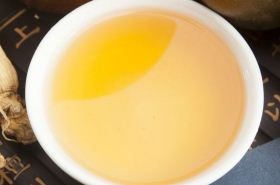
Within the formula, Qiang Huo (Notopterygium root) is pungent and bitter, yet warming in nature. It disperses external cold, expels wind-dampness, benefits the joints, and alleviates pain. It's a crucial herb for addressing external wind-cold-dampness invading the Taiyang meridian, earning its role as the 'chief ingredient.' The primary herb Notopterygium (Qiang Huo) is renowned in traditional medicine for its analgesic and anti-inflammatory properties, addressing the pain and stiffness associated with external pathogenic invasions (PMID: 29849562). Fang Feng (Saposhnikovia root) is pungent and sweet, also warming, acting as a 'lubricant' among wind-expelling herbs. It dispels wind and dampness, disperses cold, and relieves pain. Cang Zhu (Atractylodes rhizome) is pungent and bitter, and warm, effectively inducing sweating and dispelling dampness, making it a key herb for resolving Taiyin cold-dampness. Together, these two herbs assist Qiang Huo in dispelling wind, dispersing cold, eliminating dampness, and alleviating pain, thus acting as 'deputy ingredients.'
Xi Xin (Asarum herb), Bai Zhi (Angelica dahurica root), and Chuan Xiong (Sichuan lovage rhizome) work to dispel wind and cold, open blockages, and relieve pain. Specifically, Xi Xin is adept at treating Shaoyin headaches, Bai Zhi excels at resolving Yangming headaches, and Chuan Xiong is particularly effective for Shaoyang and Jueyin headaches. These three herbs, combined with Qiang Huo and Cang Zhu, form the fundamental structure of this formula's 'meridian-differentiated treatment' approach. Sheng Di Huang (Rehmannia root, fresh) and Huang Qin (Scutellaria root) are included to clear internal heat and prevent the other pungent, warm, and drying ingredients from depleting the body's fluids. The inclusion of herbs like Huang Qin (Scutellaria baicalensis) helps to clear internal heat and reduce inflammatory responses, a crucial aspect of balancing the body's reaction to pathogens (PMID: 26868541). These five herbs collectively serve as 'assistant ingredients.' Gan Cao (Licorice root) harmonizes all the ingredients, making it the 'envoy ingredient.' This unique combination of nine ingredients effectively addresses wind-cold-dampness pathogens while harmonizing both the exterior and interior conditions, collectively forming a remedy that induces sweating to expel dampness and clears internal heat.
How to Use Jiu Wei Qiang Huo Tang and Dosage
Ingredients: Qiang Huo (Notopterygium root), Fang Feng (Saposhnikovia root), Cang Zhu (Atractylodes rhizome) 9 grams each; Xi Xin (Asarum herb) 3 grams; Chuan Xiong (Sichuan lovage rhizome), Bai Zhi (Angelica dahurica root), Sheng Di Huang (Rehmannia root, fresh), Huang Qin (Scutellaria root), Gan Cao (Licorice root) 6 grams each.
Preparation and Administration: The above nine ingredients should be coarsely ground (or roughly chopped), then decocted in water for oral administration. If rapid sweating is desired, take the decoction warm and follow it with warm soup or congee. If a gentle sweat is preferred, take the decoction warm, but without supplementing it with soup or congee.
Modifications: If the dampness pathogen is mild and body aches are not severe, Cang Zhu (Atractylodes rhizome) and Xi Xin (Asarum herb) can be removed to reduce the formula's warming and drying properties. For severe limb and joint pain, Du Huo (Angelica pubescens root), Wei Ling Xian (Clematis root), and Jiang Huang (Turmeric rhizome) can be added to enhance the action of opening blockages and relieving pain. If dampness is heavy and causes chest fullness, the rich and cloying Sheng Di Huang (Rehmannia root, fresh) can be removed, and Zhi Ke (Bitter orange peel) and Hou Po (Magnolia bark) can be added to promote vital energy flow, transform dampness, and alleviate chest discomfort. If there is no bitter taste in the mouth or mild thirst, Sheng Di Huang and Huang Qin (Scutellaria root) should be reduced as appropriate. For severe internal heat with significant restlessness and thirst, Shi Gao (Gypsum) and Zhi Mu (Anemarrhena rhizome) can be added to clear heat, relieve restlessness, and quench thirst.
Benefits and Indications of Jiu Wei Qiang Huo Tang
Benefits: Induces sweating to expel dampness, while simultaneously clearing internal heat.
Main Indications: This formula is used for syndromes characterized by an external invasion of wind-cold-dampness pathogens with coexisting internal latent heat. Symptoms include aversion to cold, fever, lack of sweating (anhidrosis), headache, stiff neck, body aches and pains, a slightly bitter taste in the mouth, mild thirst, a white or slightly yellow tongue coating, and a floating pulse.
Clinical Application: This formula is applied for conditions involving an external invasion of wind-cold-dampness pathogens with internal latent heat. TCM principles emphasize identifying and expelling external pathogens like wind-cold-dampness while simultaneously addressing internal imbalances such as latent heat, a holistic approach to wellness (PMID: 34509010). In clinical practice, the key diagnostic indicators are aversion to cold, fever, absence of sweating, headache, stiff neck, soreness and pain in the limbs, a slightly bitter taste in the mouth, mild thirst, a white or slightly yellow tongue coating, and a floating pulse.
Contraindications for Jiu Wei Qiang Huo Tang
This formula is pungent, warm, and drying in nature. Therefore, it is not suitable for individuals with external wind-heat patterns or those with Yin deficiency and internal heat.
Quick Self-Check & Self-Care Guide:
3-Second Self-Test:
- If you're feeling chilly, have a mild fever without sweating, and your head and neck feel stiff with body aches...
- If you also notice a slight bitter taste in your mouth and feel mildly thirsty...
- If your tongue coating is white or slightly yellow, and your pulse feels "floating" to the touch...
30-Second Self-Rescue (What to Do Next):
- Then: Immediately consider if your symptoms align with an external wind-cold-dampness invasion combined with internal heat.
- Immediately: Consult a qualified Traditional Chinese Medicine practitioner. They can accurately diagnose your condition and determine if a formula like Jiu Wei Qiang Huo Tang is appropriate for your specific needs and constitution.
- Immediately: Drink plenty of warm fluids and rest. Avoid cold foods and drinks to prevent worsening the cold-dampness.
References
The primary herb Notopterygium (Qiang Huo) is renowned in traditional medicine for its analgesic and anti-inflammatory properties, addressing the pain and stiffness associated with external pathogenic invasions. PMID: 29849562
The inclusion of herbs like Huang Qin (Scutellaria baicalensis) helps to clear internal heat and reduce inflammatory responses, a crucial aspect of balancing the body's reaction to pathogens. PMID: 26868541
TCM principles emphasize identifying and expelling external pathogens like wind-cold-dampness while simultaneously addressing internal imbalances such as latent heat, a holistic approach to wellness. PMID: 34509010
For informational purposes only. Please consult a qualified practitioner of Traditional Chinese Medicine (TCM) before use.