Tangerine Pith
Often known by its aliases such as Tangerine Silk, Tangerine Veins, or simply the delicate fibrous membranes found on the inner pulp of the tangerine fruit.
In Traditional Chinese Medicine (TCM), Tangerine Pith is characterized by its distinct flavor profile and inherent nature. It tastes both bitter and sweet, and is considered to have a neutral nature. It's understood to primarily influence the Spleen and Lung meridians, which are vital energy pathways in the body.
The medicinal part of the plant used is specifically the reticular fibers found on the inner layer of the fruit peel.
Morphological Characteristics
① Phoenix-Tail Tangerine Pith (Feng Wei Ju Luo)
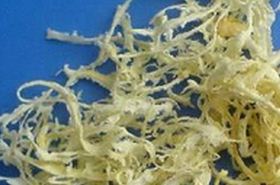
This type presents as long, network-like strands. It's typically a pale yellowish-white color, which may transform into brownish-yellow over time. The upper end is connected to the stem, while the lower fibers are interwoven and run straight. Each bundle usually measures around 6-10 centimeters in length and 0.5-1 centimeter in width. The stem base often forms a round, cap-like shape, with more than ten or more bundles tightly pressed together into a rectangular block. Phoenix-Tail Tangerine Pith is light, airy, and soft in texture, becoming brittle and easily broken once dried. It carries an aromatic scent and a slightly bitter taste. The best quality is noted for its neatness, uniform appearance, long unbroken strands, and a clear yellow color.
② Golden-Thread Tangerine Pith (Jin Si Ju Luo)
This variety appears as irregular, loose clumps, often resembling tangled threads of varying lengths, and is commonly mixed with the stem. Other characteristics are similar to the Phoenix-Tail Tangerine Pith.
③ Shovel Pith (Chan Luo)
In this form, the fibrous strands are mostly loose, fragmented, and often mixed with small, white pieces of the inner pith. You might also find bits of the stem and small fragments of the inner pulp. Among the three, Phoenix-Tail Tangerine Pith is regarded as having the best quality, while Shovel Pith is considered the lowest.
Dosage and Administration of Tangerine Pith
For oral consumption, Tangerine Pith is typically prepared as a decoction (boiled in water), with a recommended dosage of 0.8 to 1.5 Qian (which translates to approximately 3 to 5.6 grams).
Preparation: The fibers are usually collected during summer and autumn. They are carefully peeled from either the fruit peel or the inner pulp, then sun-dried, and used in their raw form.
Functions and Actions of Tangerine Pith
Functions: Tangerine Pith is widely recognized in TCM for its ability to invigorate channels and collaterals (通络), transform phlegm (化痰), and stop cough (止咳).
Indications: It is primarily used for conditions such as cough with abundant phlegm, and discomfort or pain in the chest and hypochondriac regions (the area below the ribs).
Related Discussions on Tangerine Pith
Throughout history, various classical texts have elaborated on the benefits of Tangerine Pith, highlighting its unique properties:
- From Ben Cao Chong Yuan: "The fibrous membranes on the tangerine pulp effectively treat thirst and vomiting after drinking alcohol. When decocted and consumed, it's highly efficacious because it can move fluids accumulated in the chest towards the skin."
- From Ben Cao Shi Yi (Supplements to the Compendium of Materia Medica): "Jin Yu-cheng stated that Tangerine Silk specifically promotes smooth circulation of stagnant Qi within the meridians. I have frequently used it with great success to treat severe pulse distention caused by rebellious Wei Qi (Defensive Qi) in the lungs."
- From Ben Cao Bian Du: "Tangerine Pith, sweet and cold, enters the collaterals. It has no significant powerful uses, perhaps only capable of clearing residual heat within the collaterals."
- From Ri Hua Zi Ben Cao: "Treats thirst and vomiting after drinking alcohol; frying it and then decocting it for consumption is very effective."
- From Ben Cao Shi Yi: "Invigorates stagnant Qi in the channels and collaterals, relieves pulse distention, expels accumulated phlegm from beneath the skin and between membranes, and vitalizes blood."
- From Ben Cao Qiu Yuan: "Invigorates channels, smooths Qi flow, transforms phlegm, dries the stomach and removes impurities, and harmonizes blood circulation."
3-Second Self-Test + 30-Second Self-Rescue
If... you're constantly clearing your throat due to a persistent cough with thick, stubborn phlegm, or experiencing a dull, nagging ache in your chest and sides (hypochondriac region)...
Then... consider exploring natural remedies that support your respiratory system and vital energy pathways. Immediately consult a qualified Traditional Chinese Medicine practitioner to discuss whether Tangerine Pith or other herbal remedies are suitable for your specific constitution and condition.
References
Comprehensive reviews on *Citrus reticulata* pericarp indicate its role in respiratory health and anti-inflammatory actions. PMID: 29918237
Studies have explored the anti-inflammatory activities of *Citrus reticulata* peel extracts, supporting its traditional use in conditions involving inflammation. PMID: 29026405
Further research highlights the ethnopharmacological uses, phytochemistry, and pharmacology of *Citrus reticulata* peel, reinforcing its therapeutic potential. PMID: 30149021
For informational purposes only. Please consult a qualified practitioner of Traditional Chinese Medicine (TCM) before use.