Juhong: Your Go-To Guide for This Traditional Chinese Herb
Hey there! Ever heard of Juhong? If you're into traditional Chinese medicine (TCM) or just curious about natural health remedies, you might want to get acquainted with this powerful herb. Commonly known as Red Tangerine Peel, Juhong is a staple in the TCM pantry, celebrated for its ability to clear phlegm, ease coughs, and soothe digestive woes. Let's dive into what makes Juhong so special, from its ancient wisdom to its modern-day applications.
What is Juhong? The Basics
Juhong, often referred to as Huazhou Juhong, Yunpi, or Yunhong, is more than just a tangerine peel. It's specifically the dried outer layer of the fruit from a particular citrus plant, carefully prepared for medicinal use. Think of it as a cousin to Chenpi (aged tangerine peel), but with its own unique energetic profile.
Energetic Properties in TCM
- Flavor: Pungent and Bitter
- Nature: Warm
In TCM, "pungent" herbs help to disperse and move, while "bitter" herbs tend to dry dampness and descend Qi. Its "warm" nature means it's generally used for conditions characterized by cold or dampness in the body, helping to warm things up and get circulation flowing.
Meridian Tropism
Juhong primarily targets the Lung and Spleen meridians. This means it has a direct influence on the functions associated with these organ systems in TCM – particularly respiratory health (Lungs) and digestion/fluid metabolism (Spleen).
The Medicinal Part
The part of the plant used as medicine is the dried outer fruit peel. It's not just any peel; it's specifically processed to harness its therapeutic properties.
What Does Juhong Look Like?
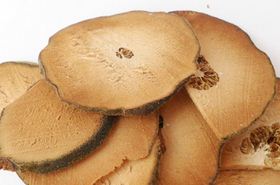
This herb usually comes in long strips or irregular thin flakes. Its edges might appear wrinkled and curled inwards. The outer surface typically ranges from yellow-brown to orange-red, deepening to a brown-red color upon storage. You'll notice tiny, dense yellow-white bumps or depressions on it – these are its essential oil chambers! The inner surface is yellow-white and often dotted with small, translucent indentations. Juhong is quite brittle and breaks easily. When you take a whiff, it has a distinct aromatic fragrance, and its taste is slightly bitter and a bit numbing.
How to Use Juhong & Dosage
Juhong can be incorporated into your health routine in a few ways:
- Decoction: Typically, 3-5 grams (0.8-1.5 qian) is simmered in water to make a tea.
- Pills or Powders: It can also be ground into a fine powder and made into pills or taken as a loose powder.
Preparation Methods (Paozhi)
The way Juhong is prepared can subtly alter its properties. Here are some common methods:
- Raw Juhong (橘红): Simply clean off any impurities, brush it thoroughly, and break it into smaller pieces before use. This form retains its original energetic properties.
- Salt-Processed Juhong (盐橘红): Clean Juhong is evenly sprayed with salted boiling water until it absorbs the liquid, then air-dried. (For example, about 1 kg of table salt for every 50 kg of Juhong, dissolved in warm water). This processing helps to guide its effects towards the kidneys or to soften its nature.
- Honey-Fried Juhong (蜜橘红): Juhong is stir-fried over low heat until it turns slightly yellow. Honey is then added and mixed thoroughly, and frying continues until it achieves a lightly scorched yellow color. It's then removed and air-dried. (Typically, about 12.5 kg of honey for every 50 kg of Juhong). Honey-frying can enhance its lung-moistening and qi-tonifying effects.
The Power of Juhong: Key Actions & Benefits
Juhong shines when it comes to regulating your body's vital energy (Qi) and tackling issues related to dampness and phlegm.
Main Actions (功效):
- Regulates Qi and Harmonizes the Middle Jiao: This means it helps your body's energy flow smoothly, particularly in the digestive system (Middle Jiao), relieving discomfort like bloating and indigestion.
- Dries Dampness and Resolves Phlegm: It's excellent for drying out excess moisture in the body and breaking down stubborn mucus, making it easier to expel.
Traditional Uses (主治):
Juhong is commonly used to address a range of symptoms, including:
- Cough with Abundant Phlegm: Especially when the phlegm is thick and difficult to expectorate.
- Food Stagnation and Alcohol-Related Digestive Issues: Helps to ease indigestion, bloating, and discomfort that arises from overeating or excessive alcohol consumption.
- Nausea, Vomiting, and Oppressive Chest Sensation: It can calm upset stomachs and relieve feelings of heaviness or fullness in the chest.
Research continues to explore the mechanisms behind these traditional uses. For instance, studies indicate that certain compounds in citrus peels can reduce inflammation and mucus hypersecretion in airway cells, supporting Juhong's role in respiratory health. PMID: 30043588
Important Note: Who Should Avoid Juhong?
While generally safe, Juhong isn't for everyone. It's traditionally advised that individuals with:
- Dry Cough due to Yin Deficiency: This often presents as a dry, ticklish cough with minimal or no phlegm, accompanied by symptoms like night sweats, dry mouth, or a feeling of heat in the palms and soles. Since Juhong is drying and warm, it could exacerbate these symptoms.
- Cough due to Qi Deficiency: If your cough is weak and easily triggered, especially with general fatigue and a lack of energy (common signs of Qi deficiency), Juhong might not be the best choice as its primary action is to move Qi rather than tonify it.
Always consult a qualified TCM practitioner before using Juhong, especially if you have chronic conditions or are unsure about your TCM diagnosis.
Traditional Combinations for Enhanced Efficacy
In TCM, herbs are often combined to create synergistic effects. Here are a couple of classic examples:
- For Childhood Vomiting and Diarrhea: Equal parts Clove (Ding Xiang) and Juhong, refined with honey into pills the size of a soybean. Taken with rice water. (From Liu's Pediatric Formulas).
- To Stabilize Cough and Resolve Phlegm: Equal parts Baiyao Jian (a processed herb), sliced Scutellaria baicalensis (Huang Qin), Juhong, and Licorice (Gan Cao). Ground into a fine powder and formed into mung bean-sized pills with steamed cake. Swallow a few pills dry from time to time for excellent results. (From Binhu Medical Cases).
Classic Formulas Featuring Juhong
Juhong is a valued ingredient in many time-tested TCM formulas:
- Treating Belching with Water Regurgitation: True orange peel (with the white pith removed) is powdered. At 5 AM, place 0.5 grams on your palm and lick it, then go back to sleep. (From Strange Disease & Wonderful Formulas).
- The Famous Er Chen Tang (Two Aged Herbs Decoction): This formula is a classic for phlegm-dampness conditions, such as vomiting with a dull sensation in the chest, dizziness, heart palpitations, abdominal discomfort, or chills and fever due to consuming cold foods or spleen-stomach imbalance. It combines Pinellia (processed by washing seven times), Juhong (approx. 175 grams each), Poria (approx. 105 grams), and Roasted Licorice (approx. 52.5 grams). The herbs are finely chopped. For each dose (approx. 15 grams), decoct with one cup of water, seven slices of fresh ginger, and one ume plum until reduced to about six-tenths of the original volume. Drink warm, anytime. (From Bureau's Formulas).
- Treating Sudden Chest Pain on the Road: Orange peel (white pith removed) is decocted and drunk, which is highly effective. (From Tan Yeneng's Tested Formulas).
- Addressing Wind-Phlegm Numbness: Juhong (approx. 500 grams or 1.1 lbs) is boiled in five bowls of pure water until soft. The dregs are removed, and the liquid is boiled again until reduced to one bowl. This is taken at once to induce vomiting. If vomiting doesn't occur, Gualouzi (Fructus Trichosanthis) powder can be added. (From Zhaiyuan Formulas).
- For Postpartum Spleen Qi Dysfunction and Urinary Retention: Juhong powder is taken in doses of approx. 7.5 grams on an empty stomach with warm wine. (From Formulas for Women's Diseases).
- Treating Breast Carbuncles (Mastitis): For immediate dissipation if not yet formed, or ulceration if already formed, especially for unbearable pain. This uses aged tangerine peel (soaked in hot water to remove the white pith, sun-dried, then stir-fried with flour until yellow) powdered, combined with ground musk. Mix with wine and take approx. 7.5 grams. (From Shenghui Formulas, Juxiang San - Tangerine Fragrance Powder).
Historical Perspectives and Modern Insights
Juhong has a rich history in TCM, with its properties documented in foundational texts:
- From Bencao Gangmu (Compendium of Materia Medica): "Descends Qi and resolves phlegm." This classic text highlights Juhong's primary role in regulating vital energy and clearing congestion.
- From Benjing Fengyuan (Origins of the Classic of Materia Medica): "Juhong specifically treats cough with abundant phlegm due to lung cold. It is frequently used in formulas for deficiency-depletion. However, it is not suitable for chronic cough with Qi leakage." This emphasizes its targeted action for cold-phlegm and warns against its use in certain deficiency conditions.
- From Yaopin Huayi (Elaboration on Medicinal Properties): "Juhong, with its pungent flavor, disperses stagnation laterally, and its bitter flavor directly descends. It is a vital herb for regulating Qi. To treat phlegm, one must regulate Qi; when Qi flows smoothly, phlegm naturally resolves. Thus, it enters the Lung and Spleen meridians, treating all phlegm conditions, its efficacy surpassing other phlegm-resolving herbs. It assists Bamboo Shavings (Zhuru) to treat heat hiccups, aids Green Tangerine Peel (Qingpi) to guide stagnant Qi, combines with Atractylodes (Cangzhu) and Magnolia Bark (Houpo) to balance excess in the stomach, and joins green onion (Congbai) and ephedra (Mahuang) to release external cold-dampness. **Please note: Ephedra (Mahuang) is a potent herb and should only be used under the strict guidance of a qualified TCM practitioner due to potential side effects and interactions.** It eliminates food stagnation, detoxifies alcohol, stops vomiting, and opens chest stuffiness. It promotes renewal and dispels old, all due to its pungent spreading and bitter descending properties." This detailed description beautifully summarizes Juhong's versatility and its energetic actions within TCM theory.
Modern reviews also highlight the broad range of pharmacological activities associated with citrus peels, including anti-inflammatory and antioxidant properties, further supporting their traditional uses. PMID: 37575775 And specifically, research into different varieties of mandarin citrus peels has shown significant anti-inflammatory and antioxidant activities, contributing to overall health benefits. PMID: 32692095
3-Second Self-Check + 30-Second Self-Relief
Self-Check: If you're frequently experiencing a persistent cough with a lot of thick, white phlegm, often feel bloated after meals, or have an uncomfortable fullness in your chest, Juhong might be a beneficial herb for you.
Self-Relief: Immediately consider incorporating Juhong into a warm tea (decoction) as described above to help move stagnation and clear phlegm. Even a simple Juhong tea can offer immediate relief for mild digestive discomfort and ease breathing. Always consult with a qualified TCM practitioner for personalized advice!
For informational purposes only. Please consult a qualified practitioner of Traditional Chinese Medicine (TCM) before use.References
- Citri Rubrum Exocarpium, a Traditional Chinese Medicine, Inhibits Inflammation and Hypersecretion of Mucus in Airway Epithelial Cells PMID: 30043588
- Chemical Constituents and Pharmacological Activities of Citri Reticulatae Pericarpium (Chenpi) and Citri Rubrum Exocarpium (Juhong): A Review PMID: 37575775
- Anti-inflammatory and antioxidant activities of Citrus peels from different varieties of mandarin PMID: 32692095