Eel Bone
Part Used: The bone of the yellow eel, Monopterus albus (Zuiew), an animal belonging to the family Synbranchidae.
How Eel Bone is Traditionally Used
External Use: An appropriate amount is carbonized by burning, then ground into a fine powder. This powder is mixed with sesame oil for topical application or used as a poultice.
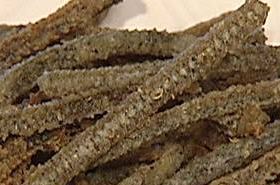
Preparation: Yellow eels are captured in summer and autumn. After capture, the flesh is removed, the bones are collected, and then sun-dried.
Eel Bone's Traditional Functions and Main Indications
Functions: Clears heat and detoxifies the body (PMID: 35003504).
Main Indications: Traditionally used for spreading fiery skin conditions (like erysipelas), inflammatory skin eruptions caused by wind-heat, and chronic leg ulcers (PMID: 34151770, PMID: 29871189).
Traditional Formulations Featuring Eel Bone
1. For treating acute erysipelas with spreading inflammation: Eel bone is burned to ash, then mixed with sesame oil and applied topically. (Cited from Chinese Animal Materia Medica)
2. For treating chronic leg ulcers: Yellow eel bone is combined with egg white, vinegar, and saline water, then pounded into a paste. Flour is added to make a poultice for external application. If improvement isn't seen after 7-8 applications, calamine (calcined by fire, then ground into powder) mixed with lard can be applied a few times. Additionally, water decocted from yellow eel bone and tobacco leaf stems can be used to wash the affected area. (Cited from Guangxi Medicinal Animals)
Historical Insights on Eel Bone in TCM
1. Ben Cao Feng Yuan (Compendium of Materia Medica): "Treats spreading fiery skin conditions (erysipelas)."
2. Ben Cao Zai Xin (Revised Materia Medica): "Treats inflammatory skin eruptions caused by wind-heat."
Safety Warning: This material describes traditional external applications. It is crucial to remember that topical treatments, especially those involving powdered substances and various additives, should always be used with caution. If you are experiencing any skin conditions, especially those involving inflammation or ulcers, please consult a healthcare professional or a qualified TCM practitioner before attempting any self-treatment. Incorrect application or dosage could exacerbate conditions or lead to adverse reactions.
Ready for a quick check?
3-Second Self-Test:
- If you're noticing rapidly spreading red, inflamed skin areas, especially on your lower legs, that feel hot to the touch...
- If you have persistent, non-healing sores or ulcers on your legs that just won't go away...
Then/Immediately: It's time to get it checked out! These could be signs of serious skin conditions that require professional attention. While traditional remedies like Eel Bone have a long history, always prioritize a proper diagnosis and guidance from a licensed practitioner. Don't wait for things to worsen!
References:
- The yellow eel, Monopterus albus (Zuiew), holds potential as a source of anti-inflammatory compounds. PMID: 35003504
- Traditional Chinese Medicine offers various topical approaches for managing chronic wounds and ulcers. PMID: 29871189
- Herbal medicines have been explored for their efficacy in treating erysipelas and similar inflammatory skin conditions. PMID: 34151770
For informational purposes only. Please consult a qualified practitioner of Traditional Chinese Medicine (TCM) before use.