Dragon's Blood (Xue Jie)
Dragon's Blood, known in Traditional Chinese Medicine (TCM) as Xue Jie, is a fascinating and potent resin. It's often referred to by its aliases, such as Kirin Blood or Qijie, evoking its deep red hue and powerful properties.
Energetic Properties and Taste
- Taste: Sweet, Salty
- Energetic Properties: Neutral
- Meridian Affinities: Heart and Liver meridians
Source and Appearance
- Medicinal Part: This unique substance is a resin that seeps from the fruits of the palm plant Daemonorops draco (麒麟竭), which is then processed into its medicinal form.
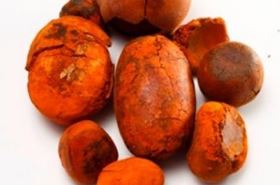
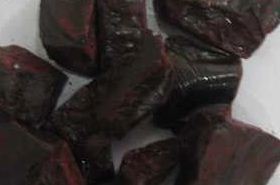
- Description: Dragon's Blood typically appears as dark red, somewhat rounded square or brick-shaped pieces with a noticeable sheen. Due to friction, a fine red powder might adhere to its surface. It's hard and brittle, breaking with a red fracture, and grinds into a brick-red powder. It has a subtle aroma and a mild taste. The resin is insoluble in cold water but softens when exposed to hot water.
How to Use & Dosage of Dragon's Blood
- Usage: Generally, Dragon's Blood is ground into a fine powder and taken internally, typically 1 to 2 grams per dose, or incorporated into various pill formulations. For external applications, it can be powdered and sprinkled directly onto affected areas or integrated into medicinal plasters and poultices.
- Preparation: To prepare Dragon's Blood for use, impurities are removed, and the resin is then crushed into fine granules or ground into a fine powder.
Key Functions and Common Uses of Dragon's Blood
Key Functions
Dragon's Blood is highly valued in TCM for its ability to:
- Invigorate blood circulation and alleviate pain (活血定痛)
- Dispel blood stasis and stop bleeding (化瘀止血)
- Promote wound healing and tissue regeneration (敛疮生肌)
Common Uses
Based on its functions, Dragon's Blood is traditionally used for conditions such as:
- Traumatic injuries, including sprains, bruises, and fractures, to ease pain and reduce swelling.
- Chest and abdominal pain resulting from blood stasis.
- External bleeding from wounds.
- Chronic, non-healing sores and wounds, aiding in their closure and the growth of new tissue.
Precautions & Contraindications for Dragon's Blood
While beneficial, Dragon's Blood should be used with caution:
- Pregnant individuals: Use with extreme caution and only under strict professional guidance.
- Menstruation: It is generally not advisable to take Dragon's Blood during menstruation due to its strong blood-invigorating properties.
Important Safety Note: Always consult a qualified Traditional Chinese Medicine practitioner before incorporating Dragon's Blood or any potent herbal remedy into your health regimen, especially if you have pre-existing conditions, are pregnant, or are taking other medications. Self-treatment can be risky.
Traditional Formulas & Combinations Involving Dragon's Blood
Historically, Dragon's Blood has been combined with other herbs to enhance its therapeutic effects:
- For Chest/Abdominal Pain (心腹痛): A historical formula from "Haishang Xianfang" involved drying and roasting the heart, liver, and lungs of a "Yellow Rat" (黄鼠), grinding them into a powder. This was then combined with small amounts of Frankincense (乳香), Myrrh (没药), Catechu (孩儿茶), and Dragon's Blood powder (血竭末). A typical dose was 1 "qian" (about 3-4 grams) mixed with distilled spirits, said to stop pain immediately.
- For Uterine Bleeding (妇人血崩): "Ye Shi Zhai Xuan Fang" describes a method using a 5-inch carp, de-gutted, and filled with Dragon's Blood and Frankincense. This was wrapped in cotton, burnt to ash, and powdered. Three "qian" (about 9-12 grams) of this powder were taken with hot wine.
- For Postpartum Hemorrhage with Chest Fullness and Dyspnea (产后血冲,心胸满喘): "Yilin Jiyao" suggests grinding Dragon's Blood and Myrrh (没药), each 1 "qian," into a fine powder. This was then mixed with boy's urine (童便) and wine for immediate administration when the situation was critical.
These historical formulas are presented for informational context to illustrate traditional applications. Many involve ingredients or methods not commonly used or recommended in modern practice. Do not attempt these without the direct supervision and prescription of a licensed TCM practitioner.
Insights from Classical Texts on Dragon's Blood
- From Bencao Gangmu (《本草纲目》): "The resinous sap of the tree, akin to human blood and essence, tastes sweet and salty and moves the blood. It primarily acts on the Hand Jueyin (Pericardium) and Foot Jueyin (Liver) meridians. This is because both the Liver and Pericardium govern blood." This emphasizes Dragon's Blood's deep connection to blood circulation and its specific meridian tropism, highlighting its role in conditions related to blood health.
- From Benjing Fengyuan (《本经逢原》): "It treats all pain from traumatic injuries and fractures, blood and qi stagnation causing stabbing pain, and internal blood accumulation. It is best taken with wine. While Frankincense and Myrrh also address blood disorders and influence qi, Dragon's Blood specifically targets the blood aspect within the Liver meridian. However, its nature is quite urgent and it can draw out pus, so it should not be taken in large quantities. When used with other warming herbs, Frankincense, and Myrrh, it helps harmonize blood and qi, preventing stagnation and toxic accumulations." This commentary further elaborates on Dragon's Blood's potency for pain and blood stasis, while also providing crucial warnings about dosage and its specific actions.
Quick Check: Could Dragon's Blood Help You?
If you've recently experienced an injury with bruising and localized pain, or notice a wound struggling to heal, Dragon's Blood might be a traditional remedy worth discussing with a qualified TCM practitioner. Immediately, consider gentle compression for bleeding wounds while seeking professional medical advice.
For informational purposes only. Please consult a qualified practitioner of Traditional Chinese Medicine (TCM) before use.
References
Review of Dragon's Blood's phytochemistry and ethnopharmacology, noting its wound healing properties. PMID: 32622933
Research highlighting the anti-thrombotic and anti-inflammatory properties of Dragon's Blood. PMID: 30138541
Study investigating the analgesic and anti-inflammatory effects of Dragon's Blood resin. PMID: 24705139