Di Sumu
Di Sumu, also known by its evocative aliases like "Climbing Dragon," "Fern Diamond Yellow," "Chicken Blood Lotus," "Dispersing Blood Lotus," and "Phoenix Tail Qi," is a revered herb within Traditional Chinese Medicine (TCM).
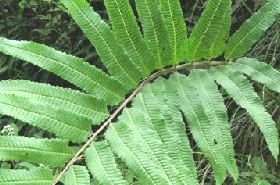
Aliases: Climbing Dragon, Fern Diamond Yellow, Chicken Blood Lotus, Dispersing Blood Lotus, Phoenix Tail Qi.
Nature and Flavor: It possesses a bitter and astringent taste, with a cool nature.
Channel Tropism: Primarily enters the Liver Meridian.
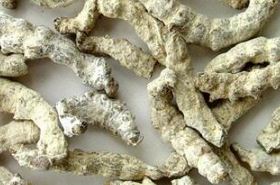
Medicinal Part: The therapeutic components of Di Sumu are derived from the rhizome and the entire plant of Pronephrium penangianum (Hook.) Holtt., a species belonging to the Thelypteridaceae family.
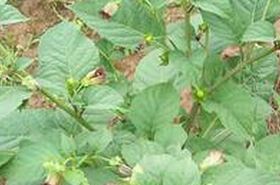
Morphological Characteristics: This plant features a long, creeping, robust, and firm rhizome, which can reach up to 1 cm in diameter, presenting a dark brown color with distinct longitudinal grooves. Its fibrous roots are similarly dark brown and are densely covered with soft, brown hairs. The leaves are pinnately compound, with leaf blades that are lanceolate or oblong-lanceolate and papery in texture. The sori, or spore clusters, are round, arranged in two rows close to the lateral veins, and lack an indusium (a protective membrane). The spores themselves are typically reniform (kidney-shaped).
Di Sumu: Usage and Dosage
Internal Use: Typically prepared as a decoction, with a recommended dosage of 9-18g. It can also be steeped in wine for consumption.
Di Sumu: Actions and Indications
Actions: Di Sumu is traditionally used to invigorate blood circulation and to help dispel dampness from the body.
Indications: It is commonly applied to address lower back pain resulting from falls, sprains, or minor traumatic injuries, as well as conditions characterized by stagnant blood and sluggish vital energy flow within the body.
Di Sumu: Traditional Formulas
For traumatic injuries: A traditional preparation involves using 30g of Di Sumu. This is steeped in white liquor for half a day, after which 10-20ml can be consumed orally per dose. For external application, an appropriate amount of the infused liquor can be applied directly to the injured area. (As documented in "Wanxian Chinese Herbal Medicine")
Di Sumu: Related Discussions
1. From the "Sichuan Commonly Used Chinese Herbal Medicines" text: "It disperses stagnant blood and removes dampness. It is used for lower back pain from falls or trauma, and conditions involving blood stasis and stagnant vital energy."
2. As noted in the "Guizhou Flora and Fauna Catalog": "It treats injuries from overexertion and dysentery."
If you're noticing persistent aches, especially in your lower back after a minor fall or injury, or feeling a general heaviness and stiffness that hints at dampness, then consider gentle movement and warming therapies to encourage smooth vital energy and blood flow. Immediately reach out to a TCM practitioner for personalized guidance.
For informational purposes only. Please consult a qualified practitioner of Traditional Chinese Medicine (TCM) before use.
References
Exploring how Traditional Chinese Medicine approaches blood stagnation is key to understanding Di Sumu's role in promoting overall wellness. PMID: 25170366
Understanding the concept of dampness in TCM helps shed light on various symptoms and the therapeutic strategies employed. PMID: 32675662
TCM offers diverse approaches to managing musculoskeletal pain, providing context for Di Sumu's application in traumatic injuries. PMID: 29468007