Understanding Cryptorchidism: What Exactly Is It?
Cryptorchidism, often referred to as an undescended testicle, is a condition where one or both testicles fail to move down into the scrotum after a boy is born. This journey usually begins early in embryonic development. Around the third month of pregnancy, the testicles are located near the spinal column in the lumbar region. As the embryo grows, they gradually descend. By the sixth to seventh month, they typically reach the inguinal canal in the lower abdomen, and by the ninth month, they should pass through this canal to finally settle in the scrotum.
Sometimes, a boy’s testicle might be found just above the scrotum or within the groin area; these are often called "false" or "ectopic" cryptorchidism. However, if the testicle remains entirely within the abdominal cavity, it's considered "true" cryptorchidism, accounting for about 15% to 25% of cases. There's also a "retractile testicle," which can move back and forth between the scrotum and the groin, much like playing hide-and-seek. This is not considered true cryptorchidism. Studies show that approximately 2% to 10% of full-term newborns have an undescended testicle (this can jump to 20% to 30% in premature babies). Most of these descend naturally within a few months. Yet, for boys over one year old, the incidence of undescended testicles remains at about 0.8% to 1%. In adults, cryptorchidism affects 0.2% to 0.4% of the population, with roughly one-tenth of these cases being bilateral (affecting both testicles). (Approximately 2-5% of full-term male infants and up to 30% of premature male infants are born with cryptorchidism. PMID: 30671607)
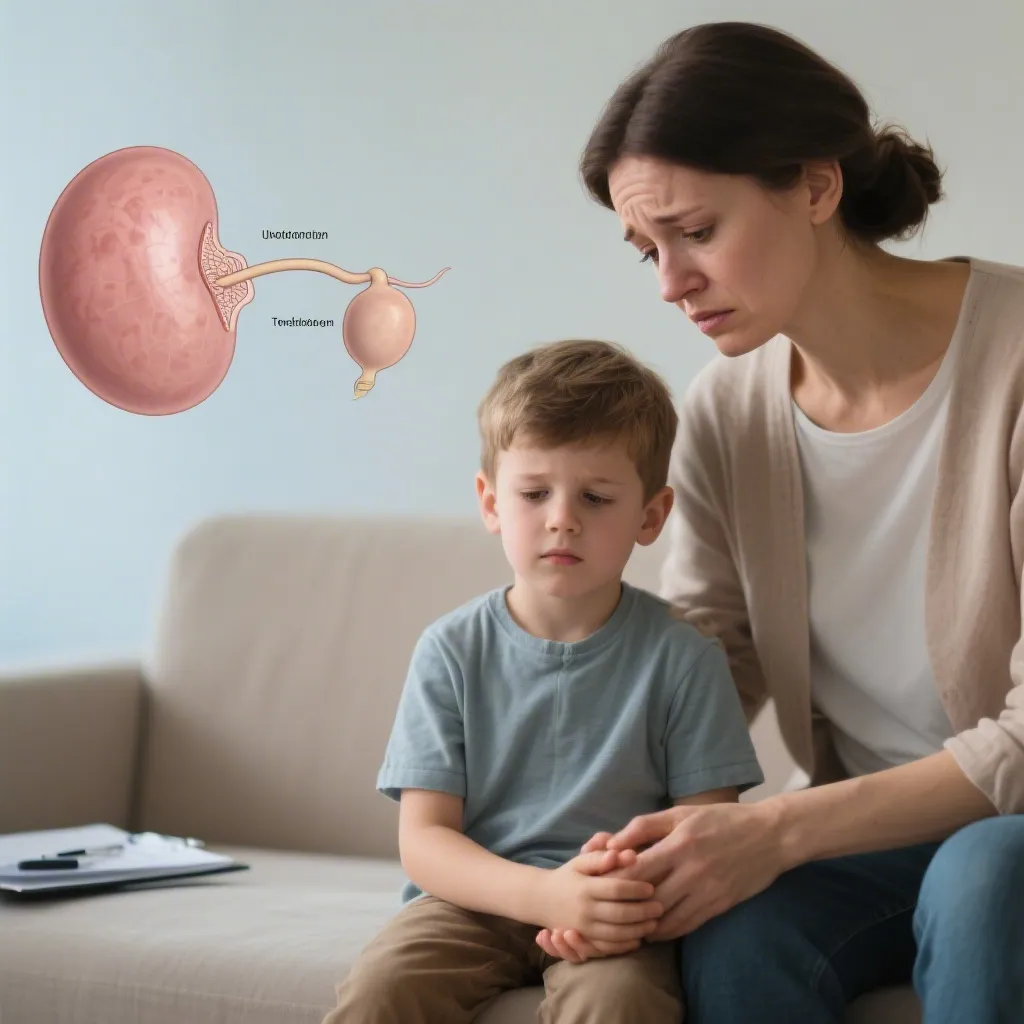
Seriously Concerning Consequences of Cryptorchidism
When a testicle stays in an abnormal position for an extended period, it can lead to several serious issues:
Testicular Atrophy
Testicles that haven't descended into the scrotum undergo only minor tissue changes within the first two years after birth. However, after 2 to 5 years, this can lead to impaired testicular development or even atrophy (shrinkage). For individuals with bilateral cryptorchidism, the risk of infertility is significantly high, affecting up to 90% of patients.
Significantly Increased Cancer Risk
Patients with cryptorchidism face a substantially elevated risk of developing testicular cancer—20 to 48 times higher than those with normally descended testicles. The risk is even five times greater for testicles located in the abdomen compared to those in the groin. This heightened risk is primarily attributed to congenital defects of the testicle itself, as well as its abnormal location and the higher ambient temperature within the body compared to the scrotum. (The risk of germ cell tumors in cryptorchid testicles is estimated to be 3 to 14 times higher than that of normally descended testicles. PMID: 22476599)
Vulnerability to Injury
Normally, testicles within the scrotum have a good range of motion, which helps protect them from injury. However, a testicle located in the groin is susceptible to compression when the abdominal muscles contract. Similarly, an abdominal testicle is frequently subjected to pressure changes within the abdomen.
Risk of Testicular Torsion
Undescended testicles may have abnormal attachments of the gubernaculum (testicular ligament) or cremaster muscle, or unusual attachments of the tunica vaginalis, all of which can increase the likelihood of testicular torsion—a painful twisting of the spermatic cord that cuts off blood supply.
Associated Conditions
Approximately 65% of patients with cryptorchidism also present with an associated inguinal hernia.
Emotional and Psychological Impact
An empty scrotum can unfortunately lead to feelings of self-consciousness, emotional distress, and even social isolation, impacting a boy's psychological well-being.
Navigating Effective Treatments for Cryptorchidism
Hormonal Therapy
For cases of bilateral cryptorchidism, doctors may initially try treatment with human chorionic gonadotropin (hCG) hormone. This therapy should ideally be administered between the ages of 3 and 5 years. If hormonal treatment proves ineffective, it’s generally not recommended to continue or repeat the course; instead, surgical intervention should be considered.
Surgical Intervention: When and How
Surgery is the primary treatment for unilateral (one-sided) cryptorchidism and for bilateral cases where hormonal therapy has failed.
Optimal Surgical Timing
There's a growing consensus on performing testicular fixation (orchidopexy) at an increasingly earlier age. Most experts now recommend surgery before the age of two. For low-lying undescended testicles, surgery may still be effective if performed before six years of age. (Early orchidopexy, ideally between 6 and 18 months, is crucial for preserving fertility potential and reducing the risk of malignancy. PMID: 29469752)
Common Surgical Procedures
Orchidopexy (Testicular Fixation)
This procedure is typically recommended for boys aged 2 to 5 years, for those with unilateral cryptorchidism, or when hormonal treatment hasn't worked. Unilateral cryptorchidism is often caused by mechanical factors, such as a short spermatic cord, blood vessels, or vas deferens, or adhesions, making surgery necessary. The surgical method involves carefully freeing the testicle and surrounding spermatic cord tissues, gently pulling the testicle down into the scrotum, and then securing it in place.
Testicular Autotransplantation
If the spermatic cord is too short or the testicle is positioned too high to be brought down into the scrotum even after extensive mobilization, a more complex procedure called testicular autotransplantation may be performed. This involves carefully detaching the undescended testicle along with its blood vessels, transplanting it into the scrotum, and then meticulously rejoining the testicular blood vessels to nearby scrotal vessels under a surgical microscope to ensure its blood supply. The primary goal of both orchidopexy and autotransplantation is not just to restore the testicle to its normal anatomical position, but crucially, to preserve its normal tissue structure and spermatogenic (sperm-producing) function. If surgery is performed between 2 and 5 years of age, approximately 80% of cases can retain their fertility potential.
Orchidectomy (Testicular Removal)
In cases where a high-lying undescended testicle has already become atrophied (shrunken) or for adults diagnosed with cryptorchidism, an orchidectomy (surgical removal of the testicle) may be performed promptly. This is primarily done to prevent the potential development of cancer.
References
Quick 3-Second Check & 30-Second Action Plan
If your child’s scrotum appears empty, unusually flat, or you can’t feel one or both testicles inside, immediately schedule a consultation with a pediatrician or pediatric urologist.
If a medical professional confirms an undescended testicle, immediately discuss the optimal timing and type of treatment (whether hormonal or surgical) to prevent long-term complications like infertility and cancer risk.
For informational purposes only. Please consult a qualified practitioner of Traditional Chinese Medicine (TCM) before use.