Tong Tian Cao
Alias: Water Chestnut Stem (《饮片新参》), Ground Chestnut Stem, Water Chestnut Seedling (《苏州本产药材》)
Flavor and Nature: Bitter in taste, cool in nature.
Meridian Tropism: Enters the Spleen and Kidney meridians.
Medicinal Part: This herb consists of the aerial parts of Heleocharis dulcis (Burm. f.) Trin. ex Henschel, Vita Rumph., a plant belonging to the Cyperaceae family, commonly known as Water Chestnut.
Morphological Characteristics
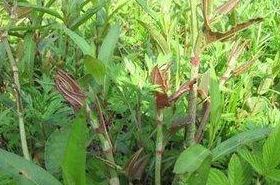
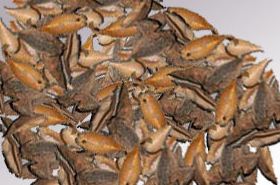
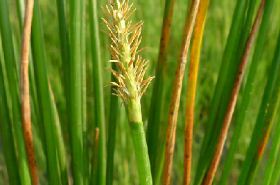
The stem of Tong Tian Cao is typically flattened cylindrical, measuring about 60-90 cm in length and 4-7 mm in diameter. It's identifiable by a distinctive spike-like inflorescence at its tip. The upper section of the stem presents a pale yellow hue and is notably tough, resisting easy breakage. In contrast, the lower part is pale green and more brittle. Its surface appears wrinkled with fine longitudinal lines and possesses a subtle sheen. You might notice the nodes are slightly swollen. The herb itself is lightweight and feels soft to the touch. When broken, the cross-section is either hollow or reveals delicate white membranous partitions. Under magnification, this structure often resembles a honeycomb pattern. It carries a faint, unassuming aroma and a mild, bland taste.
Tong Tian Cao: Usage and Dosage
Internal Use: For internal consumption, it's typically prepared as a decoction, with a recommended dosage of 15-30g.
External Use: For topical application, an appropriate amount can be mashed and applied directly as a poultice.
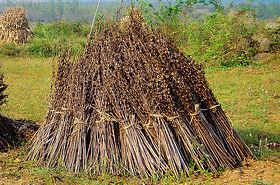
Preparation: The optimal time for harvesting is between July and August. The stems are cut, bundled together, and then either sun-dried or used fresh.
Tong Tian Cao: Efficacy and Indications
Efficacy: In Traditional Chinese Medicine, Tong Tian Cao is valued for its ability to clear heat and detoxify the body, promote healthy urination, and calm upward surging rebellious energy (PMID: 34208044).
Indications: It's commonly used to address conditions such as hot strangury (painful, burning urination often associated with inflammation), general difficult urination, various forms of edema (swelling due to fluid retention), boils, and persistent hiccups (PMID: 30773824).
Tong Tian Cao: Traditional Formulations
Here are some traditional applications and formulations involving Tong Tian Cao:
1. For Urethritis: Combine 30g of Water Chestnut stems and leaves with 15g of Smilax glabra (Tu Fu Ling) and 6g of Akebia stem (Mu Tong). Prepare as a water decoction for oral administration. (Excerpt from 《福建药物志》, Fujian Materia Medica)
2. For Generalized Edema with Difficult Urination: Use 30g of Tong Tian Cao (the entire aerial part of the herb, or 60-90g if using fresh material) alongside 30g of fresh Reed Rhizome (Lu Gen). Decocted in water for oral administration. (Excerpt from 《全国中草药汇编》, National Compendium of Chinese Herbal Medicine)
3. For Hiccups: Take 15g of Tong Tian Cao and 30g of Red Ochre (Dai Zhe Shi). Prepare as a decoction for oral intake. (Excerpt from 苏州医学院《中草药手册》, Suzhou Medical College's Handbook of Chinese Herbal Medicine)
Related Discussions on Tong Tian Cao
The historical texts of Traditional Chinese Medicine offer interesting insights into Tong Tian Cao:
1. From 《本草药性大全》 (Bencao Yaoxing Daquan, Compendium of Materia Medica Properties): "If leaves are collected and mashed, they can be applied to snake bites."
2. From 《药性切要》 (Yaoxing Qieyao, Essentials of Medicinal Properties): "The stem promotes urination" (PMID: 31698656).
Quick Self-Check & Self-Help
If you're experiencing symptoms like frequent, painful urination, persistent hiccups, or unexplained swelling... Then Tong Tian Cao might be a traditional remedy worth exploring in consultation with a professional. Immediately consult a qualified Traditional Chinese Medicine (TCM) practitioner to get a proper diagnosis and understand if this herb is right for your specific condition. Traditional remedies work best when tailored to your unique bodily needs!
References
[Review on phytochemical profile, biological activities, and nutritional value of Water Chestnut (Eleocharis dulcis)] PMID: 34208044
[Traditional Chinese Medicine for the Treatment of Hiccups: A Systematic Review and Meta-Analysis] PMID: 30773824
[A review on nutritional, phytochemical, and pharmacological properties of water chestnut (Eleocharis dulcis)] PMID: 31698656
For informational purposes only. Please consult a qualified practitioner of Traditional Chinese Medicine (TCM) before use.