Millipede (Ma Lu)
Known by many fascinating historical and folk names in ancient Chinese texts, the Millipede (马陆, Mǎ Lù) has been referenced as Jiao (蛟) in Zhuangzi, Bai Zu (百足, "Hundred-foot") in Ben Jing, Ma Xian (马蚿), Qu Qu (蛆蟝), and Ma You (马蚰) in Fang Yan. Other notable aliases include Ma Juan (马蠲) in Shuo Wen, Qin Qu (秦渠) in Huainanzi (Gao You's commentary), Fei Xian Chong (飞蚿虫) by Li Dangzhi, Ma Zhou (马轴) in Wu Pu Ben Cao, Ju (蚐) in Er Ya (Guo Pu's commentary), Qian Zu (千足, "Thousand-foot") in Lei Gong Pao Zhi Lun, Dao Huan Chong (刀环虫, "Saber-ring insect") in Tang Ben Cao, Bai Jie Chong (百节虫, "Hundred-joint insect") in Sheng Hui Fang, and Qiong (蛩) in Gang Mu. More modern folk names include Qian Jiao Chong (千脚虫, "Thousand-leg insect") from Fen Lei Cao Yao Xing, Bi Zi Chong (篦子虫, "Comb insect") and Guo Er Duo (锅耳朵, "Pot ear") from Guizhou Min Jian Fang Yao Ji, Da Cao Xie Chong (大草鞋虫, "Large straw sandal insect") from Sichuan Zhong Yao Zhi, and Bai Jiao Lu (百脚陆, "Hundred-foot land dweller") from Quanzhou Ben Cao.
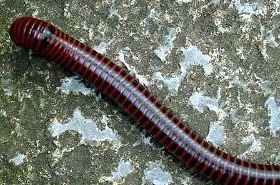
Flavor & Nature: Millipede possesses a pungent (辛, Xin) flavor and a warm (温, Wen) nature. It is considered toxic (有毒, You Du). In Traditional Chinese Medicine (TCM), pungent substances often have dispersing and moving properties, aiding in breaking up stagnation. A warm nature suggests it helps to warm the body and dispel cold.
Meridian Tropism: This herb primarily affects the Heart (心, Xin) and Lung (肺, Fei) meridians. Meridian tropism in TCM refers to the specific channels or organ systems an herb targets to exert its therapeutic effects, guiding where its medicinal actions are concentrated.
Part Used: The entire body of millipede species, specifically from the family Julidae (round-backed millipedes) such as Trigoniulus corallinus, or other related millipede types.
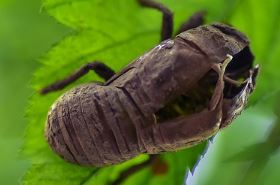
Morphological Characteristics: The millipede's body is cylindrical, typically measuring 2-3 cm in length and 2-3 mm in diameter. Its surface is pale yellow or yellowish-white, featuring approximately 20 segments, with deeper coloration at the joints. The legs are slender and lighter in color. The body is lightweight and brittle, easily breaking. The cross-section reveals a pale yellow edge with a brownish-red center. It has a faint odor and a slightly salty taste.
How to Use Millipede in TCM
Internal Use: It is typically ground into a powder or prepared as tablets, with a recommended dosage of 1-2g.
External Use: An appropriate amount can be prepared as a paste (膏, gao), ground into a fine powder, or mashed fresh for topical application.
Preparation (Pao Zhi): Millipedes are usually harvested between June and August. After collection, they are thoroughly cleaned to remove any impurities and soil, then dried either in the sun or by baking.
Functions and Indications of Millipede
Functions: In TCM, Millipede is used to break up stagnation and accumulations (破积, Po Ji), detoxify (解毒, Jie Du), and harmonize the stomach (和胃, He Wei). Breaking stagnation refers to resolving masses or blockages within the body, while detoxification aims to neutralize harmful substances and clear toxins.
Indications: It is primarily indicated for various conditions, including abdominal masses and stagnation (症积, Zheng Ji), epigastric fullness and distention (痞满, Pi Man), stomach pain accompanied by reduced appetite (胃痛食少, Wei Tong Shi Shao), carbuncles and boils (痈肿, Yong Zhong), and toxic sores (毒疮, Du Chuang).
Traditional Millipede Formulations
Here are some traditional applications recorded in classical texts:
① For nasal polyps (鼻息肉, bi xi rou): Millipede is stir-fried with vinegar (醋炙, cù zhì) – a processing method used to enhance or alter an herb's properties – then ground into a fine powder. A cotton swab dipped in this powder is then inserted into the nostrils. (From Quanzhou Ben Cao)
② For "e'zi" (蛾子, é zi), which often refers to throat/neck swelling or sores like tonsillitis or pharyngitis: Millipede and fresh Red Kudzu (鲜赤葛, xiān chì gé) are mashed together into a pulp. This mixture is then applied as a poultice to the neck area. (From Sichuan Zhong Yao Zhi)
③ For all types of toxic sores and skin infections (一切疮毒, yi qie chuang du): A complex formula involving Millipede (马陆, Ma Lu), Goniodes chinensis (滚山珠, Gun Shan Zhu), Toad (癞疙宝, Lai Ge Bao), Black-striped Snake (乌梢蛇, Wu Shao She), Gecko (壁虎, Bi Hu), and Centipede (蜈蚣, Wu Gong) are processed. These ingredients are cooked together with Tung oil (桐油, tong you) to form a paste, which is then applied externally to the affected area. (From Sichuan Zhong Yao Zhi)
Important Precautions for Millipede
Warning: Millipede is considered toxic (有毒, You Du). Therefore, internal administration must be undertaken with extreme caution and *only* under the strict guidance and supervision of a qualified Traditional Chinese Medicine practitioner. Self-medication is strongly discouraged. The safe and effective use of Traditional Chinese Medicine (TCM) herbs, particularly those classified as toxic, requires comprehensive knowledge of their properties, processing methods, and appropriate dosages to mitigate potential adverse effects and maximize therapeutic benefits. PMID: 29541334
Historical Perspectives on Millipede in TCM
Across various historical texts, different medicinal properties and uses for Millipede have been noted:
1. Ben Jing: It is primarily used for large hard masses in the abdomen (腹中大坚症, fu zhong da jian zheng), breaking up accumulations (积聚, ji ju), and treating polyps (瘜肉, xi rou), malignant sores (恶疮, e chuang), and alopecia (白秃, bai tu). The TCM approach to treating such accumulations often involves strategies to disperse stagnation and resolve masses, a principle explored in modern research on TCM's role in addressing conditions like cancer. PMID: 36676346
2. Bie Lu: It is prescribed for cold-heat stagnation and masses (寒热痞结, han re pi jie) and fullness below the hypochondrium (胁下满, xie xia man).
3. Gang Mu: It is used to ward off malarial chills, historically associated with dispelling 'evil influences' (辟邪疟, pi xie lue).
4. Fen Lei Cao Yao Xing: It is used to treat all kinds of itchy sores (一切痒疮, yi qie yang chuang) and applied topically for "fish mouth" carbuncles (鱼口痈毒, yu kou yong du). The use of TCM for various dermatological conditions, including inflammatory skin diseases, highlights its long-standing tradition in addressing external manifestations of internal imbalances. PMID: 32622723
5. Guizhou Min Jian Fang Yao Ji: It is mentioned for treating leprosy (麻风, ma feng) and expelling wind-dampness (去风湿, qu feng shi).
Wondering if TCM is Right for You?
3-Second Self-Test: If you're experiencing persistent digestive discomfort, unexplained abdominal fullness, or recurrent skin issues, and are curious about holistic, individualized approaches to wellness.
30-Second Self-Rescue (Action): Immediately consult with a qualified Traditional Chinese Medicine practitioner. They can provide a personalized diagnosis and recommend appropriate, safe, and effective treatments tailored to your unique health profile. This article is for informational purposes only and does not endorse self-treatment with toxic substances like Millipede.
For informational purposes only. Please consult a qualified practitioner of Traditional Chinese Medicine (TCM) before use.