Knotweed (Huzhang)
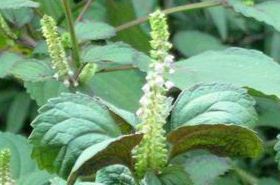
Knotweed, known in Traditional Chinese Medicine (TCM) as Huzhang, is botanically identified as Polygonum cuspidatum Sieb. et Zucc. It's a fascinating herb with a rich history in herbal remedies. Beyond its scientific name, you might hear it called by several other common names, reflecting its widespread use and recognition.
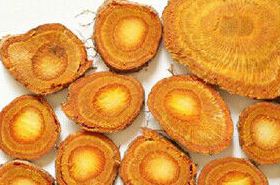
Common Names: Flower-spotted Bamboo, Sour Bamboo Cane, Sour Soup Stalk, Spotted Cane Root, Yellow Burnet, Japanese Knotweed.
Properties: Slightly bitter in taste, slightly cold in nature.
Meridian Tropism: Enters the Liver, Gallbladder, and Lung meridians. This means it's traditionally believed to exert its therapeutic actions primarily on these organ systems according to TCM theory.
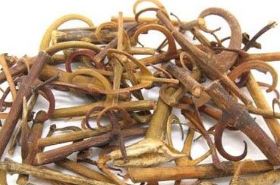
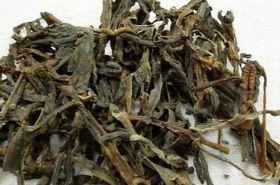
Medicinal Part: The dried rhizome and root of the plant Polygonum cuspidatum Sieb. et Zucc., which belongs to the Polygonaceae family.
Knotweed (Huzhang): Dosage and Administration
Dosage: For internal use, typically 9–15 grams. For external application, an appropriate amount can be prepared into a decoction or ointment and applied topically.
Preparation: The herb is usually cleaned to remove impurities, thoroughly moistened, cut into thick slices, and then dried for medicinal use.
Knotweed (Huzhang): Traditional Functions and Indications
Functions: Huzhang is traditionally valued for its ability to drain dampness and clear jaundice, clear heat and detoxify, dispel blood stasis and alleviate pain, and stop coughs while transforming phlegm. Its multifaceted properties make it a versatile herb in the TCM pharmacopoeia.
Indications: It's commonly used for conditions such as damp-heat jaundice, turbid urination (lymphuria), vaginal discharge (leukorrhea), wind-damp painful obstruction syndrome (rheumatic pain), carbuncles, sores, and toxic swellings, burns and scalds, amenorrhea (menstrual blockage), abdominal masses (accumulations), traumatic injuries, and coughs due to lung heat.
Knotweed (Huzhang): Precautions and Contraindications
Caution: Pregnant individuals should use this herb with extreme caution and only under the direct guidance of a qualified healthcare professional or a licensed practitioner of Traditional Chinese Medicine.
Knotweed (Huzhang): Traditional Combinations
Huzhang is often combined with other herbs to enhance its therapeutic effects, demonstrating the sophisticated approach of TCM formulation:
1. For menstrual blockage with abdominal masses and severe shortness of breath: This historical formula from *Qian Jin Yao Fang* involves 100 jin (a traditional unit of weight) of Knotweed root (cleaned, dried, sliced), along with the juices of 2 dou (a traditional unit of volume) each of *Tugua Gen* (Trichosanthes root) and *Niuxi* (Achyranthes root). The Knotweed root is soaked in 1 hu (another unit of volume) of water overnight, then decocted to yield 2 dou of liquid. This is then combined with the *Tugua Gen* and *Niuxi* juices and simmered until it resembles a thick syrup. One *he* (a small unit of volume) is taken with wine, twice daily and once at night. This aims to expel old blood. Treatment is stopped once the condition resolves.
2. For traumatic injuries with stagnant blood and pain: The "Huzhang San" from *Sheng Ji Zong Lu* combines 2 liang (a traditional unit of weight) of sliced Knotweed with 1 liang of sliced *Chishao Yao* (Red Peony root). These are pounded into a powder. 3 qian bi (a small spoonful) is taken with warm wine, irrespective of meal times. This combination specifically targets pain and swelling from injuries.
3. For epidemic toxins attacking hands and feet, causing severe swelling and pain: According to *Zhou Hou Fang*, Knotweed root is sliced, boiled, and the resulting decoction is used to soak the affected areas. This suggests its topical detoxifying and pain-relieving properties.
4. For difficult menstruation or amenorrhea with abdominal distension and shortness of breath: A formula from *Sheng Hui Fang* uses 3 liang of Knotweed, 1 liang of *Lingxiao Hua* (Trumpet Creeper Flower), and 1 liang of *Moyao* (Myrrh), all ground into a powder. One *qian* (a small amount) is taken with hot wine. Another variant for severe menstrual blockage involves 1 jin of Knotweed (cleaned, dried, sliced) with 2 dou each of *Tugua Gen* juice and *Niuxi* juice. The Knotweed is soaked in 1 hu of water overnight, decocted to 2 dou, then combined with the other juices and simmered to a syrup. One *he* is taken with wine, twice daily and once at night, to expel old blood. (Note: These are traditional units and practices; modern interpretation requires expert guidance).
Knotweed (Huzhang): Historical and Classical Perspectives
The efficacy of Huzhang has been documented in classical TCM texts, providing historical context for its therapeutic uses:
1. *Bencao Gangmu* (Compendium of Materia Medica): "When ground into powder and taken with wine, it is effective in treating postpartum blood stasis and pain, as well as dizziness and fainting due to falls or blows." This highlights its use in resolving post-traumatic blood stagnation and associated symptoms.
2. *Mingyi Bielu* (Records of Famous Physicians): "Mainly used to facilitate menstruation and break up blood masses and accumulations." This emphasizes its significant role in gynecological conditions related to blood stagnation.
3. *Diannan Bencao* (Materia Medica of Yunnan): "Attacks all kinds of swellings and toxins, stops throat pain, promotes urination, and moves through the meridians. Treats five types of turbid urination, leukorrhea, hemorrhoids, sores and carbuncles, and women's red and white vaginal discharge." This comprehensive description underscores its broad application in clearing heat, detoxifying, and addressing various inflammatory and gynecological issues.
Quick Self-Check: Is Knotweed Right for You?
If you're experiencing:
- Persistent yellowing of the skin or eyes accompanied by a heavy, sluggish feeling.
- Stiff, aching joints that feel worse in damp weather, resembling rheumatic pain.
- Persistent cough with thick, sticky phlegm, or a sore throat that suggests internal heat.
- Irregular or blocked menstruation, or dull, persistent abdominal pain.
Your 30-Second Self-Help Tip (General Wellness)
While you consult a professional, focus on supportive measures. To help your body's natural balance:
- Hydrate well with warm water.
- Incorporate light, gentle movement into your day to encourage circulation.
- Eat a balanced diet, favoring cooked foods and avoiding excessive greasy or sugary items, which can contribute to dampness.
For informational purposes only. Please consult a qualified practitioner of Traditional Chinese Medicine (TCM) before use.
References
Protective effects of Polygonum cuspidatum Sieb. et Zucc. extract and its active ingredient resveratrol on liver injury: A review. PMID: 35003504
The anti-inflammatory and analgesic effects of Polygonum cuspidatum extracts and their isolated compounds. PMID: 34102928
Antioxidant and anti-inflammatory activities of Polygonum cuspidatum and its main components. PMID: 28249692