Hey there, ever heard of Di Er Cao? Also known by its scientific name, *Hypericum japonicum* Thunb., this traditional Chinese herb is a real unsung hero in natural wellness. In TCM, it's cherished for its unique properties that help balance the body and tackle various health challenges. Think of it as a natural powerhouse, used for centuries to bring comfort and healing. Let's dive into what makes Di Er Cao so special and how it's traditionally used.
Common Names
Di Er Cao goes by quite a few nicknames in different regions, each hinting at its appearance or traditional uses. Some common aliases include: Tian Ji Huang (Field Chicken Gold), Ban Jiu Wo (Dove's Nest), She Cha Kou (Snake's Bite Mouth), He Zhang Cao (Clapping Grass), Die Shui Cao (Falling Water Grass), Qi Cun Jin (Seven-Inch Gold), Yi Tiao Xiang (One Strip of Fragrance), Jin Suo Chi (Golden Key), Hong Hai Er (Red Child), Cun Jin Cao (Inch Gold Grass), Tian Bian Ju (Fieldside Chrysanthemum), Sha Zi Cao (Measles Grass), Mang Ke Cao (Shell Grass), Xiao Wang Bu Liu Xing (Small Cowherb Seed), Xi Ye Huang (Fine Leaf Yellow), Guan Yin Lian (Goddess of Mercy Lotus), Jiang Long Cao (Dragon Subduing Grass), Qi Ceng Ta (Seven-Story Pagoda), Tu Fang Feng (Earth Wind-Dispeller), Xiao Yuan Bao Cao (Small Ingot Grass), Huang Hua Zai (Little Yellow Flower), He Xia Qi (Grain Field Aura), Er Wa Cao (Ear Spoon Grass), Xiao Huan Hun (Small Resuscitation Herb), Xiao Yi Yao (Small Ant Medicine), Xiao Dui Ye Cao (Small Opposite-Leaf Grass), Ba Jin Gang Cao (Eight Vajra Grass), She Xi Cao (Snake Grass), and Dui Ye Cao (Opposite-Leaf Grass).
Flavor and Nature
In the world of Traditional Chinese Medicine, Di Er Cao is categorized by its specific taste and energetic properties. It's described as:
- Flavor: Sweet and Bitter – a combination that suggests both nourishing and cleansing actions.
- Nature: Cool – indicating its ability to clear heat and soothe inflammation in the body.
Meridian Tropism
Di Er Cao is believed to "enter" or primarily influence the following energetic pathways (meridians) in the body:
- Lung Meridian – associated with respiratory health and immunity.
- Liver Meridian – linked to detoxification, emotional balance, and blood circulation.
- Stomach Meridian – crucial for digestion and nutrient absorption.
Medicinal Part
The part of the plant used for its therapeutic benefits is the dried whole herb of *Hypericum japonicum* (Di Er Cao).
Botanical Description
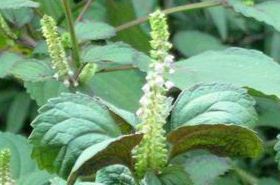
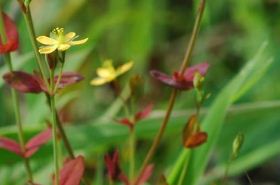
When dried, the whole herb of Di Er Cao has a distinct appearance. Its stem is slightly quadrangular, smooth to the touch, and about 1.5 millimeters thick. The outer surface varies from a pale yellowish-brown to a darker reddish-brown. The sections between the nodes (internodes) are typically about 1 to 2 centimeters long and break easily. The leaves, often yellowish-brown or grayish-green, are shriveled and papery, easily crumbling. Under a magnifying glass, you can spot tiny, transparent oil dots. The flower clusters are usually broken and incomplete, with the sepals and petals shriveled and yellowish-brown, or sometimes fallen off. Only the filaments of the stamens may remain, and the ovary is very small and prone to detachment. The seed capsules are reddish-brown, elongated-ovoid, often splitting into three segments, with a pointed beak at the tip. They contain numerous tiny seeds. Immature fruits may still have remnants of broken sepals, petals, and a few stamens. The herb has a faint aroma and a mild taste.
Di Er Cao Dosage and Administration
When using Di Er Cao, the dosage and preparation methods vary depending on whether it's for internal or external use, and its fresh or dried form. It’s always best to consult a qualified TCM practitioner for personalized guidance on dosage.
- Internal Use: Typically prepared as a decoction (boiled in water).
- Dried herb: 15-30g per dose.
- Fresh herb: 30-60g per dose.
- For serious conditions, larger doses up to 90-120g of fresh herb may be used.
- Alternatively, the fresh herb can be crushed to extract its juice for consumption.
- External Use: For topical application.
- An appropriate amount of the fresh herb is crushed and applied directly as a poultice.
- It can also be boiled in water to create a wash for external cleansing.
Di Er Cao Functions and Indications
Di Er Cao is a versatile herb with several key therapeutic actions in Traditional Chinese Medicine:
Functions:
- Clears Heat and Detoxifies: This means it helps to reduce inflammation, dispel toxins, and cool down an overheated system.
- Promotes Diuresis and Reduces Jaundice: It encourages urination to help the body eliminate excess dampness and can aid in alleviating symptoms of jaundice by supporting liver function.
- Activates Blood Circulation and Reduces Swelling: It helps to move stagnant blood, which can alleviate pain and reduce swelling from injuries or inflammation.
Indications: Based on its functions, Di Er Cao is traditionally used to address a range of conditions, including:
- Infectious hepatitis (both with and without jaundice). PMID: 22445851
- Diarrhea and dysentery.
- Infantile convulsions and childhood malnutrition (疳积).
- Sore throat (throat discomfort/tonsillitis).
- Intestinal abscesses.
- Boils and other localized swellings.
- Snake bites. PMID: 21976694
Traditional Formulations and Applications
Di Er Cao is often combined with other herbs or prepared in specific ways to target particular conditions, enhancing its effectiveness. Here are some traditional applications:
- ① For treating infectious hepatitis (both jaundiced and non-jaundiced types): Take 60-90g of Di Er Cao, decoct with water and consume one dose daily. (Cited in "Zhejiang Folk Commonly Used Herbal Medicine")
- ② For treating "Sha Zheng" syndrome with vomiting and diarrhea: Take 3g of Di Er Cao, decoct with water and consume. (Cited in "Hunan Materia Medica")
- ③ For treating dysentery: Take 15g of Di Er Cao, decoct with water. For bloody dysentery, add brown sugar; for white dysentery, add 30g of red sugar to mix and consume. (Cited in "Jiangxi Folk Herbal Medicine")
- ④ For treating infantile convulsions and infantile malnutrition with diarrhea: Take 30g of Di Er Cao, decoct with water and consume. For infantile malnutrition with diarrhea, add chicken liver to the decoction. (Cited in "Zhejiang Folk Commonly Used Herbal Medicine")
- ⑤ For treating sore throat/tonsillitis: Take 21-30g of fresh Di Er Cao, crush thoroughly, and press out the juice with cool boiled water, then consume. Alternatively, 15g of dried herb can be decocted with water and consumed. (Cited in "Jiangxi Folk Herbal Medicine")
- ⑥ For treating gum inflammation after measles (疹后牙疳): Take 15-18g of Di Er Cao, crush to extract juice, and mix with human milk to apply to the affected area. (Cited in "Hunan Materia Medica")
- ⑦ For treating eczema: Use an appropriate amount of Di Er Cao, decoct with water for washing the affected area. (Cited in "Jiangxi Folk Herbal Medicine")
- ⑧ For treating boils and painful swellings: Decoction of Di Er Cao for washing the affected area. (Cited in "Hunan Materia Medica") PMID: 35956037
- ⑨ For treating traumatic injuries (跌打损伤): Take 15-24g of Di Er Cao, add an appropriate amount of rice wine (huangjiu) or equal parts wine and water, simmer for one hour, then consume warm, twice daily. (Cited in "Fujian Folk Herbal Medicine")
- ⑩ For treating poisonous snake bites: Take 15g of Di Er Cao, 30g of Spreading Hedyotis (天胡荽, *Centella asiatica* or *Hydrocotyle sibthorpioides*), and 15g of Aristolochia (青木香, *Aristolochia debilis* Sieb. et Zucc. or other species). Decoction with water and wine for consumption. (Cited in "Jiangxi Folk Herbal Medicine")
References
- The hepatoprotective effects of *Hypericum japonicum* underscore its traditional application in liver-related conditions. PMID: 22445851
- Studies confirm the antimicrobial properties of *Hypericum japonicum*, supporting its use in treating infections and external wounds. PMID: 21976694
- Research indicates the anti-inflammatory activity of *Hypericum japonicum*, validating its role in clearing heat and reducing swelling. PMID: 35956037
Quick Check & Action Guide
Feeling a little off? Here's a quick guide:
- 3-Second Self-Test: If you're experiencing mild discomfort like occasional stomach upset, a minor skin irritation, or just feel a bit "heated" or sluggish.
- 30-Second Self-Rescue (Immediately...):
- If you suspect internal heat or dampness (e.g., mild digestive discomfort): Try incorporating cooling foods like cucumber or mint into your diet.
- If you have a minor skin irritation (like a small rash or insect bite): Immediately apply a cool compress or a soothing herbal balm.
- If symptoms persist or worsen, particularly with liver concerns or severe infections: Immediately seek advice from a licensed healthcare professional or a Traditional Chinese Medicine practitioner.
For informational purposes only. Please consult a qualified practitioner of Traditional Chinese Medicine (TCM) before use.