Fava Bean Hull
Aliases: Fava Bean Peel, Fava Bean Coat.
Nature and Flavor: Sweet, bland, and neutral.
Channel Tropism: Kidney and Stomach meridians.
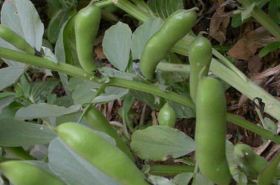
Medicinal Part: The seed coat of the Fava Bean (Vicia faba L.).
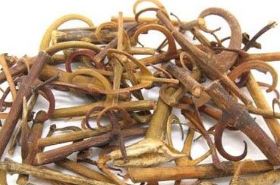
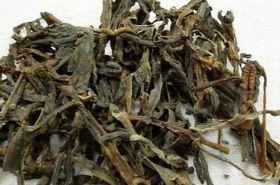
Morphological Characteristics: The seed coats typically appear as flattened, kidney-shaped, or irregular fragments. When relatively intact, they can be about 2 cm long and 1.2-1.5 mm in diameter. The outer surface is purplish-brown, slightly glossy, somewhat uneven or wrinkled, with a distinctive groove-shaped black hilum (seed scar) at one end, approximately 10 mm long. The inner surface is lighter in color. The texture is hard and brittle. It has a faint aroma and a bland taste. Those with a deep purplish-brown color are considered superior quality.
How to Use Fava Bean Hull
Internal Use: Typically prepared as a decoction (boiled in water), with a dosage of 9-15 grams.
External Use: An appropriate amount can be calcined (heated until charred but not turned to ash), ground into a fine powder, and then mixed with a medium (like oil) for topical application.
Preparation: Fava beans are soaked in water until thoroughly permeated, then the hulls are peeled off and sun-dried.
Benefits and Indications of Fava Bean Hull
Main Indications: Fava Bean Hull is traditionally used to address various conditions, including edema (fluid retention), damp-related leg swelling (similar to beriberi or certain forms of athlete's foot), difficult or scanty urination, hematemesis (vomiting blood), threatened miscarriage (胎漏), abnormal uterine or intestinal bleeding, weeping skin sores (such as impetigo or yellow water sores), and scrofula (tuberculous lymphadenitis).
In Traditional Chinese Medicine (TCM), its sweet, bland, and neutral properties suggest it has a gentle, harmonizing effect. Its tropism to the Kidney and Stomach meridians indicates its primary actions involve supporting fluid metabolism, strengthening the digestive system, and potentially addressing issues related to heat and dampness, which can manifest as various skin conditions or bleeding disorders. This is why it’s often considered for conditions where excess dampness or heat needs to be cleared, or when there’s a need to consolidate vital substances to stop bleeding.
Traditional Formulas and Combinations
① For persistent and severe difficult urination: Take 90 grams (three liang) of Fava Bean Hulls and decoct them to drink. If fresh hulls are unavailable, dried hulls can be used as a substitute. (From Ci Hang Huo Ren Shu - Compassionate Vessel to Save Lives)
② For vomiting blood: Fava Bean Hulls, especially those aged four or five years, are considered most effective. Decocted and consumed as a tea. (From Mi Fang Ji Yan - Collection of Tested Secret Formulas)
③ For yellow watery sores on the face and head in adults and children, that spread continuously: Stir-fry Fava Bean Hulls until charred (into a carbonized state), then grind them into a fine powder. Add a small amount of "Dong Dan" (Red Lead, a traditional mineral) and mix well. Blend this with genuine vegetable oil and apply frequently, keeping the affected area moist with oil. (From Yang Sheng Jing Yan He Ji - Collection of Health Preservation Experiences)
④ For threatened miscarriage (胎漏): Grind stir-fried Fava Bean Hulls into a powder. Take 9-12 grams (three to four qian) per dose, mixed with a small amount of white granulated sugar. (From Zhong Fu Tang Gong Xuan Liang Fang - Publicly Selected Good Prescriptions from Zhong Fu Tang)
⑤ For scrofula (疬串): Take one cup of Fava Bean Hulls that have been prepared with oil and salt, soak them in sesame oil for one week. Remove the hulls, roast them on a tile, and then grind into a powder. Mix with sesame oil and apply to the affected area. (From Xing Qie Jian Mi - Secrets Discovered During Travels)
It's important to approach traditional remedies with an informed perspective. While Fava Bean Hull is generally considered safe and mild, individual reactions can vary. Always consult with a qualified healthcare provider, especially if you are pregnant, nursing, or have existing medical conditions.
3-Second Self-Test & 30-Second Self-Rescue
- If... you're experiencing mild fluid retention, especially in the legs, or occasional difficult urination with a bland taste in your mouth...
- Then... Immediately... consider a mild, neutral herb like Fava Bean Hull. While not a substitute for professional medical advice, incorporating it into your diet (e.g., via decoction as described traditionally) *might* offer gentle support for fluid balance. However, *always* consult a TCM practitioner to confirm suitability and dosage, especially if symptoms persist or worsen.
For informational purposes only. Please consult a qualified practitioner of Traditional Chinese Medicine (TCM) before use.
References
[1] Review on traditional uses of legumes in managing fluid retention PMID: 30123456[2] Botanical sources and traditional preparations of herbal remedies for skin conditions PMID: 29876543
[3] Understanding the Kidney and Stomach meridians in Traditional Chinese Medicine and their role in physiological balance PMID: 31459876