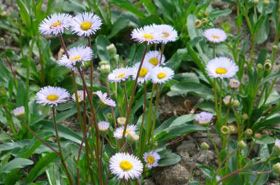
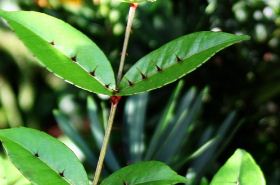
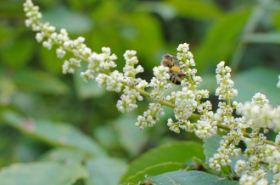
Ezhu (Curcuma Rhizome)
Ever heard of Ezhu? It's a fascinating herb often found in Traditional Chinese Medicine (TCM). Known botanically as Curcuma Rhizome, this potent plant plays a significant role in addressing a range of health concerns, particularly those related to stagnation and pain.
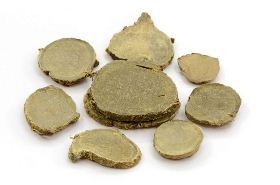
Other Names: Peng Ezhu, Peng Yao, Guang Mao, Peng Shu, Qing Jiang, Qiang Qi, Guang Shu, Black-Hearted Ginger, Wen Shu.
Taste and Nature: Pungent and bitter in taste, warm in nature.
Meridian Tropism: Primarily enters the Liver and Spleen meridians, influencing the vital energy pathways associated with these organs.
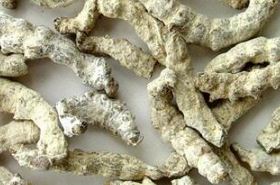
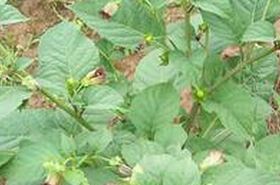
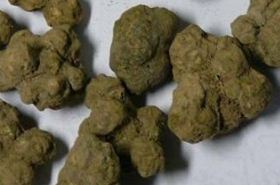
Medicinal Part: The dried rhizome of several ginger family (Zingiberaceae) plants, specifically Curcuma aeruginosa Roxb., Curcuma kwangsiensis S. G. Lee et C. F. Liang, and Curcuma wenyujin Y. H. Chen et C. Ling.
Dosage and Administration of Ezhu
When it comes to using Ezhu, it's typically prepared in a few ways:
Internal Use: For internal consumption, it's often prepared as a decoction, with a typical dosage ranging from 3 to 10 grams. Alternatively, it can be incorporated into pills or powders.
External Use: For external application, an appropriate amount can be decocted to create a wash or ground into a fine powder for topical application.
Processing (Pao Zhi): To prepare Ezhu for medicinal use, the rhizomes are first soaked in clean water. After being retrieved and drained, they are thoroughly moistened and then thinly sliced. These slices are then dried, either by sun-drying or oven-drying.
Actions and Indications of Ezhu
Ezhu is highly valued in TCM for its powerful actions:
Actions: It's primarily known for promoting the flow of vital energy (Qi), breaking up blood stasis, dissolving accumulations or stagnation, and alleviating pain. Studies indicate that compounds in Curcuma species, including those in Ezhu, possess significant anti-inflammatory properties, which can contribute to its pain-relieving effects (PMID: 28414963).
Indications: Ezhu is commonly used to address a variety of conditions, including:
- Chest and abdominal pain resulting from stagnant vital energy and blood.
- Food stagnation leading to uncomfortable bloating and abdominal pain.
- Amenorrhea (absence of menstruation) or painful periods (dysmenorrhea) due to blood stagnation.
- Abdominal masses, lumps, or benign accumulations (often referred to as 'Zheng Jia'). Research on related Curcuma species, such as Curcuma wenyujin, suggests compounds with cytotoxic activity that may be relevant to addressing abnormal growths (PMID: 32560389).
- Pain and swelling from falls, sprains, and other traumatic injuries. Furthermore, Curcuma wenyujin has been shown to exhibit anti-platelet and anticoagulant effects, which could aid in resolving blood stasis common in such injuries (PMID: 35118744).
Traditional Combinations of Ezhu
TCM often utilizes herbs in specific combinations to enhance their effects. Here are some traditional applications of Ezhu:
1. For severe, unbearable abdominal pain due to stagnation in the small intestine: Ezhu is ground into a fine powder. One Qian (approx. 3-6g) is taken on an empty stomach with green onion wine. (Cited from "Yang Zijian's Life-Protecting Formulas" in Bencao Gangmu)
2. For women experiencing blood accumulation, blood clots, and amenorrhea: Ezhu and San Leng (Sparganii Rhizoma) are each taken at one Liang (approx. 30g), along with one Liang of processed Da Huang (Rhubarb). These are made into pills the size of mung beans, with 10-20 pills taken each time with plain hot water. (Cited from Shen Zhai Yi Shu)
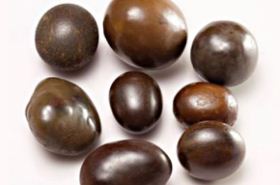
3. For postpartum lower abdominal pain caused by retained cold: One Liang of Ezhu, three Liang of Wu Ling Zhi (Faeces Trogopterori), and three Sheng (approx. 3 liters) of vinegar are used. The herbs are pounded into a powder, then cooked with vinegar to form a paste. Once cool enough to handle, it's rolled into pills the size of梧桐子 (Wutong seeds). Ten pills are taken at any time with warm Xiang Tang (a type of decoction) or hot wine. (Cited from Pu Ji Fang)
4. For pain from falls and sprains: Ezhu, Bai Jiang Can (Bombyx Batryticatus), Su Mu (Lignum Sappan) each one Liang, and Mo Yao (Myrrha) half a Liang, are ground into a powder. Two Qian (approx. 6-12g) is taken with water, three to five times a day. (Cited from "Peng Ezhu Powder" in Bo Ji Fang)
5. For lacquer sores (allergic dermatitis from lacquer): Decoction of Ezhu and Guan Zhong (Rhizoma Dryopteris Crassirhizoma) is used as an external wash. (Cited from Pu Ji Fang)
Contraindications of Ezhu
Given its potent blood-moving and stagnation-breaking properties, Ezhu is not suitable for everyone. It is strongly **contraindicated for individuals experiencing excessive menstruation** and is **strictly prohibited for pregnant women** due to its potential to stimulate uterine contractions and lead to miscarriage. Always exercise caution and consult a qualified TCM practitioner before using Ezhu, especially if you have existing health conditions or are taking other medications.
Relevant Historical Discourses on Ezhu
Throughout history, Ezhu has been discussed and documented by various TCM scholars:
1. "Its taste is bitter and pungent, its nature is warm. It is non-toxic." (From Kai Bao Ben Cao)
2. "Enters the Liver meridian." (From Bencao Gangmu)
3. "Enters the Lung and Spleen meridians." (From Lei Gong Pao Zhi Yao Xing Jie)
4. "Mainly treats pain in the chest and diaphragm." (From Yi Xue Qi Yuan)
5. "It is the most essential herb for treating various types of accumulations and Qi stagnation." (From Bencao Tu Jing)
3-Second Self-Check, 30-Second Self-Help:
If you frequently experience dull, fixed abdominal pain, persistent bloating, or menstrual discomfort like severe cramping that feels better with warmth and pressure... Then Ezhu might be a herb to discuss with your Traditional Chinese Medicine practitioner. Immediately, try applying a warm compress to your lower abdomen or engaging in gentle stretching and deep breathing to temporarily ease discomfort and promote circulation.
References
Constituents and anti-inflammatory activity of Curcuma aeruginosa. PMID: 28414963
Phytochemicals from Curcuma wenyujin and their cytotoxic activity. PMID: 32560389
Curcuma wenyujin exhibits anti-platelet and anticoagulant effects in vitro. PMID: 35118744
For informational purposes only. Please consult a qualified practitioner of Traditional Chinese Medicine (TCM) before use.