Ma Huang Tang: Composition and Usage
Ma Huang Tang, a classic formula from Traditional Chinese Medicine (TCM), is renowned for its potent effects in addressing external wind-cold invasions. This powerful blend consists of just four key herbs, each playing a crucial role in its efficacy.
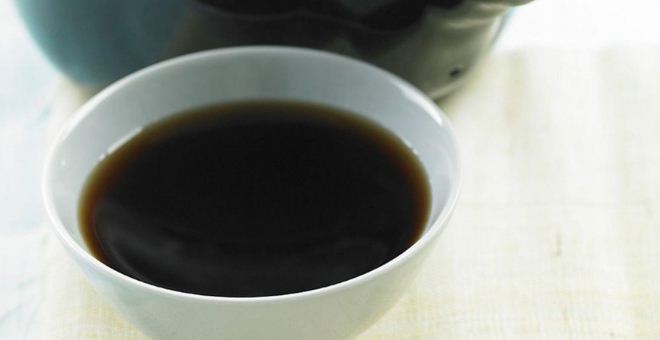
Let's break down what's in it and how it's traditionally used:
**Ingredients:**
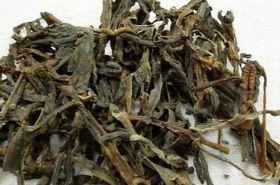
* Ma Huang (Ephedra Sinica)
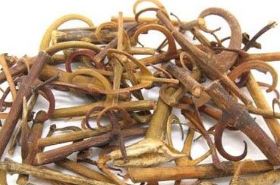
* Gui Zhi (Cinnamon Twig)
* Xing Ren (Apricot Kernel)
* Gan Cao (Licorice Root)
**Traditional Preparation & Usage:**
Historically, these four ingredients were prepared by first simmering Ma Huang in nine *sheng* (an ancient unit of volume, approximately 1.8 liters) of water until the volume reduced by two *sheng*. The foam was then skimmed off. After this, the remaining herbs were added and simmered further until two and a half *sheng* of liquid remained. The dregs were removed, and eight *ge* (another ancient unit, about 1/10 of a *sheng*) of the warm decoction was taken. The patient would then be covered lightly to induce a slight sweat, without needing to consume porridge afterward, following similar post-treatment care instructions as for Gui Zhi Tang.
**Modern Usage:** Today, it's typically prepared as a water decoction and taken warm, with the patient resting comfortably to promote a gentle sweat.
**Modifications for Specific Conditions:**
TCM practitioners often adapt formulas to better suit individual patient needs:
* **For severe wheezing, chest tightness, or excessive coughing with phlegm, especially if the exterior symptoms aren't overwhelming:** Gui Zhi (Cinnamon Twig) may be omitted, and Su Zi (Perilla Fruit) and Ban Xia (Pinellia Tuber) added to resolve phlegm, stop cough, and calm asthma.
* **For pronounced nasal congestion and runny nose:** Cang Er Zi (Xanthium Fruit) and Xin Yi (Magnolia Flower) may be added to clear nasal passages.
* **If accompanied by dampness leading to joint and body aches:** Cang Zhu (Atractylodes Rhizome) and Yi Yi Ren (Coix Seed) may be included to dispel wind and dampness.
* **If there's internal heat presenting with irritability and dry mouth:** Shi Gao (Gypsum Fibrosum) and Huang Qin (Scutellaria Root) may be cautiously added to clear accumulated heat.
**The Ma Huang Tang Song:**
A traditional verse encapsulates this formula's essence:
"Ma Huang Tang, with Gui Zhi as its core,
Xing Ren and Gan Cao, these four adore.
It promotes sweating, releases the exterior, and disperses lung Qi,
Best for external cold with robust exterior, when sweat won't flee."
Ma Huang Tang: Functions and Primary Indications
**Functions:**
* Induces sweating to release the exterior (resolves external pathogenic factors).
* Disperses Lung Qi and calms asthma.
**Primary Indications:**
This formula is primarily used for **external invasion of wind-cold with exterior excess syndrome**. Key symptoms include:
* Aversion to cold with fever
* Headache and body aches
* Absence of sweating (anhidrosis) accompanied by asthma or wheezing
* A thin, white tongue coating
* A floating, tight pulse
**Understanding the Formula's Logic (Pathophysiology in TCM):**
This syndrome occurs when external wind-cold pathogens invade the body, particularly affecting the superficial layers and the lungs. The cold constricts the body's superficial protective energy (Wei Qi), causing the pores to close tightly. This leads to stagnation of the nourishing inner energy (Ying Qi) and obstruction in the meridians, manifesting as aversion to cold, fever, lack of sweat, and general body pain. In TCM, the Lungs govern Qi and relate to the skin and body hair. When external cold binds the exterior, it impairs the Lung's ability to disperse and descend Qi, causing it to rebel upwards, resulting in asthma or wheezing. The thin white tongue coating and floating-tight pulse are classic signs of this wind-cold exterior pattern. The therapeutic approach, therefore, is to induce sweating to release the exterior pathogens and disperse Lung Qi to calm asthma.
**Herbal Breakdown (Chief, Deputy, Assistant, Envoy):**
Within Ma Huang Tang, each herb plays a specific role:
* **Ma Huang (Ephedra Sinica)** is the **Chief (Jun)** herb. It's pungent and bitter in flavor, warm in nature, and acts on the Lung and Bladder meridians. It excels at opening the pores to induce sweating, dispelling wind-cold from the exterior, and dispersing constricted Lung Qi to relieve asthma. **Given its potent nature, Ma Huang should always be used with caution and under the guidance of a qualified TCM practitioner to avoid excessive sweating or adverse effects.**
* **Gui Zhi (Cinnamon Twig)** serves as the **Deputy (Chen)** herb. In this syndrome, the Wei Qi is constrained, and Ying Qi is stagnant. While Ma Huang addresses the Wei Qi obstruction, Gui Zhi penetrates deeper to release the Ying Qi, warming and opening the meridians. It supports Ma Huang's action to intensify sweating and helps relieve body aches by promoting better circulation. Together, Ma Huang and Gui Zhi form a classic combination for releasing the exterior with pungent-warm properties.
* **Xing Ren (Apricot Kernel)** is an **Assistant (Zuo)** herb. It directs Lung Qi downwards, counteracting Ma Huang's dispersing action. This combination of upward dispersion and downward direction restores the Lung's natural function of dispersion and descent, significantly enhancing its ability to calm asthma and cough. This "one disperses, one descends" pairing is a common strategy for harmonizing Lung Qi.
* **Gan Cao (Licorice Root)** acts as both an **Assistant (Zuo)** and **Envoy (Shi)** herb. It harmonizes the powerful dispersing effects of Ma Huang and Xing Ren. Crucially, it moderates the strong diaphoretic (sweat-inducing) action of Ma Huang and Gui Zhi, preventing excessive sweating that could deplete the body's vital energy (Zheng Qi).
By combining these four herbs, Ma Huang Tang effectively resolves exterior cold, restores proper circulation of vital energy, and harmonizes Lung function, leading to the resolution of symptoms.
Ma Huang Tang: Important Contraindications
This formula is a powerful, warm-diaphoretic agent, and its use requires careful consideration:
1. **Historically, the "Treatise on Cold Damage" (Shang Han Lun) cautions against its use in patients with certain conditions**, even if they present with exterior cold. This includes individuals with:
* Sores or skin lesions ("Chuang Jia")
* Urinary tract infections or painful urination ("Lin Jia")
* Nosebleeds or other bleeding disorders ("Niu Jia")
* History of blood loss or deficiency ("Wang Xue Jia")
* Those with exterior deficiency syndrome presenting with spontaneous sweating
* Individuals with blood deficiency whose pulse in the "chi" (cubit) position is slow
* Patients who have been mistakenly purged and now experience heavy body sensation and palpitations, even if they show signs of exterior cold.
2. **Ma Huang Tang, despite its simple composition, is potent.** It should *never* be overused, as excessive sweating can severely deplete the body's vital energy. As noted by the renowned physician Ke Qin: "This is a purely yang formula, excessively dispersing, like a general entering battle with a single blade. Used appropriately, it achieves victory in one swift strike. Used improperly, it does not only fail but invites disaster. Therefore, for releasing the exterior, it should be used once and not repeatedly." (From *Shang Han Lai Su Ji: Shang Han Fu Yi*, Vol. 1). **Always consult a qualified TCM practitioner before using this formula, especially if you have pre-existing conditions or are taking other medications.**
Different Versions of Ma Huang Tang
Here are some notable variations of the Ma Huang Tang formula, each adapted for specific patterns:
**1. Ma Huang Jia Shu Tang (Ma Huang Plus Atractylodes Rhizome Decoction)**
* **Ingredients:** Ma Huang (Ephedra Sinica, desectioned) 9g, Gui Zhi (Cinnamon Twig, peeled) 6g, Gan Cao (Licorice Root, stir-fried) 3g, Xing Ren (Apricot Kernel, peeled and pointed) 6g, Bai Zhu (White Atractylodes Rhizome) 12g.
* **Usage:** Traditionally, the five herbs are added to nine *sheng* of water. Ma Huang is simmered first, reducing the volume by two *sheng*, then the foam is removed. The other herbs are added and cooked until two and a half *sheng* remain. Dregs are removed, and eight *ge* of the warm decoction is consumed, followed by covering to induce a slight sweat.
* **Functions:** Induces sweating to release the exterior, dispels cold and dampness.
* **Primary Indications:** Wind-cold-damp Bi syndrome, characterized by generalized body aches, pain, and anhidrosis.
* **Source:** *Jin Gui Yao Lue* (Synopsis of Prescriptions of the Golden Cabinet).
**2. Ma Huang Xing Ren Yi Yi Gan Cao Tang (Ma Huang, Apricot Kernel, Coix Seed, Licorice Root Decoction)**
* **Ingredients:** Ma Huang (Ephedra Sinica, desectioned, soaked in hot water) 6g, Xing Ren (Apricot Kernel, peeled, pointed, stir-fried) 6g, Yi Yi Ren (Coix Seed) 12g, Gan Cao (Licorice Root, stir-fried) 3g.
* **Usage:** The herbs are ground into coarse powder (about the size of soybeans). For each dose, 12g of the powder is simmered in one and a half cups of water until reduced to eight-tenths of a cup. Dregs are removed, and the warm decoction is taken. A slight sweat is encouraged, and exposure to wind should be avoided.
* **Functions:** Induces sweating to release the exterior, dispels wind and dampness.
* **Primary Indications:** Wind-dampness affecting the exterior with dampness transforming into heat. Symptoms include whole-body pain, fever, particularly worsening in the late afternoon.
* **Source:** *Jin Gui Yao Lue* (Synopsis of Prescriptions of the Golden Cabinet).
**3. Da Qing Long Tang (Major Green Dragon Decoction)**
* **Ingredients:** Ma Huang (Ephedra Sinica, desectioned) 12g, Gui Zhi (Cinnamon Twig, peeled) 6g, Gan Cao (Licorice Root, stir-fried) 6g, Xing Ren (Apricot Kernel, peeled and pointed) 6g, Shi Gao (Gypsum Fibrosum, crushed to egg-size pieces) 12g, Sheng Jiang (Fresh Ginger, sliced) 9g, Da Zao (Jujube, pitted) 3g.
* **Usage:** The seven herbs are added to nine *sheng* of water. Ma Huang is simmered first, reducing the volume by two *sheng*, then the foam is removed. The other herbs are added and cooked until three *sheng* remain. Dregs are removed, and one *sheng* of the warm decoction is taken. A slight sweat is encouraged. If sweating is excessive, warm powder can be dusted on the skin. If sweating occurs after one dose, subsequent doses should be paused. Repeated doses with excessive sweating can lead to "Yang depletion," causing weakness, aversion to wind, irritability, and insomnia.
* **Functions:** Induces sweating to release the exterior, concurrently clears internal heat.
* **Primary Indications:** External invasion of wind-cold with concurrent internal accumulated heat. Symptoms include aversion to cold, fever, headache, body pain, anhidrosis, irritability, thirst, and a floating-tight pulse.
* **Source:** *Shang Han Lun* (Treatise on Cold Damage).
**4. San Ao Tang (Three Astringent Herbs Decoction)**
* **Ingredients:** Gan Cao (Licorice Root, unprocessed), Ma Huang (Ephedra Sinica, with root and nodes), Xing Ren (Apricot Kernel, with skin and tip) – each 30g.
* **Usage:** The herbs are ground into a coarse powder. For each dose, 15g of the powder is simmered in one and a half cups of water with five slices of fresh ginger until reduced to one cup. Dregs are removed, and the decoction is taken orally. The patient should be covered with blankets to induce a slight sweat.
* **Functions:** Disperses Lung Qi and releases the exterior.
* **Primary Indications:** External invasion of wind-cold with impaired Lung Qi dispersion. Symptoms include nasal congestion with a heavy voice, inability to speak clearly, coughing, and chest tightness.
* **Source:** *Tai Ping Hui Min He Ji Ju Fang* (Imperial Grace Formulary of the Tai Ping Era).
**5. Hua Gai San (Flower Canopy Powder)**
* **Ingredients:** Zi Su Zi (Perilla Fruit, stir-fried), Ma Huang (Ephedra Sinica, with root and nodes removed), Xing Ren (Apricot Kernel, peeled and pointed), Chen Pi (Aged Tangerine Peel, with white pith removed), Sang Bai Pi (Mulberry Root Bark), Chi Fu Ling (Red Poria, peeled) – each 30g; Gan Cao (Licorice Root) 15g.
* **Usage:** The herbs are ground into a fine powder. For each dose, 6g of the powder is simmered in one cup of water until reduced to six-tenths of a cup. Taken warm after meals.
* **Functions:** Disperses Lung Qi and releases the exterior, resolves phlegm and stops cough.
* **Primary Indications:** Patients with a pre-existing tendency for phlegm, who contract wind-cold. Symptoms include coughing with upward-rising Qi, wheezing sounds, white phlegm, chest fullness and stifling sensation, nasal congestion with a heavy voice, aversion to cold, fever, moist white tongue coating, and a floating-tight pulse.
* **Source:** *Bo Ji Fang* (Prescriptions for Universal Relief).
---
**Quick Check: Do you have a "Wind-Cold" pattern?**
* **If you're experiencing** sudden chills, fever (even low-grade), body aches, headache, and *no sweating*, you might be dealing with an external wind-cold invasion.
* **Then immediately consider** warming yourself, drinking warm liquids, and consulting a qualified TCM practitioner. This pattern often benefits from formulas like Ma Huang Tang, but professional diagnosis is key.
---
**References:**
* [Comprehensive review on the pharmacological activities of Ephedra sinica (Ma Huang), covering its uses in respiratory conditions and historical context]
PMID: 21919420
* [Systematic review on the clinical application of Ma Huang Tang for acute respiratory infection]
PMID: 29809971
* [Pharmacological activities of Cinnamomi Ramulus (Gui Zhi) relevant to its traditional use in cold syndromes and circulatory effects]
PMID: 28414925
---
**Copyright Disclaimer:**
For informational purposes only. Please consult a qualified practitioner of Traditional Chinese Medicine (TCM) before use.