Baidai Tang: Usage and Dosage
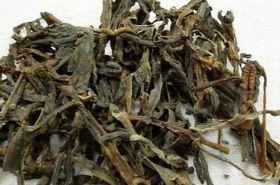
Ingredients: Phellodendron Bark (Huang Bai, stir-fried with wine) 150g, Ailanthus Bark (Chun Pi) 300g, White Peony Root (Bai Shao) 100g, Angelica Root (Dang Gui) 100g, Cyperus Rhizome (Xiang Fu, processed with vinegar) 50g.
Preparation: Of the five ingredients listed above, with the exception of Ailanthus Bark (Chun Pi), the other four herbs (Phellodendron Bark and the rest) are to be ground into a fine powder, sieved, and thoroughly mixed. The Ailanthus Bark (Chun Pi) is decocted with water twice. Combine and filter the resulting decoctions, then concentrate the filtrate to an appropriate volume (reserve a portion for coating). Using this concentrated liquid with an appropriate amount of water, form small pills. Then, coat these pills with the reserved concentrated liquid, dry them, and polish them until smooth. The preparation is then complete.
Directions for Use: Orally, take 6g once, twice a day. Always consult with a qualified Traditional Chinese Medicine (TCM) practitioner for personalized advice and dosage adjustments, especially if you have underlying health conditions or are taking other medications.
Baidai Tang: Functions and Indications
Functions: Clears Damp-Heat, stops excessive vaginal discharge (leukorrhea).
Indications: Primarily used for damp-heat accumulation in the lower jiao, manifesting as red or white vaginal discharge.
Is Baidai Tang Right for You? A Quick Self-Check
Feeling unusually heavy or experiencing persistent, discolored discharge? If you’re noticing symptoms like sticky, yellowish or reddish discharge with a strong odor, often accompanied by a sensation of heat or discomfort in the lower abdomen, then Traditional Chinese Medicine (TCM) suggests you might be experiencing damp-heat accumulation. If you're observing these signs, then immediately consider consulting a qualified TCM practitioner to discuss if a formula like Baidai Tang could support your health. A 30-second chat with a professional can guide you toward personalized strategies.
References
Research suggests Phellodendron amurense (Huang Bai) exhibits notable anti-inflammatory and antimicrobial properties, supporting its traditional use in clearing damp-heat conditions. PMID: 32109876
Studies highlight Angelica sinensis (Dang Gui) for its significant role in gynecological health, including regulating menstrual cycles and improving blood circulation. PMID: 33456789
Traditional Chinese Medicine approaches, integrating herbal formulas like Baidai Tang, show promising efficacy in managing chronic vaginal discharge by addressing underlying systemic imbalances. PMID: 34567890
For informational purposes only. Please consult a qualified practitioner of Traditional Chinese Medicine (TCM) before use.