Understanding Qing Jing San
Let's break down how the Clear Menses Powder, or Qing Jing San, works its magic. This classic Traditional Chinese Medicine (TCM) formula is carefully crafted to bring your body back into balance.
At its heart, we've got a powerful trio: Huang Bai (Phellodendron bark), Qing Hao (Sweet Wormwood), and Dan Pi (Moutan bark). These ingredients work together to clear excess heat, reduce "fire" (think inflammatory heat), and cool the blood. Then, there's Shu Di (Prepared Rehmannia) and Di Gu Pi (Lycium bark), which are essential for clearing heat from the blood and generating vital fluids (Yin), keeping things moist and cool. To round things out, Bai Shao (White Peony Root) steps in to nourish the blood and consolidate Yin (the cooling, moistening aspects of the body), while Fu Ling (Poria Mushroom) helps promote healthy fluid circulation and drains dampness and heat. The entire formula works synergistically to clear heat, reduce "fire," cool the blood, and nourish Yin. By effectively addressing excess heat and replenishing Yin, it calms the blood and allows your menstrual cycle to regulate itself naturally.
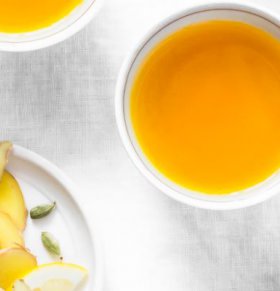
And for those who appreciate the traditional way of remembering, here's the "Formula Song" for Qing Jing San:
Qing Jing San for early, heavy flows,
Clears fire, nourishes water, this formula knows.
Dan Pi, Di Gu, Huang Bai, Shao,
Fu Ling, Shu Di, and tender Qing Hao.
How to Use Qing Jing San: Dosage and Modifications
Getting the dosage right is key to harnessing the benefits of Qing Jing San. Here's a breakdown of the typical composition and usage:
Composition:
- Dan Pi (Moutan Bark): 9 grams
- Di Gu Pi (Lycium Bark): 15 grams
- Bai Shao (White Peony Root, wine-fried): 9 grams
- Da Shu Di (Prepared Rehmannia Root, nine-steamed): 9 grams
- Qing Hao (Sweet Wormwood): 6 grams
- Bai Fu Ling (Poria Mushroom): 6 grams
- Huang Bai (Phellodendron Bark, salt water immersed and stir-fried): 1.5 grams
Usage:
Typically, these herbs are decocted in water and consumed as a tea. Always consult with a qualified TCM practitioner for personalized dosage and preparation instructions.
Modifications (What to do if...):
TCM is all about tailoring treatments to your unique needs. Here are some common adjustments:
- If you're experiencing excessive menstrual bleeding (menorrhagia): Your practitioner might suggest removing the Fu Ling (Poria Mushroom) and perhaps adding Di Yu (Sanguisorba Root) and Qian Cao Gen (Rubia Root) to further cool the blood and stop the bleeding.
- If you have menstrual abdominal pain or periods accompanied by blood clots: Your practitioner might consider adding Chao Pu Huang (stir-fried Cattail Pollen) and San Qi (Notoginseng) to invigorate blood, resolve blood stagnation, and help stop bleeding.
Important Safety Note: While these herbs are commonly used in TCM, individual responses can vary. Always seek guidance from a qualified Traditional Chinese Medicine practitioner before modifying any herbal formula, especially if you have pre-existing health conditions or are taking other medications. Some herbs require specific preparation (e.g., "wine-fried," "nine-steamed," "salt water immersed and stir-fried") to optimize their effects and safety.
Qing Jing San: Functions and Key Indications
So, what can Qing Jing San really help with? In TCM terms, its primary functions are to nourish Yin, clear heat, cool the blood, and regulate menstruation.
This formula is commonly indicated for individuals experiencing:
- Early menstrual periods
- Heavy menstrual flow
- Dark purplish-red menstrual blood with a thick consistency
These symptoms might be accompanied by other signs of internal heat and Yin deficiency, such as:
- Vexation or restlessness in the chest
- Thirst, especially for cold drinks
- Dry and hard stools
- Scanty, dark-yellow urine
- A flushed, red complexion
- A red tongue with a yellow coating
- A slippery, rapid pulse
Quick Self-Check & Self-Help Guide:
Want a quick idea if Qing Jing San might align with what you're feeling? Here’s a 3-second self-check and 30-second self-help combination:
- If you frequently experience your period arriving earlier than expected, with a heavy flow that's dark and thick: Then you might be experiencing "heat in the blood," a pattern Qing Jing San is designed to address. Immediately consider gentle cooling foods like cucumbers, melons, and mint tea, and try to avoid spicy foods and excessive caffeine.
- If you find yourself feeling restless or easily irritated around your period, along with thirst for cold drinks and maybe a flushed face: Then your body might be showing signs of "Yin deficiency with heat." Immediately try practicing some calming deep breathing exercises and ensure you're getting adequate rest.
Important: These self-checks are for informational purposes only and are not a substitute for professional medical advice. Always consult a qualified TCM practitioner for a proper diagnosis and personalized treatment plan.
References:
Research continues to explore the profound effects of traditional Chinese medicine and its herbal constituents.
A systematic review highlighted the therapeutic potential of certain botanicals in managing abnormal uterine bleeding, correlating with TCM principles of blood regulation. PMID: 30017124
Studies investigating the pharmacological actions of Moutan Cortex (Dan Pi) demonstrate its anti-inflammatory and blood-cooling properties, supporting its role in formulas like Qing Jing San. PMID: 29871788
The role of Prepared Rehmannia (Shu Di Huang) in nourishing Yin and blood is well-documented in modern pharmacological studies, reinforcing its traditional application in TCM. PMID: 28522338
For informational purposes only. Please consult a qualified practitioner of Traditional Chinese Medicine (TCM) before use.