Qing Ying Tang: Composition and Usage
Hey there! Today, we're diving into Qing Ying Tang, a significant formula in Traditional Chinese Medicine (TCM). Let's break down what's in it and how it’s typically used.

Ingredients:
This powerful formula traditionally includes:
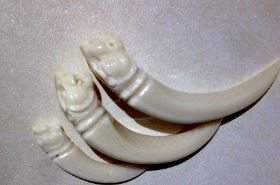
- Rhinoceros Horn (Xi Jiao) 30g (commonly substituted with Water Buffalo Horn)
- Processed Rehmannia Root (Sheng Di Huang) 15g
- Scrophularia Root (Yuan Shen) 9g
- Bamboo Leaf Core (Zhu Ye Xin) 3g
- Ophiopogon Root (Mai Dong) 9g
- Salvia Root (Dan Shen) 6g
- Coptis Rhizome (Huang Lian) 5g
- Honeysuckle Flower (Yin Hua) 9g
- Forsythia Fruit (Lian Qiao) 6g
Usage:
Traditionally, you'd take the above herbs, add eight cups of water, decoct until only three cups remain, and consume this three times a day. Modern preparation often involves decocting the Water Buffalo Horn shavings first, then adding the rest of the herbs.
A Quick Safety Note: While Water Buffalo Horn is a common substitute, and most of these herbs are widely used in TCM, it's crucial to always consult a qualified Traditional Chinese Medicine practitioner before preparing or consuming any herbal formula. They can ensure the correct diagnosis, dosage, and preparation methods tailored to your specific condition, preventing any potential adverse effects or interactions.
Modifications (Additions and Subtractions):
TCM is all about personalization! Here are some common adjustments to Qing Ying Tang:
- For pronounced dry tongue and a large superficial pulse: You might remove Coptis Rhizome (Huang Lian) to avoid its bitter and drying effects, which could further harm Yin.
- If heat traps the Pericardium, leading to blocked orifices and impaired consciousness: This formula can be combined with An Gong Niu Huang Wan or Zhi Bao Dan to clear the Heart and open the orifices.
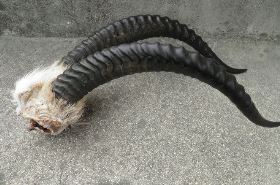
- When Ying-level heat generates internal wind, causing spasms and convulsions: Consider adding Zi Xue, or appropriately increasing Antelope Horn (Ling Yang Jiao), Uncariae Ramulus cum Uncis (Gou Teng), and Earthworm (Di Long) to extinguish internal wind and stop spasms.
- If heat-phlegm is also present: Bamboo Sap (Zhu Li), Arisaema cum Bile (Tian Zhu Huang), and Fritillaria Bulb (Chuan Bei Mu) can be added to clear heat and resolve phlegm.
- If heat in the Qi level is still strong (Ying-level heat often transmits from the Qi level): You might increase the dosage of Honeysuckle Flower (Yin Hua), Forsythia Fruit (Lian Qiao), and Coptis Rhizome (Huang Lian). Additionally, Gypsum Fibrosum (Shi Gao), Anemarrhena Rhizome (Zhi Mu), Isatis Leaf (Da Qing Ye), Isatis Root (Ban Lan Gen), and Dryopteris Root (Guan Zhong) can be added to significantly enhance the ability to clear heat and detoxify.
The Qing Ying Tang Song (Formula Rhyme):
Here's a little rhyme to help remember Qing Ying Tang's essence:
Qing Ying Tang treats heat transmitting to Ying,
Fever worse at night, restless mind it will bring.
Horn, Rehmannia, Scrophularia, Bamboo Heart,
Salvia, Ophiopogon, Coptis, Honeysuckle, Forsythia play their part.
Clearing heat and protecting Yin, a vital art.
Qing Ying Tang: Functions and Indications
Functions:
This formula is primarily designed to clear heat from the Ying (Nutritive) level, detoxify, release trapped heat, and nourish Yin. This effectively addresses the core imbalances when pathogenic heat has delved deeper into the body's systems.
Indications:
Qing Ying Tang is a go-to for conditions where heat has entered the Ying level. You might recognize this pattern by symptoms such as:
- Fever that worsens significantly at night.
- Restlessness and difficulty sleeping (insomnia).
- Occasional delirium or confused speech.
- Eyes that are often wide open or, conversely, frequently closed.
- Thirst, or surprisingly, a lack of thirst despite the fever.
- Faint, hidden rashes on the skin.
- A thready (thin) and rapid pulse.
- A dark red and dry tongue.
Formula Explanation:
This pattern often arises when pathogenic heat travels deeper into the Ying level, consuming the body's nourishing Yin. The treatment strategy focuses on clearing this Ying-level heat, detoxifying, releasing trapped heat, and replenishing Yin. When the pathogenic heat is lodged in the Ying level, particularly within the Yin aspect, it interacts with the internalizing Yang energy at night, leading to the characteristic fever that worsens after sundown. Since the Ying Qi (Nutritive Qi) is connected to the Heart, this heat can disturb the Heart-Mind, resulting in restlessness, insomnia, and occasional delirium.
When pathogenic heat deeply invades the Ying level, it can cause the Ying Yin (Nutritive Yin) to evaporate, drawing fluids from the blood vessels towards the mouth. This can paradoxically lead to a lack of thirst even when a person would typically feel parched. The faint rashes indicate that the pathogenic heat is affecting the Ying level, potentially burning the blood vessels and causing minor extravasation of blood.
Let's look at the key players in this formula:
- Rhinoceros Horn (or Water Buffalo Horn): This is considered the 'Chief Herb' (Jun Yao). It powerfully clears heat and resolves toxicity from the Ying level.
- Processed Rehmannia Root (Sheng Di Huang), Ophiopogon Root (Mai Dong), and Scrophularia Root (Yuan Shen): These are the 'Deputy Herbs' (Chen Yao). Sheng Di Huang cools the blood and nourishes Yin. Mai Dong clears heat, nourishes Yin, and generates fluids. Yuan Shen nourishes Yin, reduces fire, and detoxifies. Together, they effectively clear heat, nourish Yin, cool blood, and enhance detoxification. PMID: 30342371
- Honeysuckle Flower (Yin Hua), Forsythia Fruit (Lian Qiao), and Bamboo Leaf Core (Zhu Ye Xin): These serve as 'Assistant Herbs' (Zuo Yao). They are crucial in the initial stage of heat entering the Ying level, helping to clear heat and detoxify, thereby guiding the Ying-level pathogenic heat outward. This is a classic example of "venting heat to the Qi level" (Tou Re Zhuan Qi) – preventing deeper penetration.
- Coptis Rhizome (Huang Lian) and Salvia Root (Dan Shen): Also 'Assistant Herbs'. Huang Lian clears heat from the Heart and detoxifies. Dan Shen clears heat, cools blood, invigorates blood, and dispels blood stasis, addressing potential blood stagnation caused by heat.
Qing Ying Tang: Contraindications
It's super important to pay attention to your tongue when considering this formula! The original text explicitly states: "If the tongue coating is white and greasy, it should not be administered." The author further explains that a white and greasy tongue coating not only suggests severe heat but also significant dampness. Formulas with a moistening and nourishing nature are generally contraindicated when dampness is heavy, as they can worsen the dampness and potentially prolong the pathogenic influence.
Understanding these subtleties is why consulting a TCM practitioner is so vital. They can properly assess your unique body constitution and current condition. PMID: 32104593
Qing Ying Tang: Related Formula (Fu Fang)
There's a variant of Qing Ying Tang, often referred to as "Qing Ying Tang with Added Core/Pith Herbs" or simply a modified version focusing on specific parts of the herbs to target the Pericardium more intensely.
Ingredients:
- Scrophularia Root Heart (Yuan Shen Xin)
- Bamboo Leaf Roll Core (Zhu Ye Juan Xin)
- Rhinoceros Horn (Xi Jiao) (substituted with Water Buffalo Horn)
- Ophiopogon Root with Core (Lian Xin Mai Dong)
- Lotus Seed Heart (Lian Zi Xin)
- Forsythia Fruit Heart (Lian Qiao Xin)
Dosage:
- Scrophularia Root Heart (Yuan Shen Xin) 9g
- Lotus Seed Heart (Lian Zi Xin) 2g
- Bamboo Leaf Roll Core (Zhu Ye Juan Xin) 6g
- Forsythia Fruit Heart (Lian Qiao Xin) 6g
- Rhinoceros Horn (Xi Jiao) (substituted with Water Buffalo Horn) 30g
- Ophiopogon Root with Core (Lian Xin Mai Dong) 9g
Usage:
Decoct with water and take orally.
Functions:
This specific variant aims to clear heat from the Heart, detoxify, nourish Yin, and generate body fluids.
Indications:
It's primarily used for warm-febrile diseases where fluids are injured and the pathogenic evil has trapped the Pericardium. Key symptoms include fever, impaired consciousness, and delirium.
Formula Explanation:
In TCM, "Gong" (palace) refers to the Heart's "palace" – the Pericardium. This particular syndrome indicates that warm-heat pathogenic evil has invaded the Heart Ying level and further transmitted to the Pericardium. The treatment prioritizes clearing Heart heat, detoxifying, nourishing Yin, and generating fluids. The original text's emphasis on using the "heart" or "core" parts of the herbs (e.g., Rhinoceros Horn tip, Scrophularia root heart) signifies a strategic approach to guide the medicinal properties directly to the Heart and Pericardium. This method, sometimes called "like-kind entering like-kind," aims to clear Pericardium heat, replenish Kidney Water (Yin), and effectively detoxify and remove turbidity.
When applied to the indicated conditions, this variant helps to clear heat from the Heart Ying level, harmonize Water and Fire, resolve heat toxicity, and calm the Heart-Mind. Compared to the main Qing Ying Tang, this modified formula places a stronger emphasis on clearing heat from the Pericardium, while also nourishing Yin, removing turbidity, and detoxifying. The original Qing Ying Tang, in contrast, focuses more on clearing heat from the Ying level and "venting heat to the Qi level." Therefore, their specific indications and applications differ. PMID: 29845763
Modifications for this variant:
- For excessive heat-phlegm: Add 25ml each of Bamboo Sap (Zhu Li) and Pear Juice.
- If phlegm is difficult to expel: Add 4.5g of Snakegourd Peel (Gua Lou Pi).
- For severe heat toxicity: Add Jin Zhi (human urine sediment) and Ren Zhong Huang (human feces processed with Coptis).
- If impaired consciousness is gradually developing: Add 9g of Honeysuckle Flower (Yin Hua), 6g of Lotus Leaf (He Ye), and 3g of Acorus Rhizome (Shi Chang Pu).
Ready for a Quick Check-in?
3-Second Self-Test:
If you're experiencing a fever that feels noticeably worse at night, coupled with restlessness and an unusually dry tongue (even if you're not super thirsty), your body might be signaling "Heat in the Ying Level."
30-Second Self-Rescue (While You Seek Professional Help):
If you suspect these symptoms, immediately focus on keeping cool and hydrated. Try a lukewarm bath or cool compresses to help manage the fever, and sip on room-temperature water or clear broths. But remember, this is just immediate comfort – you absolutely need to consult a qualified TCM practitioner for proper diagnosis and guidance!
For informational purposes only. Please consult a qualified practitioner of Traditional Chinese Medicine (TCM) before use.