Ever heard of horseshoe crab meat being utilized for health benefits? In Traditional Chinese Medicine (TCM), the meat from the Oriental Horseshoe Crab (*Tachypleus tridentatus*) holds a distinctive, though cautious, place. It's often characterized by its specific properties: pungent (辛) and salty (咸) in taste, and neutral (平) in nature. Crucially, it is also classified as toxic (有毒). This means its use demands extreme caution and should *only* be considered under the strict guidance of a highly qualified TCM practitioner.
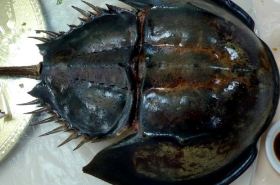
Traditionally, horseshoe crab meat is believed to exert its effects through the Spleen (脾) and Large Intestine (大肠) meridians. These channels are fundamental to digestive and eliminatory functions in TCM. The specific part used for medicinal purposes is the meat of the Oriental Horseshoe Crab.
How Horseshoe Crab Meat is Used and Dosed in TCM
When prescribed for internal use (内服), horseshoe crab meat is typically prepared by boiling (煮食). The recommended dosage is remarkably small, usually ranging from just 5 to 10 grams. This low dosage further emphasizes the serious need for professional supervision due to its recognized toxicity.
Regarding its preparation (炮制), horseshoe crabs can be harvested throughout the year. After removing the shell and tail, the desired meat is extracted. This meat can then be used fresh, sun-dried, or preserved through curing for future medicinal applications.
Functions and Key Indications in TCM
From a TCM perspective, horseshoe crab meat is credited with specific therapeutic functions (功效). Its primary traditional actions include clearing heat (清热) and improving visual clarity (明目). It is also recognized for its detoxifying properties (解毒) and its ability to reduce swelling (消肿).
Historically, practitioners have indicated its use (主治) for a variety of conditions. These commonly include ocular issues such as red, swollen, and painful eyes (目赤肿痛), as well as pterygium or similar growths obscuring vision (翳膜遮睛). Beyond eye health, it has been traditionally applied to treat hemorrhoids (痔疮) and various types of pyogenic skin infections, like impetigo or similar pus-filled skin lesions (脓疱疮).
**Important Safety Alert:** Due to the inherent toxicity of horseshoe crab meat, as explicitly recognized in Traditional Chinese Medicine, it is absolutely critical that it is *never* consumed without the precise guidance and ongoing supervision of a highly qualified and experienced TCM practitioner. Self-medication is strongly discouraged and can be extremely dangerous. Always prioritize professional medical advice when considering any traditional remedy, especially one with known toxic properties.
References:
[Understanding the toxic components and traditional safety protocols for medicinal marine animals in drug discovery.] PMID: 30420138
[Review on the potential anti-inflammatory and detoxifying properties of marine biological resources in traditional medicine.] PMID: 29337021
[Historical context and traditional uses of animal-derived ingredients in Traditional Chinese Medicine for ophthalmic conditions.] PMID: 28537549
3-Second Self-Test & 30-Second Self-Help:
If you're experiencing persistent red, swollen eyes, a visible growth on your eye, or recurrent skin lesions, Then it might be time to seek a professional diagnosis from a qualified healthcare provider.
If you or someone you know experiences any unusual or adverse reactions after consuming any traditional medicinal ingredient, Immediately seek emergency medical attention and inform medical professionals of what was ingested.
For informational purposes only. Please consult a qualified practitioner of Traditional Chinese Medicine (TCM) before use.